Physical Address
Remote team based in Bozeman, Montana.
Physical Address
Remote team based in Bozeman, Montana.
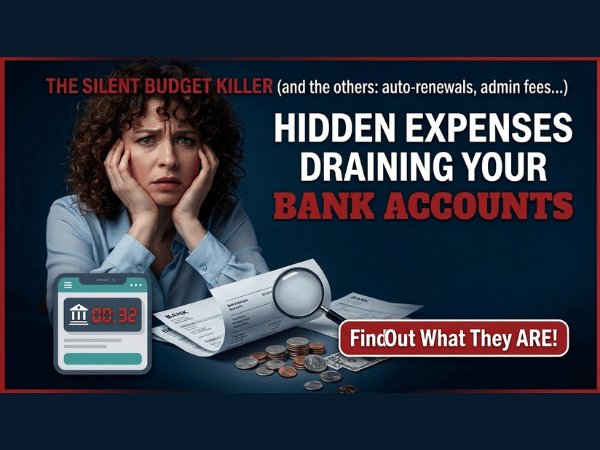
The silent budget killer: 7 hidden expenses draining your bank account, including subscription creep, convenience fees, and interest. Save $4,000+ per year starting today. Read More
Here is a question that keeps 64% of Americans awake at night: Where did all my money go?
You get paid. You pay bills. Two weeks later, your account is empty. You cannot point to any big purchase. No vacation. No new TV. Just… nothing.
The silent budget killer is not a single expense. It is dozens of small leaks that drain your bank account without you noticing.
The silent budget killer is invisible by design. Subscription services auto-renew. Convenience fees hide at checkout. Energy vampires suck power while you sleep. None of these expenses triggers alarm bells. But together, they can cost you $4,000 to $15,000 per year.
The average American loses $238 per month** to hidden expenses they never see. That is **$2,856 per year. For a family of four, the number doubles to nearly $6,000.
The silent budget killer is the reason you feel broke even when your income is okay. It is the gap between what you earn and what you keep.
The good news is that once you see these leaks, you can stop them. This article reveals the 7 most common silent budget killers and exactly how to plug each one.
For understanding your full financial picture, see How to Build an Emergency Fund from Scratch.
For tracking your spending, see Best Budgeting Apps for Couples.
For the emotional side of money leaks, see How to Stop Worrying About Money.
The silent budget killer starts with subscriptions. You signed up for a free trial. You forgot to cancel. Months later, you are still paying.
| Statistic | Value |
|---|---|
| Average number of subscriptions per person | 4-6 |
| Average monthly subscription spend | $80-150 |
| Subscriptions people forget they have | 2-3 |
| Money wasted on unused subscriptions annually | $300-600 per person |
| Subscription Type | Typical Monthly Cost | Annual Cost |
|---|---|---|
| Streaming services (Netflix, Hulu, Disney+) | $15-50 | $180-600 |
| Gym membership | $30-60 | $360-720 |
| Meal kits | $50-100 | $600-1,200 |
| Cloud storage | $5-15 | $60-180 |
| App subscriptions | $5-20 | $60-240 |
| Magazine or news | $10-20 | $120-240 |
| Box subscriptions | $20-40 | $240-480 |
| Reason | Explanation |
|---|---|
| Free trials | You intend to cancel but forget |
| Annual billing | You forget when the renewal date arrives |
| Small charges | $9.99 does not feel like real money |
| No visibility | You do not check your statements |
| Auto-renewal | Companies make cancellation difficult |
| Step | Action | Time |
|---|---|---|
| 1 | Check your last 3 months of bank statements | 20 minutes |
| 2 | Highlight every recurring charge | 10 minutes |
| 3 | Ask: “Have I used this in the last 30 days?” | 5 minutes |
| 4 | Cancel everything you have not used | 15 minutes |
| Tool | Price | What It Does |
|---|---|---|
| Rocket Money | Free / $4-12/month | Finds and cancels subscriptions |
| Truebill (now Rocket Money) | Free | Tracks recurring charges |
| Your bank app | Free | Often has subscription tracking |
| Manual spreadsheet | Free | Lists all subscriptions with renewal dates |
The silent budget killer of subscription creep can be eliminated in one hour. The average person finds $50-100 in monthly savings.
For saving the money you find, see Automated Savings Apps That Actually Work.
For digital banking tools, see Digital Banking vs Traditional Banking.
The silent budget killer number two is the price you pay for convenience. Delivery fees. Service fees. Processing fees. Convenience fees. They seem small. They add up fast.
| Convenience | Fee | Annual Cost (if used weekly) |
|---|---|---|
| Food delivery (DoorDash, UberEats) | $5-10 delivery + fees + tip | $500-1,500 |
| ATM fees (out-of-network) | $3-5 per transaction | $150-250 |
| Late payment fees | $25-40 per occurrence | $300-500 |
| Ticket processing fees | $5-15 per ticket | $100-300 |
| Hotel resort fees | $20-50 per night | $500-1,500 (vacation) |
| Credit card convenience fees | 2-4% of transaction | Varies |
| In-app purchase markup | 10-30% markup | Varies |
| Method | Meal Cost for 2 | Monthly (4x) | Annual |
|---|---|---|---|
| Pick up yourself | $25 | $100 | $1,200 |
| Delivery (+ fees + tip) | $40 | $160 | $1,920 |
| Savings from picking up | $15 | $60 | $720 |
| Behavior | Monthly ATM Fees | Annual Cost |
|---|---|---|
| Use out-of-network ATM 2x/week ($4 fee) | $32 | $384 |
| Use your bank’s ATM | $0 | $0 |
| Savings | $32 | $384 |
| Convenience | Alternative | Savings |
|---|---|---|
| Food delivery | Pick up your own food | $10-15 per order |
| Out-of-network ATM | Plan ahead, get cash back at stores | $3-5 per transaction |
| Late fees | Set up automatic bill pay | $25-40 per occurrence |
| Ticket fees | Buy at box office | $5-15 per ticket |
| Resort fees | Choose hotels without them | $20-50 per night |
| Credit card fees | Use debit or cash | 2-4% per transaction |
The silent budget killer of convenience fees is the easiest to fix. Every time you choose the free option, you pay yourself.
For avoiding late fees, see How to Get Out of Credit Card Debt Fast When You Have No Money.
For banking without fees, see Digital Banking vs Traditional Banking.
The silent budget killer number three lives inside your own bank account. Millions of Americans pay hundreds of dollars each year in fees they could easily avoid.
| Fee Type | Typical Cost | Annual Cost (if incurred monthly) |
|---|---|---|
| Monthly maintenance fee | $5-25 | $60-300 |
| Overdraft fee | $35 per occurrence | $420 (one per month) |
| Returned deposit fee | $15-25 | $180-300 |
| Wire transfer fee (domestic) | $15-30 | $180-360 |
| Wire transfer fee (international) | $35-50 | $420-600 |
| Paper statement fee | $1-5 | $12-60 |
| Account closure fee | $0-25 | One-time |
| Scenario | Cost |
|---|---|
| You buy coffee for $4.50 | |
| Your balance is $4.25 | |
| Coffee purchase goes through | $35 overdraft fee |
| Cost of that coffee | $39.50 |
| Month | Overdrafts | Fees Paid |
|---|---|---|
| January | 1 | $35 |
| February | 1 | $70 |
| March | 1 | $105 |
| April | 1 | $140 |
| May | 1 | $175 |
| June | 1 | $210 |
| Total after 6 months | $210 |
| Fee | Solution |
|---|---|
| Monthly maintenance | Switch to a no-fee bank or credit union |
| Overdraft | Opt out of overdraft protection (transaction will simply be declined) |
| Paper statements | Switch to electronic statements |
| Wire transfer fees | Use free services like Zelle, Venmo, or PayPal |
| Minimum balance fees | Choose a bank with no minimum requirement |
| Bank | Monthly Fee | Overdraft Fee | Minimum Balance |
|---|---|---|---|
| SoFi | $0 | $0 | $0 |
| Ally Bank | $0 | $0 | $0 |
| Chime | $0 | $0 | $0 |
| Capital One 360 | $0 | $0 | $0 |
| Discover Bank | $0 | $0 | $0 |
The silent budget killer of bank fees is completely avoidable. If your bank charges fees, switch today.
For comparing banks, see Digital Banking vs Traditional Banking.
For free checking accounts, see How to Build an Emergency Fund from Scratch.
The silent budget killer number four is hiding in your walls. Electronic devices continue drawing power even when they are turned off.
Energy vampires are devices that consume electricity when they are not in active use. They sit in “standby” mode, waiting for a signal to wake up.
| Device | Standby Power Draw | Annual Cost |
|---|---|---|
| Gaming consoles (PS5, Xbox) | 10-15 watts | $15-25 |
| Computers (desktop) | 5-10 watts | $8-15 |
| Cable box | 20-30 watts | $30-45 |
| Smart TV | 5-10 watts | $8-15 |
| Phone charger (plugged in) | 0.5-1 watt | $1-2 |
| Coffee maker | 1-2 watts | $2-4 |
| Microwave | 2-5 watts | $3-8 |
| Router and modem | 10-20 watts | $15-30 |
| Total per household | $100-200 per year |
| Solution | Cost | Savings |
|---|---|---|
| Unplug devices when not in use | Free | $50-100/year |
| Use a power strip and turn it off | $10-20 | $50-100/year |
| Buy smart power strips | $20-40 | $75-150/year |
| Enable power-saving modes | Free | $20-50/year |
| Investment | Cost | Annual Savings | Payback Period |
|---|---|---|---|
| Smart power strip | $25 | $75 | 4 months |
| 5 smart power strips | $125 | $375 | 4 months |
The silent budget killer of energy vampires is easy to fix. Unplugging your devices before bed takes 30 seconds.
For energy savings during the cost of living crisis, see How to Survive the 2026 Cost of Living Crisis.
For utility bill reduction, see How to Save Money on Groceries (same principles apply).
The silent budget killer number five is the most expensive. Carrying credit card debt month to month costs you hundreds or thousands of dollars in interest.
| Credit Card Balance | Interest Rate (APR) | Interest Paid in One Year | Monthly Payment |
|---|---|---|---|
| $1,000 | 22% | $220 | $55 (minimum) |
| $3,000 | 22% | $660 | $165 (minimum) |
| $5,000 | 22% | $1,100 | $275 (minimum) |
| $10,000 | 22% | $2,200 | $550 (minimum) |
| You Think You Are Paying | You Are Actually Paying |
|---|---|
| $50 per month toward your balance | $35 in interest, $15 toward balance |
| 100% of your payment goes to debt | 70-90% goes to interest |
| Debt will be gone in 12 months | Debt will take 3-5 years |
| Balance | Minimum Payment | Years to Pay Off | Total Interest Paid |
|---|---|---|---|
| $5,000 | $100 | 6 years | $2,200 |
| $5,000 | $200 | 2.5 years | $900 |
| $5,000 | $500 | 10 months | $380 |
| Strategy | How It Works | Savings |
|---|---|---|
| Balance transfer | Move debt to 0% APR card | $1,000+ per year |
| Debt avalanche | Pay highest interest first | Hundreds to thousands |
| Debt snowball | Pay smallest balance first | Builds momentum |
| Hardship program | Call credit card company for lower rate | $500+ per year |
The silent budget killer of credit card interest is the most urgent to address. Every month you carry debt, you lose money.
For debt payoff strategies, see How to Get Out of Credit Card Debt Fast When You Have No Money.
For balance transfer cards, see How to Get Out of Credit Card Debt.
For negotiating with credit card companies, see How to Stop Living Paycheck to Paycheck.
The silent budget killer number six is the most deceptive. It is the $5 here, the $10 there. Individually, these purchases are meaningless. Collectively, they are a fortune.
| Daily Spending | Monthly Cost | Annual Cost | 10-Year Cost (Invested at 7%) |
|---|---|---|---|
| $3 (coffee) | $90 | $1,095 | $15,000 |
| $5 (lunch out) | $150 | $1,825 | $25,000 |
| $10 (impulse buys) | $300 | $3,650 | $50,000 |
| $15 (dinner out) | $450 | $5,475 | $75,000 |
| $20 (entertainment) | $600 | $7,300 | $100,000 |
Before any non-essential purchase, ask yourself:
| Question | Why It Matters |
|---|---|
| “Would I rather have this $5 or an extra $15,000 in 10 years?” | Puts small purchases in long-term perspective |
| “Is this purchase adding value to my life?” | Separates wants from genuine needs |
| “Could I get this for free or cheaper?” | Encourages resourcefulness |
| Step | Action |
|---|---|
| 1 | See something you want to buy |
| 2 | Take a photo of it |
| 3 | Wait 24 hours |
| 4 | If you still want it, consider buying it |
After 24 hours, 80% of impulse urges disappear.
| Step | Action |
|---|---|
| 1 | Withdraw your weekly discretionary budget in cash |
| 2 | When the cash is gone, no more spending |
| 3 | Physical cash feels more real than tapping a card |
The silent budget killer of small daily leaks is the hardest to notice, but the easiest to fix once you see it.
For behavioral strategies, see How to Stop Worrying About Money.
To save money, you stop leaking; see Automated Savings Apps That Actually Work.
For investing the savings, see Passive Income Portfolio with $1,000.
The silent budget killer number seven is the one you cannot control, but can adapt to. Inflation has raised the price of almost everything. But most people keep spending the same way.
| Category | Price Increase Since 2020 | Current Price |
|---|---|---|
| Groceries | +25% | $1,200/month for family of 4 |
| Gas | +60%+ | $4.50-6.00/gallon |
| Utilities | +20% | $200-400/month |
| Rent | +35% | $2,050/month average |
| Old Mindset | New Reality |
|---|---|
| “I have always bought this brand” | Store brands are 30-40% cheaper |
| “I will buy the same amount of gas” | Combine trips and reduce driving |
| “I will keep the thermostat at 72.” | 68° in winter and 76° in summer saves 10% |
| “I will keep my old spending habits” | Must adapt to new prices |
| Category | Adaptation | Savings |
|---|---|---|
| Groceries | Switch to store brands and meal plan | $200-400/month |
| Gas | Carpool, public transit, combine trips | $100-300/month |
| Utilities | Lower the thermostat, and unplug vampires | $30-100/month |
| Rent | Negotiate renewal, get roommate | $200-500/month |
The silent budget killer of inflation inertia is not the price increases themselves. It is failing to change your behavior in response.
For grocery adaptation, see How to Save Money on Groceries.
For rent negotiation, see How to Survive the 2026 Cost of Living Crisis.
For utility savings, see How to Build an Emergency Fund from Scratch.
Now that you know the 7 silent budget killers, it is time to find YOUR leaks.
| Week | Focus | Action |
|---|---|---|
| Week 1 | Subscription audit | List every recurring charge |
| Week 2 | Convenience fee audit | Track every delivery, ATM, late fee |
| Week 3 | Bank fee audit | Check statements for hidden fees |
| Week 4 | Energy and small leak audit | Track standby power and daily small purchases |
| Date | Expense Type | Amount | Silent Killer Category |
|---|---|---|---|
| Person | Hidden Expenses Found | Annual Savings |
|---|---|---|
| Sarah, 34 | Unused gym membership, 3 streaming services | $720 |
| Mike, 42 | Energy vampires, out-of-network ATM fees | $480 |
| Lisa, 28 | Delivery fees, subscription creep | $1,200 |
| David, 55 | Credit card interest, bank fees | $2,800 |
Find at least $378 in hidden expenses this month. That is $4,536 per year.
The silent budget killer is only a killer if you let it hide. Once you see it, you can stop it.
For accountability, see Best Budgeting Apps for Couples.
For celebrating savings milestones, see How to Stop Worrying About Money.
For most people, subscription creep and credit card interest are the largest silent budget killers. The average person wastes $300-600 annually on unused subscriptions. Credit card interest can cost thousands per year if you carry a balance.
Review your last 3 months of bank statements. Highlight every recurring charge. Look for subscriptions you do not use, fees you did not notice, and small daily purchases that add up. The 30-day tracking challenge above walks you through exactly how.
This is the classic sign of the silent budget killer. Your income is not the problem. Small, unnoticed leaks are. Subscription creep, convenience fees, bank charges, energy vampires, interest payments, daily small purchases, and inflation inertia combine to drain your account invisibly.
The average American loses $238 per month ($2,856 per year) to hidden expenses. For a family of four, that number doubles to nearly $6,000 annually. Most people have no idea where this money goes.
Subscription creep is the easiest. Log into your bank account, find every recurring charge, and cancel anything you have not used in the last 30 days. This takes one hour and saves $300-600 per year.
Use the 24-hour rule for any non-essential purchase over $20. Wait a full day before buying. Use the weekly cash method – withdraw your discretionary budget in cash. When the cash is gone, spending stops. And ask the $5 test question before every small purchase.
For more on stopping impulse spending, see How to Get Out of Credit Card Debt Fast When You Have No Money.
For building savings from found money, see How to Build an Emergency Fund from Scratch.
For protecting your money from future leaks, see Protect Your Brokerage Account from Hackers.
The silent budget killer cannot survive your attention.
| Action | Why |
|---|---|
| Log into your bank account | Face the numbers |
| Download your last 3 months of statements | Find the leaks |
| Highlight every recurring charge | See subscription creep |
| Action | Why |
|---|---|
| Cancel all unused subscriptions | Instant savings |
| Call your bank to waive any fees | Free money |
| Unplug energy vampires before bed | Lower electric bill |
| Action | Why |
|---|---|
| Start the 30-day tracking challenge | Find YOUR leaks |
| Set up automatic bill pay | Stop late fees |
| Switch to a no-fee bank | End bank fees permanently |
Sixty-four percent of Americans live paycheck to paycheck. Most cannot explain why.
The silent budget killer is the explanation.
| Silent Budget Killer | Average Annual Cost |
|---|---|
| Subscription creep | $300-600 |
| Convenience tax | $500-1,500 |
| Bank and overdraft fees | $100-400 |
| Energy vampires | $100-200 |
| Credit card interest | $500-2,000+ |
| $5 daily leaks | $1,000-5,000+ |
| Inflation inertia | $500-2,000+ |
| Total potential waste | $3,000-11,000+ |
The difference between feeling broke and feeling secure is not earning more. It is keeping more of what you earn.
Ready to stop the leaks? Download our hidden expense tracker or share this guide with someone who needs it.
Reviewed by: Dennis M, FinTech Researcher & Developer
Dennis has tested over 50 digital banking apps and 25 crypto exchanges. He writes about FinTech tools for real people.
Comments are closed.








[…] For understanding why you feel broke despite trying to budget, see The Silent Budget Killer: 7 Hidden Expenses Draining Your Bank Account. […]
[…] For understanding why you feel broke despite trying to budget, see The Silent Budget Killer: 7 Hidden Expenses Draining Your Bank Account. […]