

Expert Analysis | July 23, 2026 | Reading Time: 22 min
Executive Summary
The recent family trust dispute involving actor Malcolm-Jamal Warner has made headlines, but it also serves as a powerful cautionary tale for anyone with assets they wish to pass on. This family trust dispute case highlights how outdated, unclear, or poorly structured estate plans can lead to family conflict, legal battles, and financial loss—regardless of the size of your estate.
In this comprehensive guide, we break down the Warner case, explain why trusts matter, and provide 5 actionable lessons to protect your family from a similar family trust dispute. Whether you have significant wealth or a modest estate, these lessons are essential for ensuring your legacy is preserved and your loved ones are protected.
What Happened in the Malcolm-Jamal Warner Family Trust Dispute?
Malcolm-Jamal Warner, best known for his role as Theo Huxtable on The Cosby Show, became the center of a very public family trust dispute over the estate of his late father. The conflict, which reportedly involved a significant trust, centered on allegations that the trust was improperly administered.
The Core of the Family Trust Dispute
According to court filings and public reports, Warner’s siblings alleged that:
- The trust’s terms were ambiguous and outdated
- The appointed trustee, Warner himself, had acted without proper consultation
- Communication broke down among family members, leading to legal action
This family trust dispute exemplifies how even well-intentioned plans can go awry when proper legal structures and communication are lacking.
The Outcome of the Family Trust Dispute
While the case was eventually settled out of court, it had already caused significant family division and legal costs. This family trust dispute is a textbook example of how even celebrity families can be torn apart by poorly managed estate plans.
Why This Family Trust Dispute Matters to You
You might think, “I’m not a celebrity. This doesn’t apply to me.” But the truth is:
- Family dynamics are complicated in every family
- Legal costs can drain any estate
- Emotional pain from a family trust dispute can last for generations
The Warner case demonstrates that any family can face a family trust dispute if the estate plan is not carefully constructed and communicated.
Why Trusts Matter for Every Family.
You might be thinking, “I’m not a celebrity. Do I really need a trust?”
The answer is yes. Trusts are not just for the wealthy; they are a powerful tool for anyone who wants to:
- Avoid probate (a time-consuming and expensive legal process)
- Maintain privacy (wills become public; trusts do not)
- Protect assets from creditors and lawsuits
- Control how and when your assets are distributed
The Cost of Not Having a Plan
Without a trust or a proper estate plan, your family may face:
- Family conflicts over unclear intentions
- Legal fees that drain your estate
- Delays in distributing your assets
- Loss of control over how your legacy is managed

Comparing Wills and Trusts
| Feature | Will | Trust |
|---|---|---|
| Probate Required | Yes | No |
| Privacy | Public record | Private |
| Control After Death | Limited | High |
| Protection from Creditors | No | Yes |
| Cost to Set Up | Lower | Higher |
| Ongoing Management | No | Yes (if needed) |
The Emotional Cost of a Family Trust Dispute
Beyond the financial aspects, a family trust dispute can cause:
- Estrangement between family members
- Generational trauma that affects future relationships
- Stress and anxiety for everyone involved
According to a study by the American Bar Association, over 60% of family trust disputes arise from poor communication and unclear documents, not from malicious intent.
Lesson 1 – Keep Your Trust Documents Updated.
One of the most common mistakes in the Warner family trust dispute was the use of outdated documents. As life changes, so should your estate plan.
Key Updates to Consider
| Life Event | Action Needed |
|---|---|
| Marriage or Divorce | Update beneficiary designations |
| Birth of Children | Add new beneficiaries and guardians |
| Change in Financial Status | Adjust asset distribution and tax planning |
| Moving States | Ensure compliance with new state laws |
| Death of a Beneficiary | Update the trust to reflect changes |
| Change in Relationship | Update to reflect current wishes |
How Often Should You Review?
- Every 3–5 years as a general rule
- Immediately after any major life event
- When tax laws change (consult your attorney)
- When your financial situation changes significantly
Practical Step
Set a calendar reminder to review your trust and will annually. Use this time to:
- Gather all estate planning documents
- Review beneficiary designations
- Check asset titling
- Schedule a meeting with your attorney
Failing to update your trust is one of the leading causes of a family trust dispute. Regular reviews are a small investment that can prevent a costly legal battle.
Lesson 2 – Choose Your Trustee Wisely.
The trustee is the person or institution responsible for managing your trust. In the Warner family trust dispute, family dynamics complicated the role.
Qualities of a Good Trustee
| Quality | Why It Matters |
|---|---|
| Financial Competence | Ability to manage investments and taxes |
| Emotional Maturity | Handle family dynamics without bias |
| Availability | Willing and able to serve for the long term |
| Trustworthiness | Honest, transparent, and accountable |
| Communication Skills | Can explain decisions to beneficiaries |

Professional vs. Family Trustee
| Type | Pros | Cons |
|---|---|---|
| Family Member | Understands family values | Potential for bias and conflict |
| Professional Trustee | Expertise and impartiality | Can be expensive and less personal |
| Co-Trustees | Combines family insight with professional expertise | Can lead to conflicts between co-trustees |
Recommendation
Consider a professional co-trustee to manage finances alongside a family member who understands family values. This approach:
- Brings expertise and impartiality
- Reduces family burden
- Provides continuity if something happens to the family trustee
Choosing the right trustee is one of the most critical decisions you can make to prevent a family trust dispute.
Lesson 3 – Communicate Your Intentions Clearly.
Many disputes arise because family members are unaware of or misunderstand the trust’s terms. In the Warner family trust dispute, lack of clear communication was a key factor.
How to Communicate with Your Family
- Hold a family meeting to explain your estate plan
- Provide written guidance on your intentions
- Encourage questions and open dialogue
- Consider a “letter of intent” that explains your decisions
- Be transparent about your reasoning
The Benefits of Transparency
- Reduces surprises and conflicts
- Ensures family members understand your wishes
- Builds unity and shared understanding
- Creates an opportunity for feedback before it’s too late
Example: Family Meeting Agenda
- Open the meeting with a positive tone
- Explain your goals for your estate
- Review the key documents (in general terms)
- Discuss the role of the trustee
- Answer questions honestly
- Reassure your family of your love and intentions
Clear communication is a powerful antidote to a family trust dispute.
Lesson 4 – Avoid Common Trust Mistakes.
Even well-intentioned trusts can fail. Here are the most common mistakes to avoid.
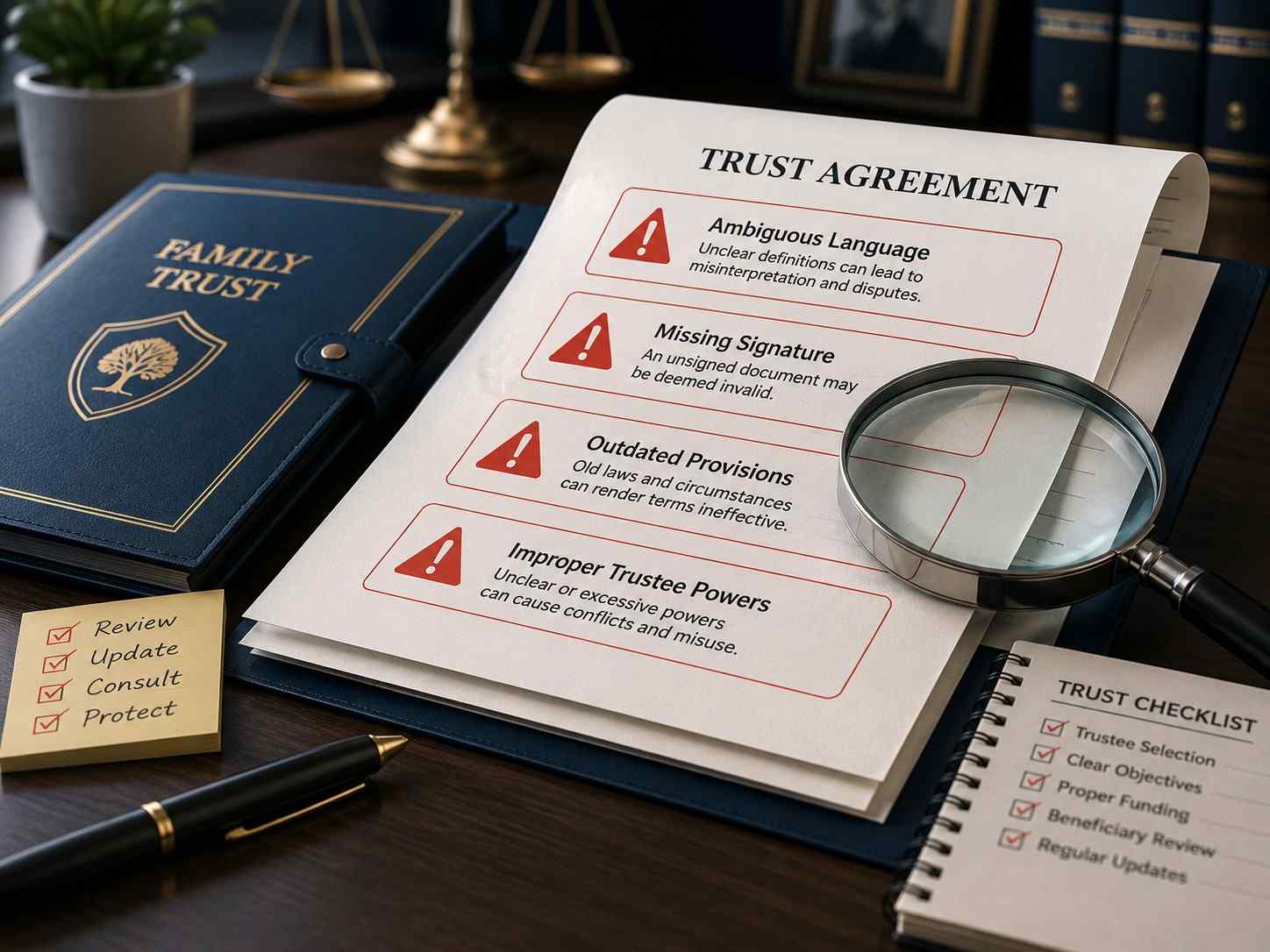
Common Mistakes That Lead to a Family Trust Dispute
| Mistake | Why It’s a Problem | How to Avoid It |
|---|---|---|
| Failing to fund the trust | The trust is worthless if assets aren’t transferred | Transfer assets immediately |
| Using vague language | Ambiguity leads to a family trust dispute | Use clear, specific terms |
| Not naming a successor trustee | Leave no one in charge | Always name at least one successor |
| Ignoring tax implications | Can result in unnecessary taxes | Consult a tax professional |
| DIY estate planning | Often leads to invalid or incomplete trusts | Use a qualified attorney |
| Forgetting digital assets | Access to online accounts can be lost | Include digital assets in your plan |
How to Avoid These Mistakes
- Work with an experienced estate planning attorney
- Ensure assets are properly titled in the trust’s name
- Review and update your trust regularly
- Document all changes in writing
- Include a “pour-over will” to catch any assets left out
Expert Insight
According to a report by the American Bar Association, “The majority of family trust disputes are caused by avoidable errors in the creation and administration of the trust.”
Lesson 5 – Plan for the Unexpected.
Life is unpredictable. Your estate plan should account for:
- Disability or incapacity – Who will manage your affairs?
- Disaster scenarios – What if all named beneficiaries pass away?
- Family changes – Divorce, remarriage, or estrangement
- Legal changes – Laws that affect taxes or distributions
- Unexpected debts – Who will handle claims against the estate?

Key Documents to Have in Place
| Document | Purpose |
|---|---|
| A will | For assets not in the trust |
| A power of attorney | For financial decisions |
| A healthcare directive | For medical decisions |
| A trust | To avoid probate and manage assets |
| A beneficiary designation | For retirement accounts and insurance |
| A letter of intent | To explain your wishes |
Creating a Comprehensive Plan
- Meet with an estate planning attorney
- Gather all financial information
- Decide on your goals for your legacy
- Draft the necessary documents
- Fund your trust (transfer assets)
- Review and update regularly
- Communicate your plan with your family
Planning for the unexpected is your best defense against a future family trust dispute.
Frequently Asked Questions About Family Trust Disputes.
1. What exactly is a family trust dispute?
A family trust dispute is a legal disagreement between beneficiaries, trustees, or family members over the management, interpretation, or distribution of a trust’s assets. These disputes can arise from a variety of issues, including ambiguous trust language, allegations of trustee misconduct, family conflict, or changes in circumstances that were not anticipated when the trust was created. A family trust dispute can be resolved through negotiation, mediation, or, in extreme cases, litigation.
2. What are the most common causes of a family trust dispute?
The most common causes of a family trust dispute include:
- Unclear or ambiguous language in the trust document
- Outdated documents that don’t reflect current family or financial situations
- Perceived unfairness in the distribution of assets
- Lack of communication between the trustee and beneficiaries
- Trustee misconduct, including mismanagement or self-dealing
- Family dynamics, such as estrangement, divorce, or remarriage
- Claims of undue influence or lack of mental capacity when the trust was created
- Disagreements over asset valuation or the interpretation of the trust’s terms
Understanding these causes is the first step in preventing a family trust dispute.
3. How can I prevent a family trust dispute in my family?
Preventing a family trust dispute requires proactive planning and clear communication. Here are the most effective strategies:
- Work with an experienced estate planning attorney to create a clear, legally sound trust
- Keep your trust documents updated to reflect life changes (marriage, divorce, births, deaths)
- Choose a competent and impartial trustee who can manage the trust objectively
- Communicate your intentions clearly with all family members
- Hold a family meeting to explain your estate plan and answer questions
- Consider including a “letter of intent” that explains your reasoning behind key decisions
- Regularly review and update your trust every 3–5 years
These steps can significantly reduce the likelihood of a family trust dispute.
4. What is the difference between a will and a trust?
A will and a trust are both estate planning tools, but they serve different purposes:
| Feature | Will | Trust |
|---|---|---|
| Probate Required | Yes | No |
| Privacy | Public record | Private |
| Control After Death | Limited | High |
| Protection from Creditors | No | Yes |
| Cost to Set Up | Lower | Higher |
| Ongoing Management | No | Yes (if needed) |
| Asset Protection | Limited | Strong |
| Mental Incapacity Planning | No | Yes |
A will only takes effect after death and goes through probate. A trust can be used during your lifetime and continues after death, avoiding probate and providing more control and protection.
5. What is a revocable living trust?
A revocable living trust is a legal document that allows you to manage your assets during your lifetime and distribute them after your death without going through probate. You can change or “revoke” it at any time while you are alive and mentally competent. This type of trust is a powerful tool to prevent a family trust dispute because it allows for clear, private, and flexible asset management and distribution.
6. What is an irrevocable trust?
An irrevocable trust is a trust that cannot be modified, amended, or terminated without the permission of the beneficiaries. Once you create an irrevocable trust and transfer assets into it, you generally cannot change its terms or take the assets back. This type of trust offers stronger asset protection and tax benefits but requires careful planning to avoid a family trust dispute, as the terms are fixed.
7. Who should I choose as my trustee?
Choosing the right trustee is one of the most critical decisions to prevent a family trust dispute. Your trustee should be:
- Financially competent and able to manage investments and taxes
- Emotionally mature and able to handle family dynamics without bias
- Available and willing to serve for the long term
- Trustworthy, honest, and transparent
- A good communicator who can explain decisions to beneficiaries
You can choose a family member, a professional trustee (like a bank or trust company), or co-trustees to combine family insight with professional expertise.
8. What happens if I don’t have a trust?
If you don’t have a trust, your estate will go through probate. Probate is a court-supervised legal process that:
- Is public, so anyone can see your assets and who receives them
- Can be time-consuming (often 6 months to 2 years)
- Can be expensive (lawyer and court fees)
- Leaves you with no control over how your assets are distributed
- Can lead to family conflicts and a family trust dispute (even without a trust)
This is why creating a trust is a proactive step to protect your family.
9. How long does probate take?
Probate can take anywhere from 6 months to 2 years, depending on:
- The complexity of the estate
- Whether there are disputes (like a family trust dispute)
- The efficiency of the local court system
- Whether the estate is contested
A properly funded trust avoids probate entirely, allowing your assets to be distributed much faster and more privately.
10. How much does it cost to create a trust?
The cost of creating a trust varies widely depending on:
- Complexity of your financial situation and wishes
- Location (attorney fees vary by state)
- Scope of the estate plan (e.g., including a will, power of attorney, healthcare directive)
You can expect to pay anywhere from $1,500 to $5,000+ for a comprehensive trust-based estate plan. This is a small investment compared to the potential costs of probate (which can be 3-7% of the estate’s value) or a family trust dispute (which can cost tens of thousands of dollars in legal fees).
11. Can a family trust dispute be settled without going to court?
Yes, the vast majority of family trust disputes are settled without going to court. Common alternative dispute resolution methods include:
- Mediation: A neutral third party helps the family reach a mutually acceptable agreement
- Negotiation: The parties work directly with their attorneys to reach a settlement
- Arbitration: A neutral arbitrator hears both sides and makes a binding decision
These methods are generally faster, less expensive, and less adversarial than litigation.
12. What is a successor trustee?
A successor trustee is the person or entity that takes over management of a trust after the original trustee dies, resigns, or becomes incapacitated. Naming a successor trustee is essential to prevent a family trust dispute. Without a named successor, a court may need to appoint someone, which can be a time-consuming and contentious process.
13. What is a “letter of intent” in estate planning?
A “letter of intent” is a non-binding document that you can include with your estate plan to explain the reasoning behind your decisions. It is not a legal document but a personal letter that:
- Clarifies your wishes and intentions
- Explains any perceived inequalities in distribution
- Reduces the potential for a family trust dispute by fostering understanding
- Provides emotional closure and guidance for your family
14. What are the most common mistakes people make when creating a trust?
The most common mistakes that can lead to a family trust dispute include:
- Failing to fund the trust (not transferring assets into it)
- Using vague or ambiguous language
- Not naming a successor trustee
- Ignoring tax implications
- DIY estate planning without legal guidance
- Forgetting about digital assets (like online accounts and cryptocurrencies)
- Failing to update the trust after life changes
- Not communicating with the family about the trust’s terms
Avoiding these mistakes is crucial to ensuring your trust works as intended.
15. What should I do if I’m involved in a family trust dispute?
If you are currently involved in a family trust dispute, take the following steps:
- Stay calm and avoid confrontational behavior
- Review the trust document carefully with an attorney
- Communicate openly with the trustee and other beneficiaries
- Consider mediation as a first step to resolve the conflict
- Seek professional legal advice from an estate planning or litigation attorney
- Document everything related to the dispute
- Avoid making public statements about the dispute on social media
- Consider the emotional cost to your family and weigh it against the financial cost of litigation
A family trust dispute can be resolved, but it requires patience, clear communication, and professional guidance.
Key Takeaways & Next Steps
Key Takeaways
- The Malcolm-Jamal Warner case is a powerful reminder of the importance of clear, updated estate planning
- Trusts benefit every family—not just the wealthy
- Outdated documents and poor communication are common causes of a family trust dispute
- Choosing the right trustee and keeping your plan current are essential
- Professional legal and financial advice is the best investment you can make for your legacy
Your Next Steps
- Schedule a meeting with an estate planning attorney
- Gather your financial documents and create an inventory
- Review your current estate plan (or create one)
- Communicate your wishes with your family
- Schedule regular reviews of your plan
Recommended Resources
- Find an Estate Planning Attorney: American College of Trust and Estate Counsel
- Learn More About Trusts: Nolo’s Guide to Living Trusts
- Estate Planning Checklist: Federal Deposit Insurance Corporation (FDIC)
What to Read Next on FinWireStack
- Trump Financial Records Lawsuit Explained: 5 Privacy Lessons for You — Understanding financial privacy in legal disputes
- [How to Choose a Financial Power of Attorney (And Avoid a Legal Mess)] — A step-by-step guide
- [Your Money & Your Mental Health: How to Reduce Financial Stress] — Practical strategies for financial wellness
Sources
- “Malcolm-Jamal Warner Family Trust Dispute: What Happened.” The Legal Examiner, 2026.
- “What You Need to Know About Family Trust Disputes.” American Bar Association, 2025.
- “Top 10 Mistakes in Estate Planning.” Nolo Press, 2025.
- “The Benefits of a Revocable Living Trust.” The Motley Fool, 2026.
- “Estate Planning for Blended Families.” Trusts & Estates Journal, 2025.






[…] Malcolm-Jamal Warner Family Trust Dispute: 5 Lessons to Protect Your Estate—Learn how an outdated trust created chaos for a celebrity family […]
[…] Family Trust Dispute Lessons: 5 Ways to Protect Your Estate — Estate planning strategies […]
[…] Family Trust Dispute Lessons: 5 Ways to Protect Your Estate — Estate planning strategies […]
[…] Family Trust Dispute Lessons: 5 Ways to Protect Your Estate — Estate planning strategies […]
[…] Family Trust Dispute Lessons: 5 Ways to Protect Your Estate — Estate planning strategies […]
[…] Family Trust Dispute Lessons: 5 Ways to Protect Your Estate — Estate planning strategies […]