
Time to read: 14 minutes | Fact-checked: June 26, 2026
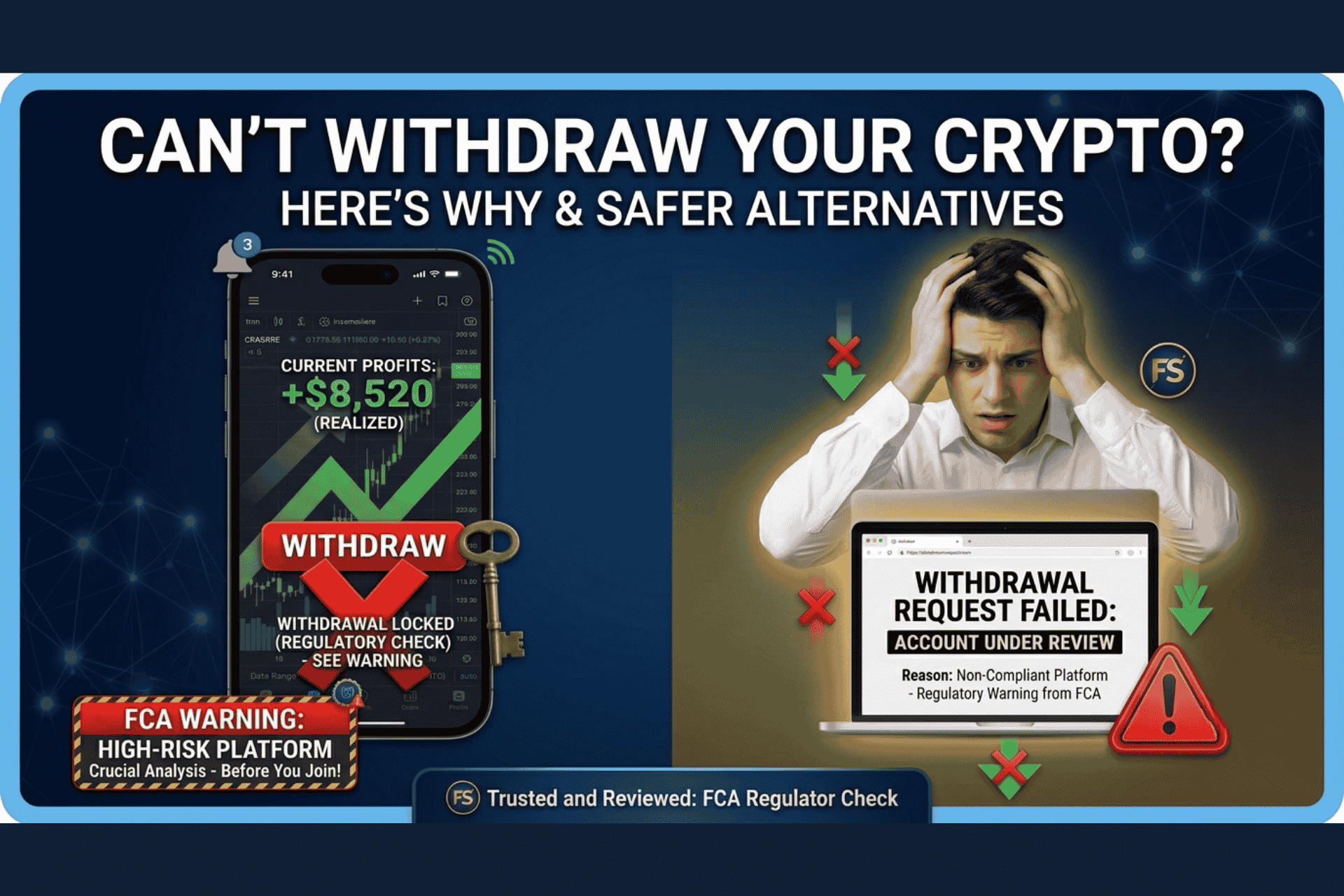
The crypto withdrawal fees scam is one of the most devastating financial traps of 2026. You invest money in a platform that looks legitimate. You see impressive profits on the dashboard. You feel excited. Then you try to withdraw your money. That is when the crypto withdrawal fees scam kicks into high gear. The platform asks for a “withdrawal fee.” You pay it. Then they ask for a “tax fee.” You pay that too. Then a “compliance fee.” Then a “gas fee.” The requests keep coming. Your money never arrives. This guide will help you spot the crypto withdrawal fees scam and protect your hard-earned money.
If this sounds familiar, you are not alone.
The Better Business Bureau has received over 4,000 reports of crypto investment scams since 2020. Americans lost more than $9 billion to cryptocurrency scams in 2024 alone. These schemes are becoming more sophisticated and harder to detect.
This guide will show you exactly how the crypto withdrawal fees scam operates, how to spot it, and what to do if you are already trapped. By the end, you will know how to protect yourself and your hard-earned money.
The Anatomy of a Crypto Withdrawal Fees Scam
Understanding how the crypto withdrawal fees scam works is the first step to protecting yourself. The pattern is remarkably consistent across thousands of reported cases.
Table 1: The 6-Step Scam Playbook
| Step | What Happens | Why It Works |
|---|---|---|
| Step 1: The Hook | Scammers approach you on social media (TikTok, Instagram, WhatsApp, Telegram, or even dating apps) with an investment opportunity | Unsolicited messages feel personal and opportunistic |
| Step 2: The Trust Build | They show fake profits, send small “test” payments, and build a relationship over days or weeks | Small wins create false confidence |
| Step 3: The Deposit | You are directed to a professional-looking platform and encouraged to deposit cryptocurrency | The platform looks legitimate with real-time charts |
| Step 4: The Fake Profits | Your dashboard shows impressive, rapid gains | No actual trades occur—the numbers are entirely fabricated |
| Step 5: The Block | You try to withdraw. Suddenly, you are asked to pay a “fee” to release your funds | The request seems reasonable at first |
| Step 6: The Escalation | Each fee you pay leads to another, larger fee. The funds never materialize | The sunk cost fallacy keeps victims paying |
One victim recounted her experience on TikTok: “I was asked by a woman on TikTok if I was interested in investing. I proceeded with a $500 investment through Bitcoin. I was told that after 24 hours, I could withdraw my profit. I had to pay a 30% fee of $2,150. After 24 hours, I received an email that I had to pay a ‘gas fee’ of $4,250. At this point, I knew it was a scam.”
This is a textbook example of the crypto withdrawal fees scam. The scammer demands increasingly large fees to unlock a fictional profit that never existed.

Red Flags of the Crypto Withdrawal Fees Scam
Fake crypto investment platforms follow a predictable pattern. Understanding these signals helps you identify fraud long before any money is lost.
The crypto withdrawal fees scam is designed to look legitimate, but it leaves a trail of warning signs for those who know what to look for. These red flags are not always obvious at first glance. Scammers are skilled at creating an illusion of professionalism and credibility. However, once you know the patterns, the crypto withdrawal fees scam becomes easier to spot.
The most dangerous aspect of the crypto withdrawal fees scam is how it exploits human psychology. Scammers know that once you have invested money, you are emotionally committed. They use this to their advantage. They create urgency. They create fear. They create a sense of excitement that clouds your judgment. Understanding the red flags is your best defense against the crypto withdrawal fees scam.
Below is a comprehensive list of warning signs that almost every crypto withdrawal fee scam shares. If you see even one of these signals, proceed with extreme caution. If you see two or more, the platform is almost certainly a scam.
Table 2: Red Flags of the Crypto Withdrawal Fees Scam
| Red Flag | Why It Is Dangerous | How to Spot It |
|---|---|---|
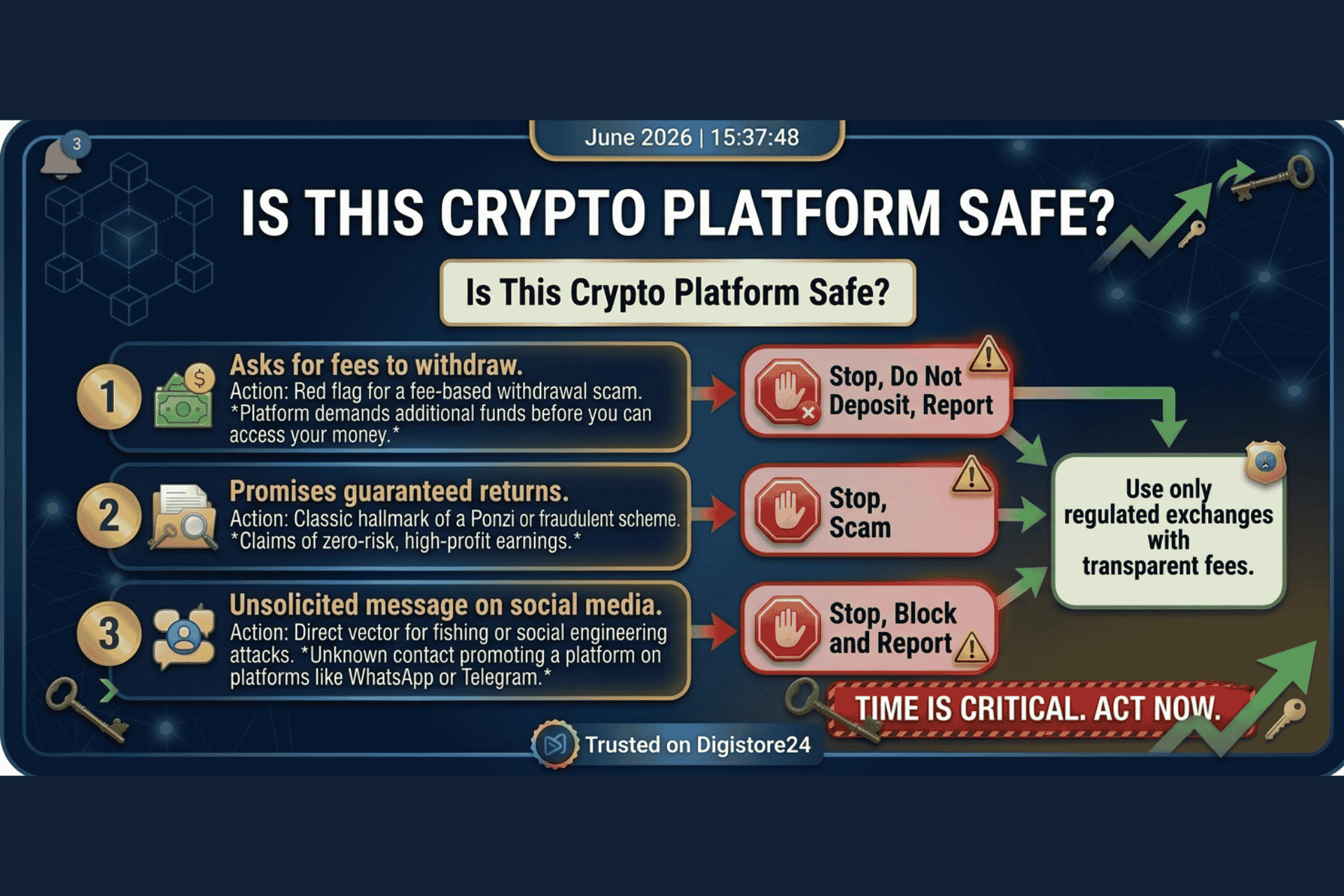
| Promises of Guaranteed Returns | Real investments never offer guarantees. Legitimate yield opportunities are variable and disclosed upfront. | “Double your money in 7 days,” “Risk-free returns,” “Fixed daily profits” |
| Unsolicited Contact on Social Media | Legitimate brokers do not recruit clients through private messages on Instagram, WhatsApp, or dating apps. | DMs from “mentors,” “trading gurus,” or “AI bot programmers” |
| Requests to Move to WhatsApp/Telegram | Scammers use private messaging apps to avoid detection and create urgency. | “Let’s continue this on Telegram,” or “Join our private WhatsApp group.” |
| Fees to Withdraw Your Own Money | Legitimate platforms never require extra payment to release money that is already yours. This is the clearest sign of the crypto withdrawal fees scam. | “Withdrawal fee,” “tax fee,” “compliance fee,” “gas fee,” “VIP upgrade” |
| No Regulatory License | Real brokerages must be registered with official financial authorities (SEC, FCA, ASIC, CySEC). | No license number or a fake license that cannot be verified |
| Recently Created Domain | Most fake trading sites are less than 12 months old. | Check domain age using whois.icann.org |
| Deepfake or Fake Celebrity Endorsements | Scammers use AI-generated videos of famous people to create false credibility. | Celebrity endorsements that seem “too good to be true” |
| Payment Only via Crypto or Wire Transfer | These methods cannot be reversed, making them ideal for scammers. | No credit card or regulated payment options |
| No Physical Office or Unverifiable Address | Real investment companies have traceable offices and corporate records. | The address is partial, incorrect, or an empty lot |
| Pressure to Act Immediately | Scammers use urgency to prevent you from thinking critically. | “Limited spots,” “Flash bonuses,” “Deposit today for higher returns” |
The ASIC Warning
The Australian Securities and Investments Commission (ASIC) has identified specific red flags for scam websites, including:
- Mismatch between the URL and the website content
- Similar URL to an existing legitimate business
- Poor grammar and spelling
- Terms and conditions referencing a different company name
- References to an ASIC license that is actually an Australian Company Number
Always verify a platform’s license on the regulator’s official website.
Also, Read More about How to Spot a Fake Crypto Exchange: 8 Red Flags to Save Your Funds in 2026
Trapped in a Crypto Withdrawal Fees Scam? Here Is What to Do

If you are reading this section, you may already be trapped in the crypto withdrawal fees scam. Take a deep breath. You are not alone. Thousands of people fall victim to this scheme every single year. The most important thing you can do right now is to stop sending money. No matter how convincing the request, no matter how urgent the demand, do not pay another cent.
The crypto withdrawal fees scam operates on a simple principle. Once you pay one fee, they ask for another. Then another. Then another. Each fee is presented as the “final” one. Each fee comes with a promise that your money will be released immediately after payment. But the money never comes. The fees never stop. The only way to break the cycle is to stop participating in it.
Being trapped in the crypto withdrawal fees scam can feel overwhelming. You may feel embarrassed. You may feel angry. You may feel desperate to recover your money. These feelings are natural. Scammers deliberately create these emotions to keep you in a state of panic. When you are panicked, you do not think clearly. You make decisions based on fear, not logic. Recognizing this is the first step toward breaking free.
Table 3: Step-by-Step Recovery Plan
| Step | Action | Why It Matters |
|---|---|---|
| Step 1: Stop Sending Money | Do not pay any more fees. No matter how convincing the request, it will only lead to another request. | Paying one fee leads to another, often a larger one. This never ends. |
| Step 2: Gather Evidence | Save screenshots of messages, transaction IDs, wallet addresses, and links. | Law enforcement needs this information to investigate |
| Step 3: Report the Scam | File a report with the FBI IC3 (ic3.gov) and FTC (reportfraud.ftc.gov). | Reporting helps authorities track scammers and prevent others from falling victim |
| Step 4: Beware “Recovery” Scams | Do not hire companies that promise to recover stolen funds for a fee. | These are often the same scammers or other fraudsters looking to exploit you again |
| Step 5: Notify Your Exchange | If you transferred funds from a legitimate exchange, notify their support team. | They may be able to flag the wallet address or provide guidance |
A critical warning from Kraken:
“Crypto transfers are almost always irreversible. Once funds leave your Kraken account and are transferred to wallets controlled by scammers, recovery is often difficult and, in many cases, not possible. Kraken cannot recover funds once they have been transferred to external wallets controlled by third parties.”
This means that once you have sent your cryptocurrency to the scammer’s wallet, the money is almost certainly gone forever. This is a difficult reality to accept, but it is essential to understand so you do not fall for “recovery” scams that promise to get your money back for a fee.
Why Recovery Scams Target Victims of the Crypto Withdrawal Fees Scam
The crypto withdrawal fees scam does not end when you stop paying fees. In fact, scammers have created an entire secondary industry designed to exploit victims a second time. These are called “recovery scams.” You will receive emails, messages, or phone calls from people claiming to be law enforcement, cybersecurity experts, or “ethical hackers” who can recover your stolen funds for a fee.
They will ask for an upfront payment to cover “investigation costs” or “legal fees.” They may even show you fake evidence of progress. This is another trap. The crypto withdrawal fees scam has evolved to include this second layer of deception. Do not fall for it.
Legitimate law enforcement agencies do not charge fees to investigate crimes. Legitimate cybersecurity firms do not cold-call victims of scams. If someone contacts you offering to recover your money for a fee, they are almost certainly running a recovery scam.
Real-World Example of the Crypto Withdrawal Fees Scam
One victim recounted her experience on TikTok: “I was asked by a woman on TikTok if I was interested in investing. I proceeded with a $500 investment through Bitcoin. I was told that after 24 hours, I could withdraw my profit. I had to pay a 30% fee of $2,150. After 24 hours, I received an email that I had to pay a ‘gas fee’ of $4,250. At this point, I knew it was a scam.”
This is a textbook example of the crypto withdrawal fees scam. The scammer demanded increasingly large fees to unlock a fictional profit that never existed. The victim’s $500 was gone forever. The “profits” on the dashboard were completely fabricated. There was never any real investment made. The platform was created solely to extract money from unsuspecting victims.
What to Do Immediately After Being Trapped in the Crypto Withdrawal Fees Scam
If you have just realized you are trapped in the crypto withdrawal fees scam, follow these urgent steps:
- Stop all communication with the scammers. Do not respond to their messages. Do not engage in further negotiation. Scammers are skilled at manipulation. The only winning move is to stop playing their game.
- Document everything. Take screenshots of every message, every transaction, every email. Record dates, times, and amounts. This evidence is critical for law enforcement.
- Report the scam to the appropriate authorities. File a report with the FBI IC3 at ic3.gov and the FTC at reportfraud. ftc.gov. These agencies track patterns of fraud and use victim reports to shut down scam operations.
- Notify your exchange. If you transferred funds from a legitimate exchange (like Coinbase or Kraken), contact their support team. Provide them with the transaction IDs and wallet addresses involved. They may not be able to recover your funds, but they can flag the scammer’s wallet and potentially prevent future victims from sending money to the same address.
- Accept the loss. This is the most difficult step. You may need to accept that your money is gone. The crypto withdrawal fees scam is designed to be irreversible. Accepting this reality frees you from the emotional grip of the scam and prevents you from making further financial mistakes.
- Protect your identity. Scammers often collect personal information during the scam. Monitor your credit reports and bank accounts for suspicious activity.
- Share your story. Warning others about the crypto withdrawal fees scam is one of the most powerful things you can do. Share your experience on social media, forums, and review sites. Your story may prevent someone else from falling victim to the same scam.
The Sunk Cost Fallacy in the Crypto Withdrawal Fees Scam
The crypto withdrawal fees scam exploits a psychological bias called the “sunk cost fallacy.” This is the tendency to continue investing in something because of what you have already invested, even when it no longer makes sense.
In the context of the scam, you have already deposited $500. You think, “I cannot lose that $500. I need to pay this fee to get it back.” So you pay $2,150. Then you think, “I cannot lose the $2,150. I need to pay this next fee to get it all back. “So you pay $4,250. This is exactly how the crypto withdrawal fees scam works. Each payment becomes the reason to make the next payment. The only way to escape is to recognize the trap and stop playing.
Remember: Your money is almost certainly gone. Stop paying fees. Report the scam. Warn others. And move forward.
How to Avoid the Crypto Withdrawal Fees Scam
The best way to avoid the crypto withdrawal fees scam is to use only verified, legitimate platforms. Here is how to choose safely.
Table 4: How to Verify a Crypto Platform
| Verification Step | How to Do It | What to Look For |
|---|---|---|
| Check Regulatory Registration | Search for the platform on official financial authority websites (SEC, FCA, ASIC, CySEC) | The license number should match the platform’s name |
| Research the Domain | Check domain age using whois.icann.org or similar tools | Legitimate platforms are not recently created (under 12 months) |
| Read Real Reviews | Search “[platform name] scam” or “[platform name] review” on Reddit, Trustpilot, and forums | Look for patterns of blocked withdrawals or fake fees |
| Test Customer Support | Contact support with basic questions before depositing money | Responsive, professional support is a good sign |
| Check the address. | Verify the platform has a real, verifiable physical address | Not just a state or suburb—a full street address |
| Examine the Terms | Read the terms and conditions carefully | Terms should reference the correct company name |
| Look for HTTPS | Ensure the website uses HTTPS encryption | Look for the padlock icon in the browser |
Recommended Legitimate Exchanges
Here are some well-established, regulated cryptocurrency exchanges you can trust:
| Exchange | Regulation | Best For |
|---|---|---|
| Coinbase | FCA, FinCEN, SEC (registered) | Beginners, US users |
| Kraken | FCA, FinCEN, SEC (registered) | Secure trading, US users |
| KuCoin | Global presence | Derivatives traders, global audience |
| Bybit | Global presence | Derivatives traders |
Always verify the regulatory status of any platform independently before depositing funds.
How to Protect Yourself from the Crypto Withdrawal Fees Scam
Once you have safely withdrawn your funds (or learned from a bad experience), follow these best practices to avoid the crypto withdrawal fees scam in the future.
Table 5: Crypto Safety Best Practices
| Practice | Why It Matters | How to Implement |
|---|---|---|
| Use self-custody wallets. | Keep your crypto in a wallet where you control the private keys | Hardware wallets like Ledger or Trezor are the safest. |
| Enable Two-Factor Authentication (2FA) | Adds an extra layer of security to your accounts | Use an authenticator app like Google Authenticator, not SMS |
| Verify Before Transferring | Always double-check wallet addresses before sending crypto | Copy and paste, then verify the first and last 4 characters |
| Start Small | Test with a small amount before committing larger sums | If you cannot withdraw $50, you will not be able to withdraw $5,000 |
| Keep Software Updated | Protect against malware and hacking | Update your wallet, antivirus, and operating system regularly |
| Cool-Off Before Transfers | Even a 24-hour pause breaks the urgency of scams | Get a second opinion from someone you trust |
The 24-Hour Rule:
Kraken advises, “Cool off and pause before making another transfer. Even a 24-hour pause breaks the spell of urgency that these scams rely on.”
FAQ: Crypto Withdrawal Fees Scam Questions Answered
What is the crypto withdrawal fees scam?
The crypto withdrawal fees scam is a type of advance fee fraud. Scammers build trust, show fake profits on a fabricated dashboard, then demand increasingly large fees to “unlock” withdrawals. The fees escalate—$500, then $2,000, then $5,000—and the money never comes.
Can I get my money back from the crypto withdrawal fees scam?
Once you have transferred cryptocurrency to a scammer’s wallet, recovery is very difficult. Crypto transfers are almost always irreversible. Report the scam to law enforcement immediately, but be realistic about recovery chances.
What are the red flags of the crypto withdrawal fees scam?
Key red flags include promises of guaranteed returns, unsolicited DMs, pressure to move to WhatsApp/Telegram, requests for fees to withdraw, no regulatory license, a recently created domain, and deepfake endorsements.
Is it a scam if a platform asks for fees to withdraw?
Yes. Legitimate platforms never require extra payment to release money that is already yours. This is the most common and clearest red flag of the crypto withdrawal fees scam.
How can I verify if a crypto platform is legitimate?
Check regulatory registration on official government websites (SEC, FCA, ASIC), research the domain age, read reviews from independent sources, test customer support, and verify the physical address.
What should I do if I have already sent money?
Stop sending money immediately. Gather all evidence (screenshots, transaction IDs, messages). Report to the FBI, IC3, and FTC. Do not pay any more fees. Beware of “recovery” scams that promise to get your money back for a fee.
Why do scammers use WhatsApp or Telegram?
Scammers use private messaging apps to avoid detection, create urgency, and isolate victims from friends and family who might warn them. Legitimate platforms do not move conversations to these apps.
Are Bitcoin ATMs safe?
Scammers often direct victims to Bitcoin ATMs to convert cash into cryptocurrency. Demand from a legitimate organization to pay via a Bitcoin ATM is a red flag. Americans lost more than $333 million to Bitcoin ATM scams in 2025 alone.
How much money do I need to start investing in cryptocurrency safely?
You can start with as little as $10 on most regulated exchanges. However, you should never invest more than you can afford to lose. Start small and test withdrawal processes before committing larger sums.
What is the best way to spot the crypto withdrawal fees scam early?
The best way is to test a withdrawal of a very small amount (e.g., $10) within the first week of investing. If the platform charges a fee to withdraw your own money, you have found the crypto withdrawal fees scam. Stop depositing immediately.
Can I report the crypto withdrawal fees scam if I didn’t lose money?
Yes. Even if you did not lose money, you should report suspicious platforms to the FBI IC3, and FTC. Your report helps authorities track patterns and shut down scam operations before others lose their savings.
How do scammers make the platforms look so legitimate?
Scammers often use templates from real trading platforms, steal logos from legitimate companies, and pay for fake reviews. They also use deepfake videos of celebrities or “trading gurus” to create false credibility. Always verify independently.
Final Verdict: Trust Your Instincts
After all of this research into the crypto withdrawal fees scam, here is the most important thing to remember:
If it feels like a scam, it probably is.
Scammers are experts at making you feel afraid, excited, and pressured. They know exactly what to say to keep you sending money. The moment you feel any of these emotions, stop. Take a breath. Get a second opinion from someone you trust.
Table 6: The Golden Rules of Crypto Safety
| Rule | Why It Matters |
|---|---|
| Never pay fees to withdraw your own money | This is the clearest sign of the crypto withdrawal fees scam |
| If it sounds too good to be true, it is | Guaranteed returns do not exist in legitimate investing |
| Always verify before depositing | Check regulation, domain age, and reviews |
| Use only regulated exchanges | Stick to platforms with verifiable licenses |
| Get a second opinion | Scammers thrive in secrecy |
| Store your crypto in a self-custody wallet | You control the private keys |
| Never invest what you cannot afford to lose | Crypto is volatile and risky |
My Personal Recommendation
If you are unsure about a platform, follow these three steps to avoid the crypto withdrawal fees scam:
Step 1: Stop and pause. Do not send another dollar.
Step 2: Verify the platform independently. Search the name with “scam” and “review.” Check regulatory registration on official government websites.
Step 3: Get a second opinion. Show the messages to someone you trust. If they feel uneasy, walk away.
Remember: legitimate investment platforms never need to pressure you, never guarantee returns, and never demand fees to release your money. Anyone who does these things is not an investment advisor. They are running the crypto withdrawal fees scam.
Action Steps: Your Crypto Safety Audit
Before you deposit any money into a crypto platform, do this:
- Check the domain age. Use whois.icann.org. If it is less than 12 months old, be suspicious.
- Verify the regulatory license. Search for the platform on the official regulator’s website (SEC, FCA, ASIC). Do not trust the logo on their site.
- Read independent reviews. Search “[platform name] scam” and “[platform name] review” on Reddit, Trustpilot, and ScamAdviser.
- Test a small withdrawal. Deposit a tiny amount (e.g., $10). Wait 24 hours. Try to withdraw it. If you cannot, the platform is running a crypto withdrawal fee scam.
- Get a second opinion. Share the opportunity with someone you trust. If they are skeptical, trust their instinct.
- Report suspicious platforms. Even if you did not lose money, report the platform to the FBI IC3 and FTC. Your report can prevent others from being scammed.
Ready to start your crypto journey safely? Get started with a regulated exchange like Coinbase → and avoid the crypto withdrawal fees scam from day one.
Sources & Last Updated
This crypto withdrawal fees scam guide was fact-checked on June 26, 2026, using:
- Better Business Bureau: Cryptocurrency Money-Flipping Scams on TikTok
- Klever.io: Fake Investment Platforms: Red Flags and Checklist
- Kraken Blog: Crypto Investment Scams: How to Protect Yourself
- Scamwatch (Australian Government): Fake Crypto Trading Platforms Alert
- ASIC: Website Takedown Capability and Red Flags
- OSL Digital Securities: How to Spot a Fake Crypto Investment Platform
- Morgan Stanley: Crypto Scams to Watch Out For
- Forensic Logic Inc: Fxcryptotradings.net Scam Report
- CoinMarketCap: U.S. Regulators Shut Down $14M Crypto Scam
- KuCoin: Telegram Impersonation Scams Warning
- Bitdefender: Instagram Crypto Scams Guide
Found this guide helpful? Share it with someone who is considering a crypto investment. You could save them from losing their hard-earned money to the crypto withdrawal fees scam.
Disclaimer: I may earn a commission if you sign up through links in this post. This does not affect my recommendations. Cryptocurrency is volatile. Past performance does not guarantee future returns. Never invest more than you can afford to lose. Always verify a platform’s regulation before depositing funds. If you have been scammed, report it to the FBI IC3 at ic3.gov and the FTC at reportfraud.gov. ftc.gov.