

Introduction: The Reality of Living Paycheck-to-Paycheck
If you’re living paycheck-to-paycheck, barely making it from one pay period to the next without running out of money, you’re not alone. A staggering 70% of Americans live paycheck-to-paycheck, according to a recent survey. For millions of people, that rhythm has defined everyday life and shaped their financial reality.
But here’s the truth: you can learn how to break the paycheck-to-paycheck cycle. This comprehensive guide is designed specifically to show you how to break the paycheck-to-paycheck cycle once and for all. Whether you’re earning $40,000 or $100,000, these strategies will help you take control of your money and build lasting financial security.
Living paycheck-to-paycheck means relying solely on your salary to cover basic costs such as rent, bills, and groceries, with little to no room for saving or unexpected expenses. This financial instability can lead to a constant cycle of stress and anxiety as individuals struggle to make ends meet and worry about what might happen if they encounter a financial emergency.
The good news is that you can break this cycle. This guide provides a practical, step-by-step plan to help you how to break the paycheck-to-paycheck cycle and build a more secure financial future. Whether you’re earning $40,000 or $100,000, these strategies will help you take control of your money.
Step 1: Track Every Dollar—Know Where Your Money Goes.
The first step to breaking the paycheck-to-paycheck cycle is to get a clear, specific picture of where your money is going. You cannot fix what you do not measure. This is the foundation of learning how to break the paycheck-to-paycheck cycle.
How to Track Your Spending
Start by tracking your expenses for the previous month to get an idea of your current spending habits. Going forward, track your expenses as part of a weekly or monthly routine.
Sort your expenses into categories such as
- Essential spending: Housing, utilities, groceries, transportation, insurance
- Nonessential spending: Dining out, subscriptions, entertainment, shopping
Tools to Help You Track
You can track your expenses with:
- Pen and paper
- A spreadsheet
- Money-tracking apps like YNAB or Goodbudget
Some apps link to your bank account, so your expenses are tracked automatically. On the other hand, manually recording your spending can help you stay actively aware of your cash flow.
“The knowledge you’ll get when you take time to enter a transaction may even help you think twice about an unnecessary purchase.”
Step 2: Create a Budget That Works for You.
Tracking your expenses alone won’t necessarily stop the cycle. You now need to make a budget aimed at reducing expenses and getting your finances under better control. This is a critical step in how to break the paycheck-to-paycheck cycle.
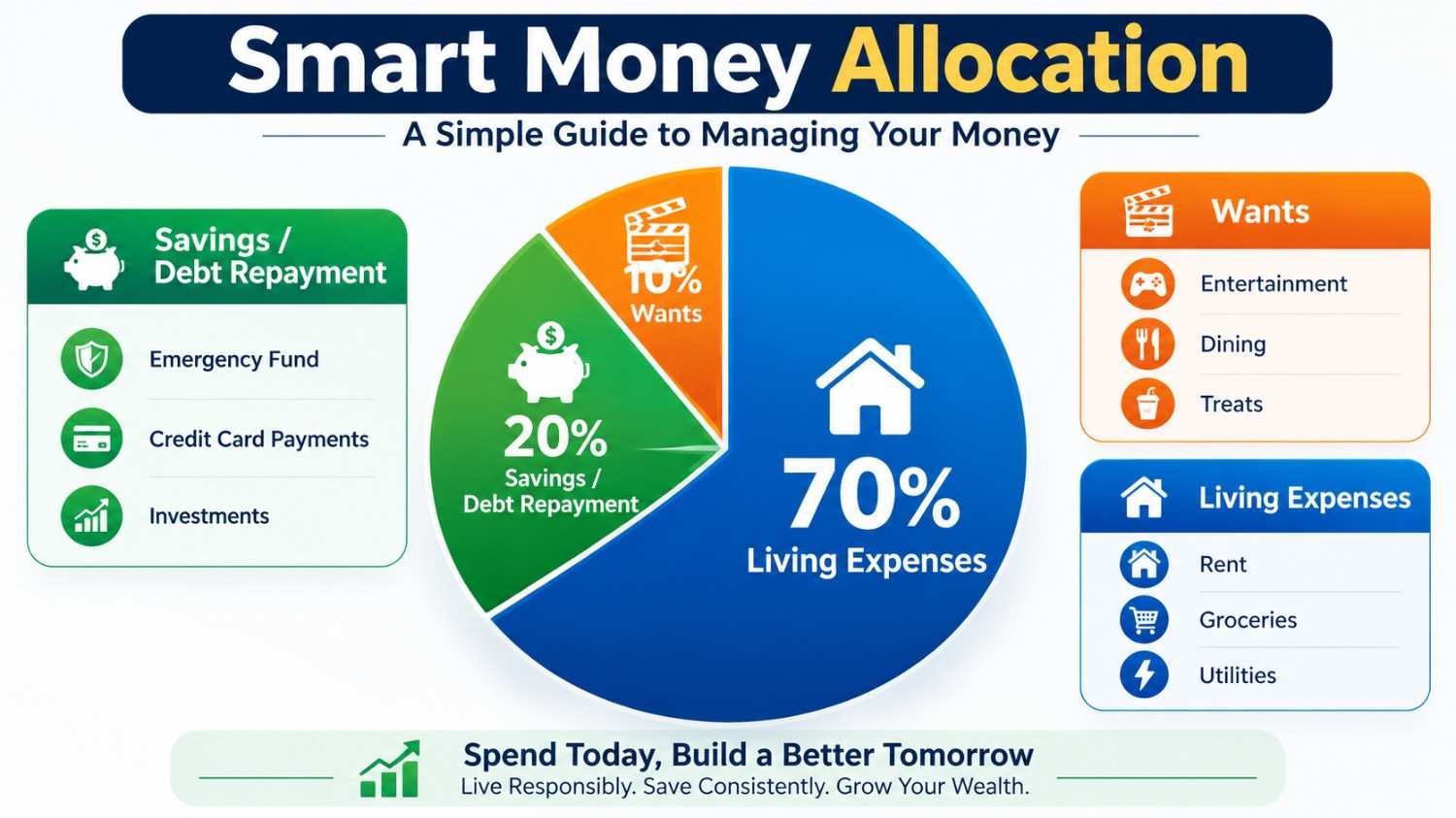
The 70-20-10 Rule for Simple Budgeting
When money’s tight, a detailed spreadsheet budget can feel overwhelming. Instead, try a simple spending plan like the 70-20-10 rule:
| Category | Percentage | Purpose |
|---|---|---|
| Living Expenses | 70% | Rent, groceries, utilities, bills |
| Savings/Debt Repayment | 20% | Emergency fund, credit card debt, investments |
| Flexible/Wants | 10% | Entertainment, dining out, personal treats |
If your essential expenses take up more than 70% of your income, that’s okay—the percentages can be adjusted based on your situation. Some households may need to dedicate 90% or more of their income to necessities during periods of high inflation.
Alternative: Zero-Based Budgeting
With a zero-based budget, every dollar you receive is allocated to a specific purpose, so there’s no room left for overspending. When you subtract your expenses from your income for a given month, the difference is zero.
Flexibility is key. If you overspend on a new pair of shoes, make up the difference by reducing spending in another discretionary category, like dining out.
Step 3: Cut Costs Where Inflation Hurts Most.
Now that you’ve started tracking your expenses and created a budget, look at your spending with a fresh eye to find opportunities to cut back. Inflation does not affect all expenses equally. Food prices may rise faster than transportation costs.
Areas Where You Can Cut Costs
Monthly Bills:
- Lower your energy bill by using fewer lights or appliances less often
- Downgrade your phone plan
- Shop around for better home- or auto-insurance rates
Subscriptions:
- Cancel streaming services, news subscriptions, or monthly subscription boxes you don’t truly use
- Audit your “small” recurring expenses
Food:
- Cook at home instead of dining out
- Use coupons and cook meals with low-cost ingredients
- Create a meal plan that takes advantage of leftovers
Shopping:
- Wear what you already have
- Stick to a limited clothing budget
- Shop secondhand
Turn Unused Items into Cash
Do you have unused items lying around your home? Selling unwanted items through online marketplaces can be one way to bring in extra money. You might be surprised at what people are willing to pay for things you no longer need.
Step 4: Automate Your Savings-Pay Yourself First.
Not only should you budget for savings, but you should treat saving as a high-priority expense. If you wait to set aside money for savings after you’ve covered expenses, you may find there’s nothing left. This is one of the most powerful ways to break the paycheck-to-paycheck cycle.
The “Pay Yourself First” Strategy
Instead of waiting to save what’s left, automatically funnel a portion of each paycheck directly into a savings account. Then, build the rest of your budget around what’s left.
Small Transfers Add Up
Even small automatic transfers can add up faster when your money earns meaningful interest. As of mid-2026, some online bank accounts offer interest rates of up to 4% APY, while the national average for traditional savings accounts is closer to 0.61%.
| Savings Account Type | Interest Rate (APY) |
|---|---|
| High-Yield Savings Account | Up to 4% |
| Traditional Savings Account | ~0.61% |
For example, $100 in a savings account with a 4% APY would grow to about $104 after one year, while the same amount in a traditional savings account earning 0.61% APY would grow to about $100.61.
Step 5: Build Your Emergency Fund.
If you’re currently just barely covering all your expenses each month, saving for the future may feel unrealistic. But creating an emergency fund should be a priority for you if you’re living paycheck to paycheck. This is a crucial part of how to break the paycheck-to-paycheck cycle.
Why an Emergency Fund Matters
When you have an emergency fund, you’re less likely to rely on credit cards in a pinch, thus avoiding racking up debt you can’t afford to pay back. Without a safety net, one unexpected expense can push you deeper into a cycle of debt.
How Much to Save
Experts recommend an emergency fund large enough to cover three to six months of expenses. But focus on saving a little each paycheck. Aim for an attainable amount to start, like $500 or $1,000, and you can go up from there.
Step 6: Manage Debt Strategically
We need to manage debt before it manages us. Inflation and high interest rates are an unforgiving combination. Rising prices squeeze household budgets while rising borrowing costs make debt even more expensive.
The STOMP Method
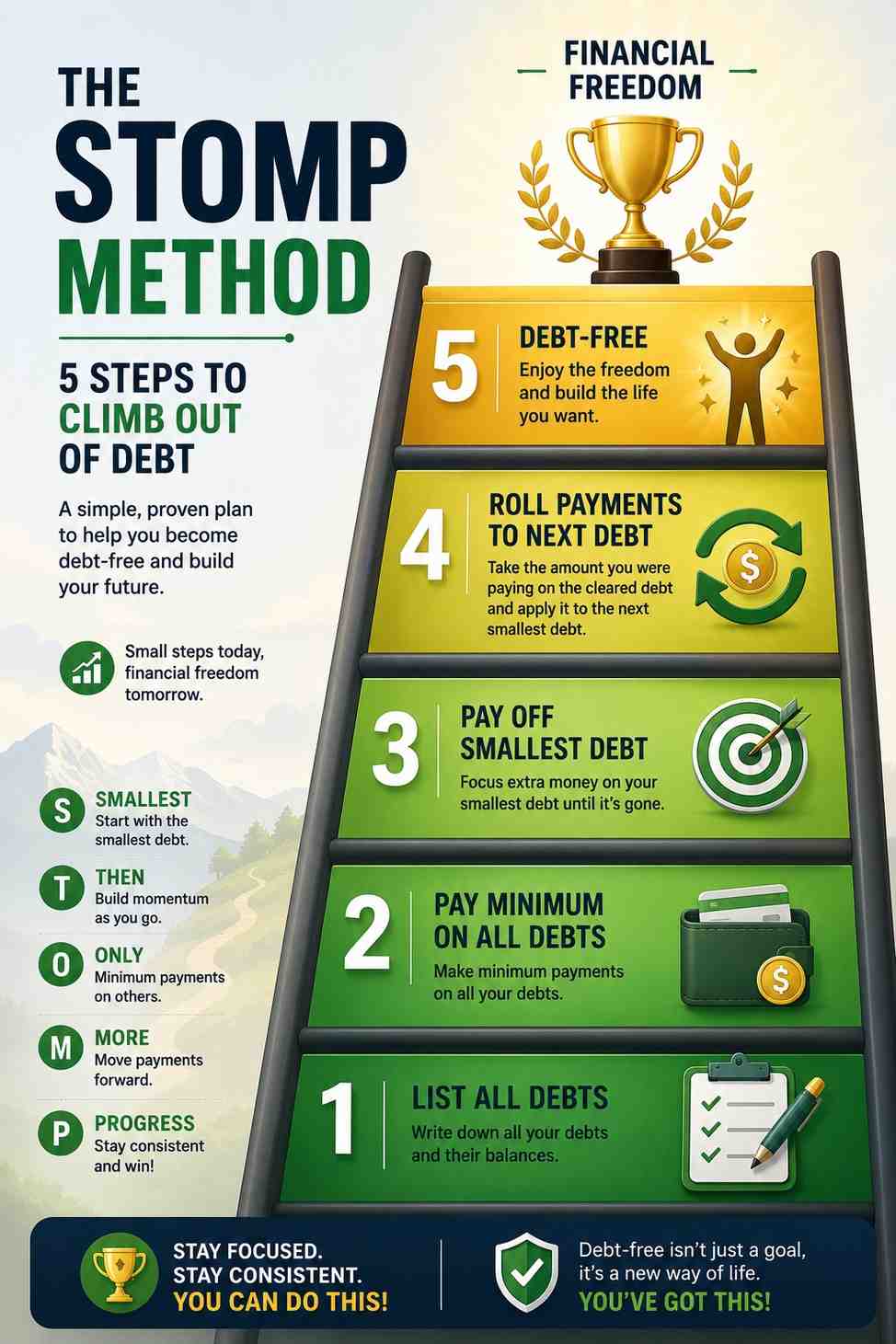
If you have multiple debts, the STOMP method (Stick To One Minimum Payment) can help:
- Identify the minimum payment required on each debt
- Commit to sticking to those amounts
- As individual debts are paid off, redirect that excess cash toward accelerating the repayment of the remaining debt with the highest interest rate
- Try not to incur new debt
Good Debt vs. Bad Debt
Not all debt is bad:
- Good Debt: Housing loans, business loans, education loans
- Bad Debt: Revolving credit card balances, high-interest consumer debt
Focus on eliminating bad debt while maintaining good debt: The easiest way to avoid paycheck-to-paycheck.
Step 7: Explore Earned Wage Access as a Tool.
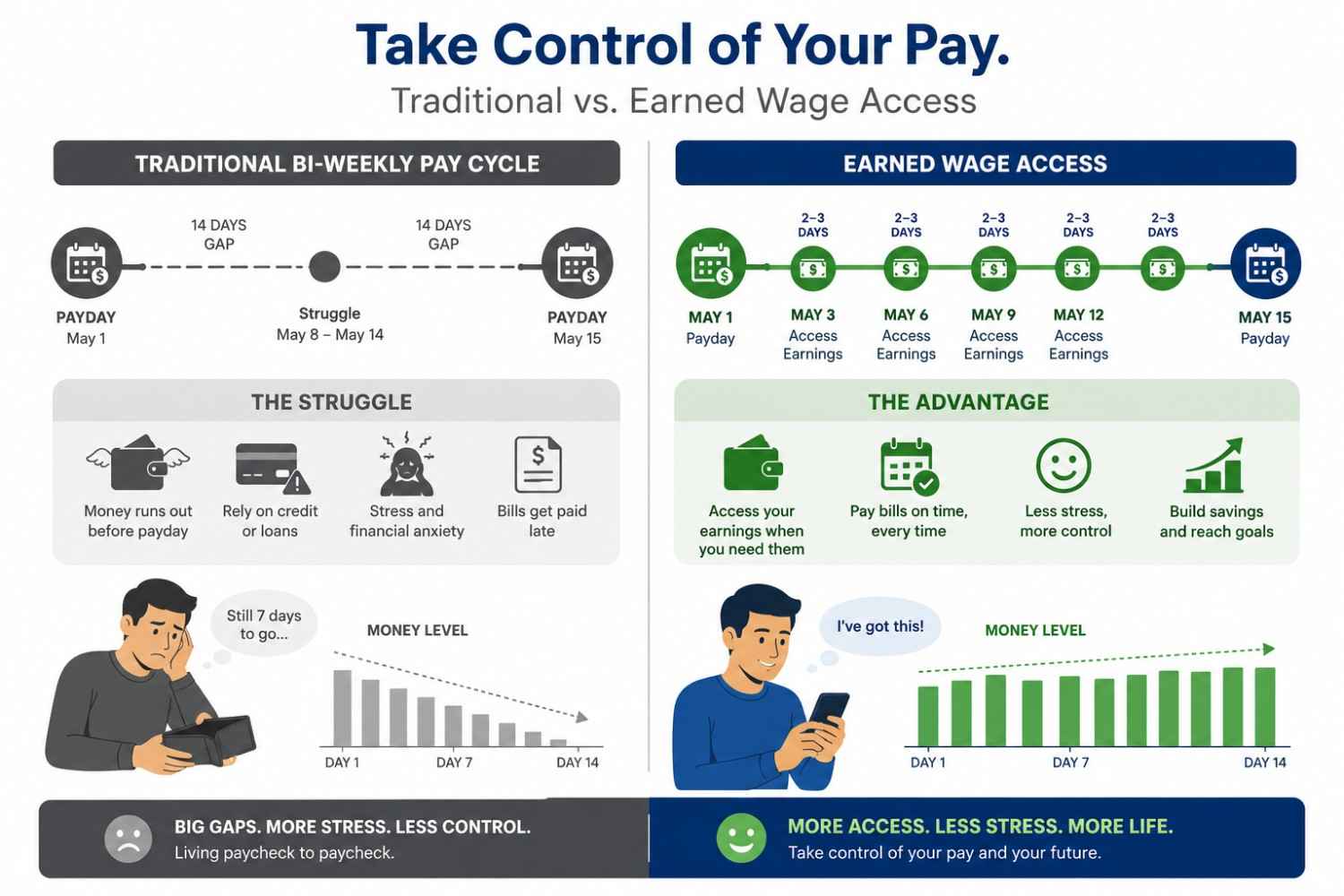
A new generation of financial technology is giving workers something they’ve historically lacked: on-demand access to a portion of the wages they’ve already earned.
What Is Earned Wage Access?
Instead of waiting for a fixed payday, workers can access a portion of wages they’ve already accrued, giving them the flexibility to meet urgent needs without turning to costly alternatives like payday loans. This tool can be part of how to break the paycheck-to-paycheck cycle.
Who Benefits from EWA?
Financial strain comes in a lot of different shapes and sizes. Needing flexibility is not a measure of income; it’s a measure of lived experience. EWA is adopted across every demographic:
- Full-time employees
- Salaried workers earning above six figures
- Freelancers, gig workers, and shift teams
- Parents managing household unpredictability
- Workers facing unexpected life events
A Note of Caution
While EWA can be a helpful tool for managing cash flow between paychecks, it is not a long-term solution for breaking the paycheck-to-paycheck cycle. It should be seen as a bridge, not a permanent crutch.
Step 8: Protect Your Money from Inflation.
Inflation chips away at your purchasing power and adds pressure to every financial decision. Here’s how to protect your finances as you learn how to break the paycheck-to-paycheck cycle.
1. Focus on the Bare Necessities.
During periods of high inflation, prioritize essential spending and trim or eliminate the rest:
- Needs: Food, shelter, utilities
- Nice-to-haves: A car, but not necessarily a brand-new Cadillac
- Wants: New TVs, vacations, jewelry
2. Be Strategic with Your Investments
Don’t let fear keep you from investing. There are plenty of companies with pricing power that can deliver strong returns, even in a high-inflation environment.
For those with lower risk tolerance, consider CDs, bonds, and other guaranteed investments that can beat or at least keep up with inflation.
3. Don’t Panic—Think Long-Term
The market always goes up in the long run. Despite pandemics, recessions, and inflation, the market has always recovered. Resist emotional decision-making and let knowledge guide your decisions.

Step 9: Seek Support and Stay Accountable.
If you’re feeling anxious about money, you’re not alone: 60% of Americans report feeling stressed about money, citing insufficient income, debt, and budgeting challenges.
Talk to Others
- Trusted loved ones: Sharing your concerns can help you feel more at ease
- Credit counselors: Some consumers may qualify for free or low-cost financial assistance and debt counseling
Community Resources
If your budget doesn’t stretch far enough to cover necessities, local, state, or federal assistance programs may help with essentials like food, utilities, healthcare, childcare, or housing. Since eligibility requirements change regularly, check even if you didn’t qualify before.
Common Mistakes to Avoid
Based on expert insights, here are the most common mistakes people make when trying to break the paycheck-to-paycheck cycle:
1. Not Tracking Spending
The Mistake: Spending without tracking, then wondering at month-end where it all went.
The Fix: Track your expenses for at least one month. A budget only works if you follow it.
2. Lifestyle Inflation
The Mistake: Upgrading your lifestyle every time your income increases.
The Fix: Before increasing your standard of living, ask whether the additional spending will create lasting happiness or merely temporary satisfaction.
3. Ignoring “Small” Recurring Bills
The Mistake: Overlooking subscriptions and small recurring expenses.
The Fix: Audit all your subscriptions and small bills. Often, these “small” expenses can really eat into your budget when combined.
4. Not Adjusting Tax Withholding
The Mistake: Overpaying taxes throughout the year to get a big refund.
The Fix: Updating your Form W-4 means you’ll have more money in your paychecks throughout the year, which can make a big difference if you’re living paycheck-to-paycheck.
Your 30-Day Action Plan.
Here’s a practical step-by-step plan to start breaking the cycle of living paycheck-to-paycheck:
Week 1: Awareness
- □ Track every expense for one week
- □ Categorize expenses as “needs” and “wants.”
- □ Review your last month’s bank statement
Week 2: Budget Creation
- □ Create a budget using the 70-20-10 rule or zero-based budgeting
- □ Set up a savings account if you don’t have one
- □ Audit subscriptions and cancel unused ones
Week 3: Taking Action
- □ Set up automatic transfer of 10% of income to savings
- □ Identify one area to cut spending (food, subscriptions, etc.)
- □ Start an emergency fund with a $500 goal
Week 4: Looking Ahead
- □ Review tax withholding (use a W-4 calculator)
- □ Research earned wage access options if needed
- □ Set a SMART financial goal for the next 6 months
📌 Q&A: Your Paycheck-to-Paycheck Questions Answered
Q1: What does it actually mean to live paycheck-to-paycheck?
A: Living paycheck-to-paycheck means that your income is almost entirely consumed by essential expenses, leaving little to no room for savings. It’s a cycle where you’re constantly waiting for your next paycheck to cover bills, and any unexpected expense can cause significant financial stress. It’s important to note that this isn’t always about low income; a lack of financial cushion and awareness is often the primary driver. Even high earners with high fixed costs can fall into this pattern.
Q2: I feel like I should have enough money, but it’s always gone by the end of the month. Why?
A: The most common reason for living paycheck-to-paycheck is a lack of clarity on where your money is actually going. Without tracking your spending, small, frequent purchases can silently drain your account. You might be underestimating the total cost of things like daily coffee, dining out, or monthly subscriptions. The gap between perceived spending and actual spending is often the culprit.
Q3: Is living paycheck-to-paycheck always a sign of financial failure?
A: Absolutely not. It is a very common situation that often stems from systemic issues like the cost of living outpacing wage growth, not personal irresponsibility. Financial wellness in this context is about building stability—meeting your essential obligations consistently—not about having a large savings account. Self-compassion is a crucial first step to breaking the cycle.
Q4: Where is the best place to start if I want to break the cycle?
A: The first and most critical step is to track every dollar you spend for at least a month. You can use a simple spreadsheet, a notebook, or a budgeting app. This gives you a clear, non-judgmental picture of your cash flow and reveals the specific areas where your money is going .
Q5: What is the 70-20-10 rule, and can it help me?
A: The 70-20-10 rule is a simple budgeting framework. It suggests allocating 70% of your income to living expenses (rent, utilities, groceries), 20% to living expenses Repayment, and 10% to wants (entertainment, dining out). It’s a great starting point for people who find traditional budgets too restrictive and can be adjusted to fit your personal situation.
Q6: How do I start building an emergency fund when I have no money left over?
A: Start with a very small, attainable goal, like saving $50 or $100. You can do this by making small cuts, like reducing dining out or canceling an unused subscription, and automating a transfer of that saved amount to a savings account on payday. The key is to build a small buffer—even $100—which can prevent you from relying on expensive credit cards for minor emergencies.
Q7: I have credit card debt. Should I focus on paying that off before saving?
A: It’s a balancing act. While paying down high-interest debt is crucial, it is equally important to create a small emergency buffer. Without a buffer, you’ll likely use your credit card again for the next unexpected expense, creating a cycle. Aim to save a small emergency fund while making consistent, extra payments on your highest-interest debt.
Q8: What is the “pay yourself first” strategy mentioned in the article?
A: This strategy means treating your savings like a non-negotiable bill. As soon as you get paid, you automatically transfer a predetermined amount (even a small one) to a savings account. You then build your spending budget around what’s left, ensuring you make progress on your financial goals before you have a chance to spend the money on other things.
Q9: How can I cut costs without feeling like I’m depriving myself?
A: Focus on “smart cuts” rather than total deprivation. Audit your subscriptions and cancel any you don’t use. Look for ways to reduce fixed bills like insurance or phone plans. Instead of eliminating things you enjoy, try finding lower-cost alternatives, like cooking at home more often or using the library for entertainment. Small, consistent changes have a compound effect.
Q10: What if I’ve tried budgeting before and it didn’t work?
A: This is very common. Often, the issue is using a budget that is too rigid and doesn’t fit your life. A budget is meant to be a flexible plan. If you overspend in one category, simply adjust another. The goal is progress, not perfection. Using modern tools like automated tracking apps can also remove the friction of manual entry, making it easier to stick with a plan.
Conclusion: Living paycheck-to-paycheck.
Breaking the paycheck-to-paycheck cycle is not easy, but it is achievable. It requires awareness, discipline, and a willingness to make changes. The journey to financial stability is built choice by choice, paycheck-to-paycheck.
Key Takeaways from This Guide:
- Track every dollar to know where your money goes
- Create a budget that works for your situation
- Cut costs where inflation hurts most
- Automate savings—pay yourself first
- Build an emergency fund to cover unexpected expenses
- Manage debt strategically using the STOMP method
- Consider earned wage access as a short-term cash flow tool
- Protect your money from inflation through smart choices
- Seek support and stay accountable
Remember: Small improvements, repeated consistently, compound over time. Don’t wait for a perfect plan. Start where you are, with what you have. Focus on progress, not perfection.
“A family that tracks expenses more carefully, reduces waste, and gradually pays down debt is already better positioned than it was a year ago.”
Your journey to financial freedom starts now. You now know how to break the paycheck-to-paycheck cycle. Take action today.
Sources
- Standard Bank South Africa. “How to get financially unstuck.” https://www.standardbank.co.za/southafrica/personal/learn/how-to-get-financially-unstuck
- Nasdaq. “3 Ways To Protect Your Money From Inflation, According to an Expert.” https://www.nasdaq.com/articles/3-ways-protect-your-money-inflation-according-expert
- Experian. “How to Break the Paycheck-to-Paycheck Cycle.” https://www.experian.com/blogs/ask-experian/how-to-break-paycheck-to-paycheck-cycle/
- Visa. “Visa Direct Blog | On-demand access to earned wages.” https://corporate.visa.com/en/products/visa-direct/blog/on-demand-access-to-earned-wages.html
- TaxAct Blog. “Living paycheck-to-paycheck? 6 Practical Ways to Handle Inflation.” https://blog.taxact.com/how-to-deal-with-inflation/
- Inquirer.net. “Managing finances during high inflation.” https://business.inquirer.net/599358/managing-finances-during-high-inflation/amp
- PYMNTS.com. “WorkWhile Adds AI Tool to Eliminate Payday Loans.” https://www.pymnts.com/dashboard-post/artificial-intelligence-2/2026/workwhile-deploys-predictive-ai-to-enhance-hourly-workers-financial-planning/






[…] 63% of Americans are living paycheck to paycheck in 2026, according to the CNBC and SurveyMonkey Quarterly Money Survey. Among those: […]
[…] paradox is visible in the conflicting data on paycheck-to-paycheck living. Debt.com’s 2026 Budgeting Survey found that 48% of Americans are living paycheck to […]