

Personal finance management in 2026 has been transformed by technology, yet the fundamentals remain unchanged. Budgeting, saving, debt management, and investing still form the foundation of financial well-being. The difference is that today’s digital tools make managing money easier than ever before.
The personal finance management market is growing at a remarkable 8.3% compound annual growth rate (CAGR), projected to increase from $1.22 billion in 2025 to $1.79 billion by 2030. This surge reflects the growing demand for digital solutions that simplify financial decision-making. With the rise of AI-powered budgeting tools, mobile banking, and digital wallets, taking control of your finances has never been more accessible.
Yet despite these technological advances, many people still struggle with financial basics. According to recent Federal Reserve data, 37% of U.S. adults would struggle to cover a $400 emergency expense. This gap between available tools and financial well-being is what this guide aims to address.
This comprehensive guide will teach you personal finance management in 2026 from the ground up. You will learn:
- How to build a strong financial foundation (emergency funds, savings, retirement accounts)
- How AI-powered tools are transforming personal finance
- The art of budgeting and expense tracking in the digital age
- Practical strategies for reducing debt and building wealth
- The future of finance and how to prepare for it
- Common personal finance mistakes to avoid
By the end, you will understand personal finance management in 2026 well enough to take control of your financial future.

Personal finance management in 2026 — taking control of your financial future
The Personal Finance Revolution
Understanding personal finance management in 2026 starts with recognizing how much has changed in the last decade. The market has evolved from basic spreadsheet tracking to sophisticated AI-powered platforms that provide real-time financial insights.
Key Market Drivers
| Driver | Impact | Example |
|---|---|---|
| AI Integration | Proactive financial management | AI predicts spending patterns and suggests optimizations |
| Mobile-First Design | Financial management on the go | Real-time expense tracking from smartphones |
| Embedded Finance | Financial services integrated into everyday apps | Buy-now-pay-later options at checkout |
| Data Privacy Concerns | Emphasis on security and transparency | Users demand control over their data |
| Digital Wallets | Cashless transactions become the norm | Apple Pay, Google Pay, PayPal, Venmo |
The Shift from Reactive to Proactive Management
Traditional personal finance was reactive—you reviewed your spending at the end of the month, often too late to change anything. Modern personal finance management in 2026 is proactive. AI-powered tools track spending in real time, flag potential issues, and suggest corrective actions before problems arise.
🎯 Real-World Example: An AI-powered budgeting app notices you are spending 30% more on dining out this month than usual. It sends you a notification suggesting you reduce dining out by 20% to stay within your monthly food budget. This is proactive financial management.
Building a Strong Financial Foundation
Before diving into advanced strategies, you need to build a solid financial foundation. These are the non-negotiable building blocks of personal finance management in 2026.
1. The Emergency Fund
An emergency fund is cash set aside for unexpected expenses—car repairs, medical bills, job loss, or other financial emergencies. It is the most important buffer against financial catastrophe.
| Income Stability | Recommended Emergency Fund |
|---|---|
| Stable Job (Salary) | 3-6 months of essential expenses |
| Variable Income (Freelance/Sales) | 6-12 months of essential expenses |
| Self-Employed/Unstable Industry | 12+ months of essential expenses |
Why It Matters: Without an emergency fund, one unexpected expense can force you into high-interest debt, derailing your entire financial plan.
2. Savings vs. Investment Accounts
Understanding the difference between saving and investing is crucial for personal finance management in 2026.
| Account Type | Purpose | Time Horizon | Risk | Growth Potential |
|---|---|---|---|---|
| Savings Account | Short-term needs, emergency fund | 0-3 years | Very Low | 1-3% |
| Money Market Account | Short-term savings | 0-3 years | Very Low | 2-4% |
| Certificates of Deposit (CDs) | Fixed-term savings | 1-5 years | Very Low | 3-5% |
| Brokerage Account | Long-term investing | 5+ years | Moderate-High | 7-10% |
| Retirement Account (IRA/401k) | Retirement | 10+ years | Moderate-High | 7-10% |
💡 Pro Tip: Keep your emergency fund in a high-yield savings account where it is accessible and earns some interest. Invest money you won’t need for 5+ years in the stock market through index funds.
3. Tax-Advantaged Retirement Accounts
The U.S. tax code offers powerful incentives for retirement savings. Understanding these options is essential for personal finance management in 2026.
| Account Type | Contribution Limit (2026) | Tax Treatment | Best For |
|---|---|---|---|
| Traditional IRA | $7,000 ($8,000 if 50+) | Pre-tax contributions, taxed on withdrawal | Those expecting lower income in retirement |
| Roth IRA | $7,000 ($8,000 if 50+) | After-tax contributions, tax-free withdrawals | Those expecting higher income in retirement |
| 401(k) (Traditional) | $23,500 ($30,500 if 50+) | Pre-tax contributions, taxed on withdrawal | Employees with employer match |
| 401(k) (Roth) | $23,500 ($30,500 if 50+) | After-tax contributions, tax-free withdrawals | Those expecting a higher income in retirement |
🟦 Blue Highlight: If your employer offers a 401(k) match, contribute at least enough to get the full match. It is the closest thing to “free money” you will ever get in personal finance.
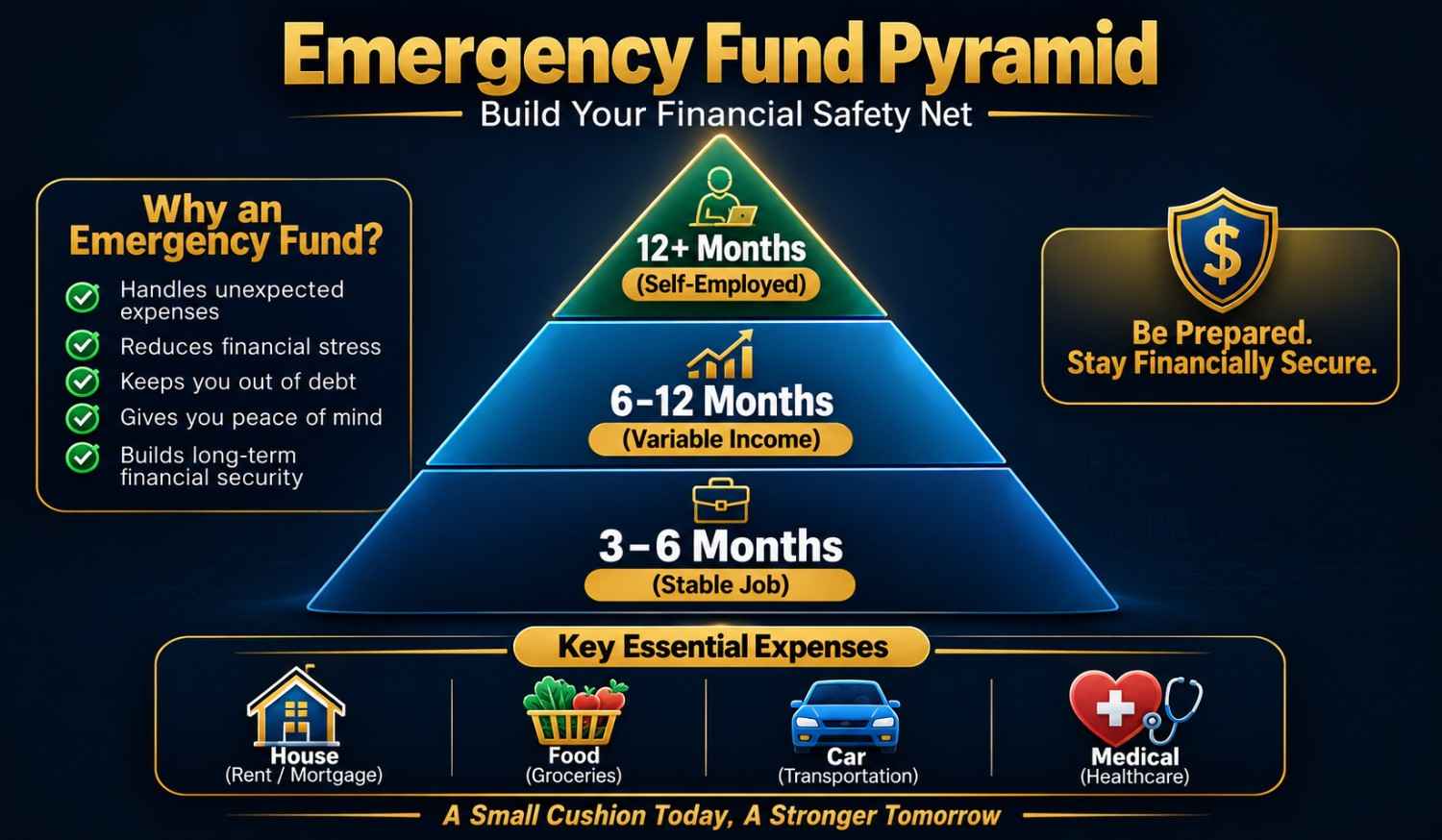
Caption: Figure 2: Building a strong financial foundation — emergency funds and savings accounts
AI in Personal Finance
One of the most significant developments in personal finance management in 2026 is the integration of artificial intelligence. According to industry research, 33% of self-directed investors are interested in using AI for financial decisions.
How AI Is Transforming Personal Finance
| Application | What It Does | Benefit |
|---|---|---|
| Automated Budgeting | Tracks spending in real-time, categorizes expenses | Saves time, reduces effort |
| Predictive Analytics | Forecasts future spending based on patterns | Helps you plan ahead |
| Personalized Recommendations | Suggests specific actions to improve finances | Tailored advice, not generic tips |
| Fraud Detection | Identifies suspicious transactions immediately | Protects your accounts |
| Goal Tracking | Monitors progress toward financial goals | Keeps you motivated |
Proactive vs. Reactive Financial Management
One of the key shifts in personal finance management in 2026 is the move from reactive to proactive management:
| Approach | Characteristics | Best For |
|---|---|---|
| Reactive | Review spending at month-end and make adjustments after the fact | Those with simple finances |
| Proactive | Real-time tracking, predictive alerts, automated adjustments | Those with complex finances |
| Hybrid | A combination of automated tools and periodic manual review | Most people |
🎯 Real-World Example: Imagine you overspend on dining out in the first week of the month. A reactive approach would only tell you this at month-end. A proactive AI tool would flag this mid-month and suggest you reduce restaurant spending for the rest of the month.
Robo-Advisors: Democratizing Professional Advice
Robo-advisors use algorithms to provide automated investment advice and management, making professional financial guidance accessible to people with modest account balances. According to industry data, about 40% of self-directed investors are interested in or currently using robo-advisors.
| Platform | Minimum Balance | Annual Fee | Best For |
|---|---|---|---|
| Betterment | $0 | 0.25% | All-in-one investing |
| Wealthfront | $0 | 0.25% | Automated investing |
| Vanguard Digital Advisor | $3,000 | 0.15% | Vanguard investors |
| Fidelity Go | $0 | 0.35% | Fidelity investors |
| SoFi Automated Investing | $0 | 0.00% | Beginners (no management fee) |
Budgeting and Expense Tracking in 2026
Budgeting remains the cornerstone of personal finance management in 2026. The tools have evolved, but the principles remain the same. A well-designed budget helps you gain control over your spending and build your wealth.
The 50/30/20 Rule
The 50/30/20 rule is a simple, popular framework for managing your money.
| Category | Percentage of After-Tax Income | Examples |
|---|---|---|
| Needs | 50% | Rent/mortgage, utilities, groceries, insurance, minimum debt payments |
| Wants | 30% | Dining out, entertainment, vacations, hobbies, subscriptions |
| Savings & Debt Repayment | 20% | Emergency fund, retirement contributions, extra debt payments |
Budgeting Tools for 2026
| Tool | Description | Best For |
|---|---|---|
| Mint | Comprehensive free budgeting app | Those wanting all-in-one financial tracking |
| YNAB (You Need A Budget) | Zero-based budgeting system | Those wanting to break the paycheck-to-paycheck cycle |
| Personal Capital | Investment-focused financial tracking | Those with significant investments |
| EveryDollar | Dave Ramsey’s zero-based budgeting app | Those following Dave Ramsey’s program |
| Goodbudget | Envelope-system budgeting | Those preferring cash-style budgeting |
How to Start Budgeting
- Track your income: Calculate your monthly after-tax income
- Track your expenses: Record every expense for 1-2 months
- Categorize your spending: Identify where your money is going
- Set budget categories: Allocate percentages to needs, wants, and savings
- Monitor and adjust: Review your budget monthly and adjust as needed
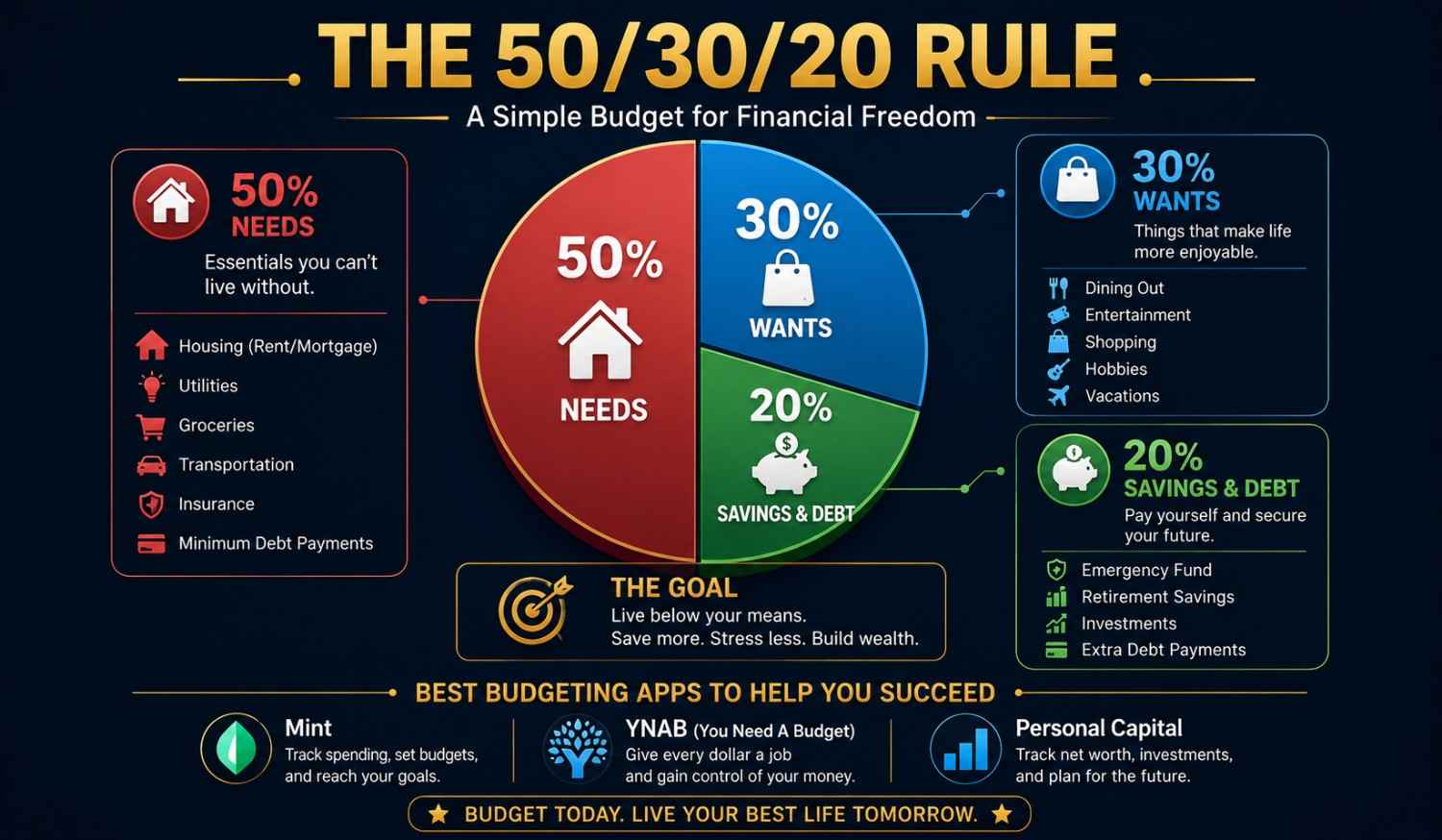
Budgeting and expense tracking—essential skills for personal finance management in 2026
Managing Debt in the Digital Age
Debt management is a critical component of personal finance management in 2026. Whether it is credit cards, student loans, mortgages, or car loans, carrying high-interest debt can severely limit your financial progress.
Types of Debt
| Debt Type | Typical Interest Rate | Strategy |
|---|---|---|
| Credit Card Debt | 18-28% | Pay off as quickly as possible |
| Student Loans | 4-8% | Pay minimum + extra if possible |
| Auto Loans | 5-10% | Pay off before investing |
| Mortgage | 6-8% | Pay minimum, invest extra in index funds |
| Payday Loans | 300%+ | Avoid entirely |
Debt Repayment Strategies
| Strategy | Description | Best For |
|---|---|---|
| Avalanche Method | Pay off the highest-interest debt first | Mathematically optimal |
| Snowball Method | Pay off smallest balance first | Psychological motivation |
| Debt Consolidation | Combine multiple debts into one loan | Simplifying payments |
| Balance Transfer | Transfer debt to 0% APR credit card | Short-term interest savings |
🎯 Real-World Example: You have $5,000 in credit card debt at 22% APR and $10,000 in student loans at 5% APR. Using the avalanche method, you would prioritize paying off the credit card debt first, as it has the highest interest rate and costs you the most money over time.

Managing debt effectively—a key component of personal finance management in 2026
The Future of Finance: Trends to Watch
Understanding where finance is headed is part of effective personal finance management in 2026. Here are the key trends shaping the future.
Embedded Finance
Embedded finance integrates financial services into non-financial platforms and apps. You can already see this in action when you use “buy now, pay later” (BNPL) options at checkout or when a ride-sharing app offers you a credit card. This trend is making financial services more accessible and frictionless.
| Application | How It Works | Example |
|---|---|---|
| Buy Now, Pay Later | Point-of-sale financing | Klarna, Afterpay |
| Embedded Payments | Payment processing in apps | Shopify Payments |
| Embedded Insurance | Insurance at point of purchase | Car rental insurance |
| Embedded Investing | Investing in everyday apps | Acorns, Robinhood |
Tokenization of Real-World Assets
Tokenization is the process of converting physical and financial assets into digital tokens on a blockchain. This can include real estate, stocks, bonds, and more. Tokenization can increase liquidity, allow fractional ownership, and make it easier to buy and sell assets. In Q2 2026 alone, tokenized real-world assets reached an estimated $33 billion.
Data Privacy and Security
With the rise of digital finance, data privacy and security are becoming increasingly important. Users are becoming more aware of how their data is used and are demanding transparency and control. This trend is driving the development of more secure, privacy-focused financial apps and services.
Common Personal Finance Mistakes
Avoiding these common mistakes is essential for effective personal finance management in 2026.
| Mistake | Why It’s a Problem | How to Fix |
|---|---|---|
| No Emergency Fund | One unexpected expense can derail you | Build 3-6 months of expenses |
| Carrying Credit Card Debt | High interest prevents wealth building | Pay off credit cards monthly |
| Over-Saving in Cash | Inflation erodes purchasing power | Invest long-term money in the market |
| Under-Investing | Missing out on compound growth | Automate investments monthly |
| Lack of Diversification | Concentrated risk | Use index funds for broad exposure |
| Ignoring Tax Efficiency | Paying more tax than necessary | Use tax-advantaged accounts |
| Emotional Spending | Impulse purchases hurt budgets | Use budgeting tools to track spending |
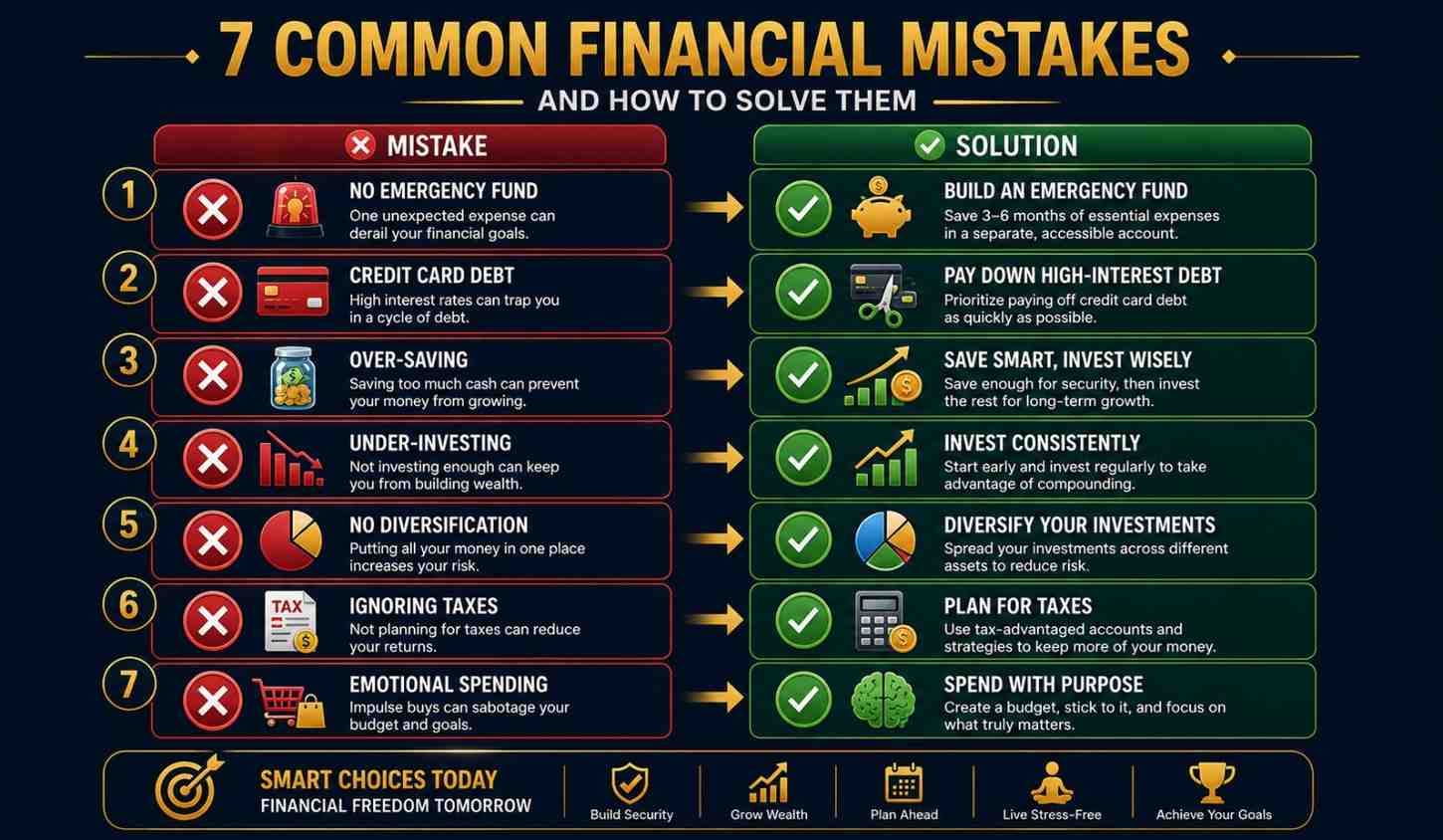
Common personal finance mistakes and how to avoid them
Conclusion: Your Financial Journey Starts Here
Personal finance management in 2026 is about mastering the fundamentals while leveraging modern digital tools. The combination of timeless principles and cutting-edge technology puts financial well-being within reach of anyone willing to learn.
Key Takeaways:
- Build an emergency fund — 3-6 months of essential expenses
- Pay off high-interest debt — Credit cards first, then other debt
- Automate your savings—Set up automatic transfers to savings and investment accounts
- Invest for the long term — Use low-cost index funds like VOO
- Use AI-powered tools—Leverage technology for proactive financial management
- Diversify your financial life—don’t rely on any single income stream
- Keep learning — The financial world changes constantly
🎯 Final Thought: The best time to start managing your finances was 10 years ago. The second-best time is today. Whether you are just starting your career, managing debt, or planning for retirement, the principles of personal finance management in 2026 can help you achieve financial freedom. Start small, stay consistent, and use the digital tools available to you. Your future self will thank you.
FAQ
1. What is the first step to improving my personal finances?
Start by tracking your spending for 1-2 months to understand where your money is going. Then, create a budget based on the 50/30/20 rule (50% needs, 30% wants, 20% savings). Finally, build a small emergency fund of $500-$1,000 before tackling other goals.
2. How much should I have in my emergency fund?
Aim for 3-6 months of essential expenses. If you have a stable job, 3-6 months is sufficient. If you have variable income (freelance, commission-based), aim for 6-12 months. If you are self-employed or in an unstable industry, aim for 12+ months.
3. What is the best way to pay off debt?
The avalanche method (paying off highest-interest debt first) saves the most money. The snowball method (paying off smallest balances first) can be more motivating. Choose the method you are most likely to stick with. Avoid taking on new debt while paying off old debt.
4. Should I save or invest?
You should do both. Keep short-term savings (emergency fund, upcoming purchases) in a savings account. Invest money you won’t need for 5+ years in the stock market through low-cost index funds. Time in the market beats timing the market.
5. What is the 50/30/20 budget rule?
The 50/30/20 rule divides your after-tax income into three categories: 50% for needs (housing, food, transportation), 30% for wants (entertainment, dining out, hobbies), and 20% for savings and debt repayment (emergency fund, retirement, extra debt payments).
6. How do AI-powered budgeting tools work?
AI-powered budgeting tools connect to your bank accounts and automatically categorize your spending. They use machine learning to identify spending patterns, predict future expenses, and suggest personalized actions to help you stay on track with your financial goals.
7. What are robo-advisors, and how do they work?
Robo-advisors are automated investment platforms that use algorithms to build and manage a diversified portfolio based on your risk tolerance and goals. They typically have low fees (0.15-0.35%) and low minimum balances, making professional investment management accessible to everyone.
8. How much should I save for retirement?
A common rule of thumb is to save 15% of your gross income for retirement. This includes any employer match. Start with the amount needed to get your full employer 401(k) match, then contribute to an IRA, then return to your 401(k) if you can save more.
9. What is the best budgeting app for beginners?
YNAB (You Need A Budget) and Mint are excellent choices for beginners. YNAB uses a zero-based budgeting system that helps you give every dollar a job. Mint is free and provides a comprehensive overview of your finances, including budgeting, tracking, and credit score monitoring.
10. How can I stop impulse spending?
Use the 24-hour rule: wait 24 hours before making any non-essential purchase. Unsubscribe from marketing emails and remove saved payment methods from online stores. Use budgeting apps to track spending in real-time and set spending alerts.
11. What is dollar-cost averaging?
Dollar-cost averaging is investing a fixed amount at regular intervals, regardless of market conditions. This strategy reduces the impact of market volatility and removes the need to time the market. It is especially effective for long-term investors.
12. What is the difference between a traditional IRA and a Roth IRA?
A Traditional IRA offers a tax deduction on contributions now, but you pay taxes on withdrawals in retirement. A Roth IRA offers no tax deduction on contributions now, but withdrawals in retirement are tax-free. Choose based on whether you expect to be in a higher or lower tax bracket in retirement.
13. What are the most common personal finance mistakes?
The most common mistakes are not having an emergency fund, carrying high-interest credit card debt, over-saving in cash (losing to inflation), under-investing (missing compound growth), not diversifying investments, ignoring tax efficiency, and making emotional spending decisions.
14. How do I know if I’m spending too much on housing?
A common rule of thumb is the 28/36 rule: your housing costs should not exceed 28% of your gross monthly income, and your total debt payments (including housing) should not exceed 36% of your gross monthly income. If you exceed these thresholds, consider reducing your housing costs.
15. What is the future of personal finance?
The future of personal finance includes AI-powered financial advice, embedded finance (financial services integrated into everyday apps), tokenization of real-world assets, and increased focus on data privacy and security. These trends will make financial management more accessible, personalized, and efficient.
Further Reading
To deepen your understanding of financial markets and trading, explore these additional resources from Finwirestack:
- Stock Investing 2026: Buffett’s Smart Beginner Strategy — Learn Warren Buffett’s simple approach to building wealth.
- Crypto Trading 101: 2026 Ultimate Beginner’s Guide — Learn the basics of cryptocurrency trading.
- Forex Trading Psychology: 7 Secrets to Master Your Mindset — Master your emotions for consistent trading success.
- Risk Management Mastery: 7 Proven Strategies — Master position sizing, stop-loss strategies, and trading psychology.
External Resources (DoFollow Links)
- Consumer Financial Protection Bureau: Budgeting — Official U.S. government guide to budgeting.
- USA.gov: Personal Finance Resources — Comprehensive U.S. government financial education resources.
- Investopedia: Personal Finance — Comprehensive personal finance education.
- Federal Reserve: Economic Well-Being Report — Latest data on American financial health.
Disclaimer: The information provided in this article is for educational purposes only and does not constitute financial advice. Always consult a qualified financial advisor before making financial decisions. Past performance does not guarantee future results.






[…] Personal Finance 2026: Smart Money Management Guide — Master budgeting, saving, and investing fundamentals. […]
[…] Article Link: Personal Finance 2026: Smart Money Management Guide […]