Category Financial Education

Fidelity Investments Explained: A Complete Beginner’s Guide to Investing in the U.S. in 2026

Fidelity Investments beginner guide to investing in the United States

If you have never invested before, the financial world can feel intimidating.

You hear people talking about stocks, ETFs, index funds, 401(k)s, Roth IRAs, mutual funds, dividends, capital gains, and compound interest.

Then you hear another name repeatedly:

Fidelity Investments.

But what exactly is Fidelity?

Is Fidelity a bank?

Is Fidelity a stock?

Is Fidelity an investment fund?

Can you buy stocks through Fidelity?

How much money do you need?

And, most importantly, how does a complete beginner actually use Fidelity Investments to start building wealth?

This guide answers those questions from the ground up.

By the end, you should understand what Fidelity is, what it offers, how the different accounts work, what you can invest in, what the major risks are, and what a sensible beginner investing journey could look like.

Important: Fidelity is not an investment itself. Fidelity is a financial-services company and investment platform through which eligible customers can access different financial products.


What Is Fidelity Investments?

Fidelity Investments is one of the major financial services companies serving U.S. investors.

Through its platforms, Fidelity provides access to investment accounts, stocks, ETFs, mutual funds, bonds, retirement accounts, managed investing, and other financial services. Fidelity’s current account lineup includes brokerage accounts, retirement accounts, managed solutions, cash-management products, crypto offerings, and accounts for children and education.

Think of Fidelity as a financial supermarket.

You do not go to Fidelity simply to “buy Fidelity.”

Instead, you open an appropriate account and then decide which investments belong inside that account.

For example:

Fidelity account โ†’ ETF โ†’ stocks inside the ETF

or

Fidelity IRA โ†’ mutual fund โ†’ diversified portfolio

or

Fidelity brokerage account โ†’ individual stocks

This distinction is fundamental for beginners.


Fidelity Investments in Simple Terms

Imagine you want to build a house.

You need:

  • A place to build
  • Building materials
  • Tools
  • A construction plan

Your Fidelity account is similar to the place where your investments are held.

Your stocks, ETFs, bonds and mutual funds are the building materials.

Your investment strategy is the construction plan.

Fidelity provides the platform and tools.

You still need to decide what you are building.


Why Is Fidelity Investments Getting So Much Attention?

The interest surrounding Fidelity fits into several major changes happening in U.S. investing.

AI and Technology

Artificial intelligence has become a major investment theme.

Fidelity’s own 2026 research identifies AI infrastructure as a major economic force and points to potential opportunities across semiconductor companies, utilities, energy, and other businesses supporting AI infrastructure.

Low-Cost Investing

Investors increasingly focus on fees because even small recurring costs can significantly affect long-term returns.

Fidelity currently advertises $0 online commissions for U.S. stocks and ETFs and offers zero-expense-ratio index mutual funds.

Fractional Investing

Fidelity allows eligible investors to purchase fractional shares, with its brokerage materials stating that investors can start with as little as $1.

Retirement Investing

Americans continue to use retirement accounts such as 401(k)s and IRAs to build long-term wealth.

For 2026, the IRS says the annual IRA contribution limit is $7,500, with an additional $1,100 catch-up contribution for eligible investors aged 50 and above.

Crypto

Fidelity has also expanded into digital assets.

Its current crypto offerings includes Bitcoin, Ethereum, Fidelity Digital Dollar, Litecoin, and Solana, and Fidelity also offers crypto-related exchange-traded products.

These trends help explain why understanding Fidelity Investments is increasingly relevant to people learning about modern U.S. investing.


How Does Fidelity Investments Actually Work?

The process is surprisingly simple.

Step 1: Choose an Account

You first decide what type of account you need.

Step 2: Deposit Money

You transfer money into the account.

Step 3: Select Investments

You choose stocks, ETFs, mutual funds, bonds or another eligible investment.

Step 4: Place the Investment

You purchase the investment.

Step 5: Monitor and Rebalance

You review your portfolio periodically and make adjustments when appropriate.

The biggest beginner mistake is believing that depositing money into Fidelity automatically means you are invested.

It does not.

Cash sitting inside an account is different from money invested in a security.


The Most Important Fidelity Accounts Beginners Should Understand

Fidelity Investments account types including brokerage, IRA, and Fidelity Go
1. Fidelity Brokerage Account

The standard brokerage account is one of the easiest places to start learning.

Fidelity describes its brokerage account as a multi-feature account that can provide access to stocks, ETFs, options, bonds, mutual funds, and other investments. It currently has no account minimum and allows investing from $1 through fractional shares.

Best For

A brokerage account can make sense for someone who wants:

  • Flexible investing
  • No retirement-account restrictions
  • Stock investing
  • ETF investing
  • Long-term wealth building
  • Access to taxable investments

The major disadvantage is taxation.

Investment income and realized capital gains can create tax obligations.


2. Traditional IRA

A Traditional IRA is designed primarily for retirement investing.

Depending on your circumstances, contributions may qualify for tax deductions, and investments generally grow tax-deferred.

However, withdrawal rules and tax consequences apply.

2026 IRA Contribution Limit

For 2026, the combined IRA contribution limit is:

$7,500 if under age 50

$8,600 if age 50 or older

The additional amount represents the catch-up contribution.

Always check the current IRS rules before making retirement contributions.


3. Roth IRA

A Roth IRA is another important retirement account.

The major attraction is the potential for tax-free qualified withdrawals.

However, eligibility and contribution rules apply.

For 2026, the IRS rules allow eligible individuals to contribute up to the applicable IRA limit, but higher-income taxpayers may face reduced or eliminated direct Roth IRA contribution eligibility. Fidelity’s current 2026 guidance lists income thresholds for Roth IRA eligibility.

Why Beginners Should Understand Roth IRAs

Suppose a young investor contributes consistently for decades.

The combination of:

contributions + investment growth + compounding + tax advantages

can become extremely powerful.

The right choice depends on your income, tax situation, retirement expectations, and eligibility.

But a Roth IRA is not automatically “better” than a Traditional IRA.


4. 401(k)

A 401(k) is generally an employer-sponsored retirement plan.

If your employer offers a 401(k), this deserves attention before opening additional investment accounts.

Why?

Because some employers provide a matching contribution.

For example, if an employer matches part of your contribution, not taking advantage of the available match can mean leaving part of your compensation unused.

Fidelity provides retirement-plan services to employers and employees, although the exact investments and rules available depend on the particular employer plan.


5. Fidelity Go

Not everyone wants to choose investments manually.

That is where a robo-advisor can become useful.

Fidelity Go is Fidelity’s automated investing service.

Fidelity states that Fidelity Go is available to U.S. residents aged 18 and above, and there is no minimum initial investment; once the account reaches $10, Fidelity begins investing according to the selected strategy.

This can be attractive to someone who says:

“I want to invest, but I don’t know which investments to select.”

Instead of manually selecting every security, the investor provides information about their goals and risk preferences, and the automated service manages the portfolio within its framework.


What Can You Buy Through Fidelity?

Fidelity Investments stocks ETFs index funds mutual funds bonds and crypt

This is where things become interesting.

Stocks

You can purchase shares of individual publicly traded companies.

For example, you might buy shares of companies operating in:

  • Technology
  • Healthcare
  • Financial services
  • Energy
  • Consumer products
  • Industrials

But individual stocks carry company-specific risk.

If the company performs poorly, the stock can fall significantly.


ETFs

An ETF is a basket of investments traded on an exchange.

Instead of purchasing 500 individual companies, you can buy an ETF designed to track a broad market index.

This can provide diversification with a single transaction.

Fidelity offers a broad range of ETFs and provides research tools for evaluating them.

Why Beginners Often Prefer ETFs

ETFs can provide:

Diversification

Convenience

Transparency

Low costs

Simple portfolio construction

But not every ETF is diversified.

Some ETFs concentrate heavily on one industry, theme, or asset.

Always investigate what is actually inside an ETF.


Fidelity Index Funds

Index funds attempt to track a particular market index.

One of Fidelity’s most well-known index funds is the Fidelity 500 Index Fund (FXAIX), which seeks to track the S&P 500.

The fund currently has an extremely low expense ratio, and current market reporting places its expense ratio at 0.015%.

This illustrates one reason index investing has become so popular.

Instead of trying to identify the next winning company, the investor obtains exposure to a broad group of companies.

Important

Low fees do not eliminate market risk.

An S&P 500 index fund can still decline substantially during a market downturn.


Fidelity Mutual Funds

Mutual funds pool money from multiple investors and invest according to a defined strategy.

Fidelity has a large mutual-fund lineup covering different objectives.

These can include:

  • U.S. equities
  • International equities
  • Bonds
  • Target-date funds
  • Sector funds
  • Growth funds
  • Income funds
  • Index funds

The important question is not

“Is this a Fidelity fund?”

The important questions are:

“What does this fund own?”

“What does it charge?”

“What is its objective?”

“What risks does it take?”


Fidelity Bonds and CDs

Investing does not have to mean buying stocks.

Fidelity also provides access to fixed-income investments such as bonds and CDs.

These can play a role in portfolios designed around:

  • Income
  • Capital preservation
  • Diversification
  • Retirement planning
  • Lower equity exposure

Fidelity currently lists $1 per bond or CD for secondary-market trading and free online trading for U.S. Treasuries, subject to applicable conditions and rules.


Fidelity Crypto

This is one of the most important modern developments to understand.

Fidelity now offers cryptocurrency exposure through multiple structures.

These include:

Fidelity Crypto

Crypto ETPs

Crypto IRA options

Its current direct crypto offering includes Bitcoin, Ethereum, Fidelity Digital Dollar, Litecoin, and Solana.

Fidelity also offers crypto funds such as FBTC, FETH and FSOL, which provide exposure to Bitcoin, Ether, and Solana through exchange-traded products.

But Crypto Is Different

Fidelity itself warns that cryptocurrency is highly volatile and may become illiquid.

Investors can lose their entire investment.

Crypto should therefore not automatically become the foundation of a beginner’s portfolio.


Fidelity Fractional Shares Explained

Suppose a stock costs $500 per share.

You only have $50.

With fractional investing, you may be able to purchase a portion of that share rather than waiting until you have $500.

Fidelity states that its brokerage account supports fractional shares and allows investors to get started with as little as $1.

This is particularly important for younger investors.

You no longer necessarily need thousands of dollars to begin building a diversified investment habit.


How Much Money Do You Need to Start With Fidelity?
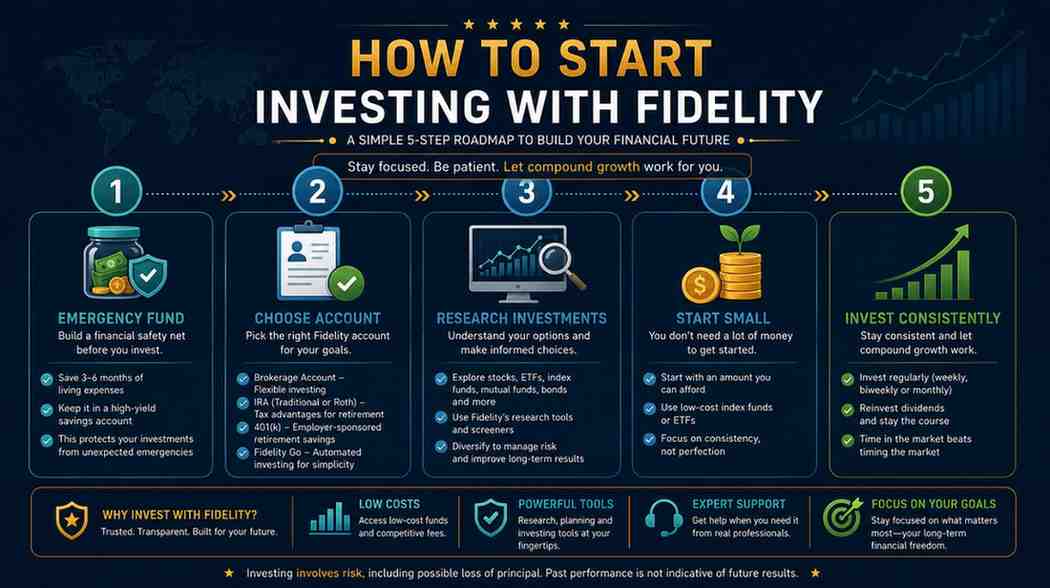
how to start investing with Fidelity Investments step by step

This is one of the most common questions for beginners.

The answer is

You do not necessarily need a large amount.

Fidelity’s standard brokerage account currently has no account minimum, and its fractional-share system allows eligible investors to start investing with $1.

But there is a difference between:

minimum required to start

and

amount needed to achieve a meaningful financial goal.

Starting with $1 teaches you how the platform works.

Building meaningful wealth requires consistent contributions over time.


Fidelity Fees: What Beginners Should Watch

One reason Fidelity attracts investors is its low-cost structure.

Fidelity currently advertises:

  • $0 online commissions for U.S. stocks
  • $0 online commissions for ETFs
  • $0 account fees for its standard brokerage account
  • Zero-expense-ratio index mutual funds

However, “$0 commission” does not mean every possible transaction is free.

Other costs can include:

  • Options contract fees
  • Certain mutual-fund transaction fees
  • Bond/CD charges
  • Advisory fees
  • Fund expense ratios
  • Margin interest
  • Other specialized service fees

Always examine the current fee schedule before investing.


The Difference Between Commission and Expense Ratio

Beginners often confuse these.

Commission

A commission is a charge associated with executing a transaction.

Expense Ratio

An expense ratio represents the annual operating expenses of a fund as a percentage of assets.

Imagine you invest $10,000 in a fund with a 0.10% expense ratio.

That is approximately

$10 per year

before considering changes in the investment value.

The lower the expense ratio, the less of the investment return is consumed by fund expenses, all else equal.

This is one reason low-cost index investing is such a major theme among long-term investors.


What Is the Best Fidelity Investment for a Beginner?

There is no universal “best Fidelity Investments.”

The right investment depends on:

  • Age
  • Income
  • Financial goals
  • Time horizon
  • Risk tolerance
  • Tax situation
  • Existing investments
  • Emergency savings
  • Debt

However, a beginner interested in long-term investing might investigate broad-market index funds or diversified ETFs before jumping into speculative individual stocks.

A Simple Beginner Framework

A hypothetical long-term investor might think in terms of:

Core portfolio

Broad-market diversified investments.

Growth allocation

Potentially higher-growth assets.

Defensive allocation

Bonds or cash-like investments depending on objectives.

Speculative allocation

Only money the investor can genuinely afford to lose.

The exact percentages should not be copied blindly from another investor.


Fidelity Investments and the AI Boom

AI is one of the biggest investment themes influencing U.S. markets in 2026.

Fidelity’s own research describes AI infrastructure spending as a major driver of U.S. economic activity and highlights potential opportunities in semiconductor companies, utilities, energy, and other infrastructure providers.

But there is an important lesson here.

Do Not Confuse a Trend With a Strategy

AI may be a powerful long-term technological transformation.

That does not mean every AI-related stock will rise.

Some companies may:

  • Become market leaders
  • Lose market share
  • Fail to monetize AI
  • Become overvalued
  • Face intense competition

A beginner should therefore investigate the business and valuation, not simply buy something because it contains the word “AI.”


Fidelity Investments and the U.S. Stock Market in 2026

Fidelity’s recent market analysis says U.S. information technology and growth stocks rebounded strongly during the second quarter of 2026, while international equities also showed broad strength.

That creates an important diversification lesson.

You do not necessarily need to put everything into U.S. technology stocks simply because they are performing strongly.

Markets rotate.

Leadership changes.

Economic conditions change.

Interest rates change.

Investor expectations change.

A diversified portfolio is designed around the possibility that you will be wrong about which asset class performs best next.


How a Beginner Could Start Investing With Fidelity

Let’s make this practical.

Step 1: Build an Emergency Fund

Before investing aggressively, consider whether you have sufficient emergency savings.

Do not invest money that you may need next month for rent, food, or an emergency.


Step 2: Eliminate Dangerous High-Interest Debt

Credit card debt with extremely high interest can work against your investment strategy.

Suppose your investment earns 8% over a particular period while your credit card balance costs you 25%.

The mathematics may not favor investing before dealing with the expensive debt.


Step 3: Define Your Goal

Ask:

Why am I investing?

Maybe your goal is:

  • Retirement
  • Buying a home
  • Children’s education
  • Financial independence
  • Long-term wealth
  • Building an investment portfolio

Your goal determines your time horizon.


Step 4: Choose the Correct Account

Consider whether you need:

Brokerage account

Traditional IRA

Roth IRA

401(k)

Fidelity Go

or another specialized account.


Step 5: Choose Your Investment

Do not buy anything until you understand:

  • What it owns
  • How it makes money
  • What it costs
  • How risky it is
  • How diversified it is
  • What your expected holding period is

Step 6: Start Small

You do not need to begin with $10,000.

The objective at the beginning is to build:

knowledge + discipline + consistency.


Step 7: Automate Contributions

Suppose someone invests $100 every month.

They are not attempting to predict every market movement.

They are building a habit.

Over years, the combination of regular contributions and compounding can become meaningful.


What Is Compound Growth?

Suppose you invest money and earn returns.

Those returns remain invested.

Then future returns can potentially be earned on:

your original money + previous investment gains.

That is compounding.

For illustration, if an investor contributed $200 per month and achieved a hypothetical 8% annual return compounded monthly, the account could grow to roughly $117,800 after 20 years.

The investor would have contributed:

$48,000

The remainder would represent investment growth.

But remember:

8% is a hypothetical assumption, not a guaranteed Fidelity return.

Real investment returns vary.


Fidelity Investments vs. Buying Stocks Directly

This is another misconception about Fidelity Investments.

When you use Fidelity, you are not necessarily buying “Fidelity stock.”

You are using Fidelity as the platform through which you can purchase investments.

For example:

Fidelity account

โ†“

Fidelity 500 Index Fund

โ†“

Portfolio of large U.S. companies

Or:

Fidelity account

โ†“

Individual company stock

โ†“

One company

The risk profile is very different.


Fidelity vs. a Bank Account

A bank account and investment account serve different purposes.

Bank/Savings Account

Usually designed for:

  • Cash storage
  • Spending
  • Emergency funds
  • Short-term goals

Investment Account

Designed for:

  • Long-term growth
  • Stocks
  • ETFs
  • Bonds
  • Mutual funds
  • Other investments

Investment values can rise and fall.

Cash accounts are generally much more stable.

Therefore, you should not treat an investment account as though it were a guaranteed savings account.


Can Someone in Africa Open a Fidelity Investments Account?

This is extremely important for FinWireStack’s international readership.

If you currently reside in Africa and do not already have a Fidelity relationship, you generally cannot open a new Fidelity account as an African resident.

Fidelity’s own international-customer guidance states that it does not open accounts for new customers residing outside the United States.

This means an African reader should not attempt to bypass Fidelity’s residency requirements using false information or another person’s U.S. address.

Instead, international investors should investigate brokers and investment platforms that legally accept residents of their country.

This distinction is critical because availability of U.S. investments and availability of a particular U.S. broker are two different things.


Who Is Fidelity Investments Best Suited For?

Fidelity can be particularly attractive for eligible U.S. investors who want:

  • Long-term investing
  • Retirement planning
  • Stocks
  • ETFs
  • Index funds
  • Mutual funds
  • Fractional shares
  • Automated investing
  • Research tools
  • Low-cost investing
  • One financial platform

It can serve both beginners and experienced investors.


Who Should Be Careful?

Fidelity may not be appropriate for someone who:

  • Wants guaranteed returns
  • Does not understand investment risk
  • Wants to day-trade without a strategy
  • Uses excessive margin
  • Buys stocks based entirely on social media hype
  • Does not understand taxes
  • Invests emergency savings
  • Cannot tolerate temporary losses

A reputable platform cannot protect you from a poor investment decision.


Common Fidelity Investing Mistakes Beginners Make

Mistake 1: Buying Whatever Is Trending

A stock appearing repeatedly on TikTok, YouTube, or Google Trends is not automatically a good investment.

Mistake 2: Confusing Fidelity With an Investment

Fidelity is the platform.

The investment is what you purchase through it.

Mistake 3: Investing Without an Emergency Fund

A market downturn can become devastating if you are forced to sell investments to pay an unexpected bill.

Mistake 4: Chasing AI Stocks

AI is a powerful trend, but not every AI company will succeed.

Mistake 5: Ignoring Fees

Small costs can compound over decades.

Mistake 6: Using Margin Too Early

Borrowing money to invest can magnify losses.

Mistake 7: Checking Your Portfolio Every Five Minutes

Long-term investing is generally different from short-term trading.


Fidelity Investments vs. Trading

This distinction deserves special attention for FinWireStack readers.

Investing generally focuses on building wealth over years or decades.

Trading focuses more heavily on shorter-term price movements.

Someone can use Fidelity for both investing and trading, but the mindset is different.

Investing

Goal: Long-term wealth

Typical holding period: Years/decades

Focus: Fundamentals, diversification, asset allocation

Trading

Goal: Profit from price movements

Typical holding period: Minutes to months

Focus: Market behavior, execution, risk management

If you are interested in trading automation, see Algorithmic Trading in 2027.


What About Fidelity Investments Crypto?

Crypto is becoming increasingly integrated into mainstream investment platforms.

Fidelity now allows eligible U.S. customers to access direct cryptocurrency through Fidelity Crypto and crypto exposure through exchange-traded products.

However, crypto should not be confused with traditional diversified investing.

Fidelity explicitly warns that crypto is highly volatile and investors can lose their entire investment.

A beginner should therefore understand the difference between:

Diversified index exposure

and

single-asset cryptocurrency exposure.


A Beginner’s Fidelity Investments Checklist

Before making your first investment, ask yourself:

Financial Preparation

โ˜ Do I have emergency savings?

โ˜ Have I addressed high-interest debt?

โ˜ Do I know my investment objective?

Account Selection

โ˜ Do I need a brokerage account?

โ˜ Should I investigate an IRA?

โ˜ Do I have access to an employer 401(k)?

Investment Selection

โ˜ Do I understand what I am buying?

โ˜ Is it diversified?

โ˜ What does it cost?

โ˜ What are the risks?

Long-Term Plan

โ˜ How much can I invest monthly?

โ˜ How long will I invest?

โ˜ What will I do during a market crash?

โ˜ Will I continue investing consistently?


The 2026 Fidelity Investments Trends Beginners Should Watch

Fidelity Investments trends in 2026: AI ETFs retirement crypto and fractional investing

Based on Fidelity’s current research and product direction, several themes deserve attention.

AI Infrastructure

AI is expanding demand for computing power, data centers, semiconductors, and electricity infrastructure. Fidelity identifies these areas as potential investment opportunities while also emphasizing the importance of valuation and risk.

Low-Cost Index Investing

Index funds and ETFs remain central to many long-term portfolios.

Fractional Investing

The ability to invest with smaller amounts makes market access easier for beginners.

Automated Investing

Robo-advisors such as Fidelity Go can help investors who prefer an automated approach.

Crypto Integration

Fidelity’s expansion into direct crypto and crypto ETPs shows how digital assets are increasingly being integrated into mainstream investment platforms.

Retirement Tax Planning

IRA contribution limits and tax rules remain important considerations for American investors.


Is Fidelity Investments Safe?

Fidelity is an established U.S. financial-services company, but “safe platform” does not mean “your investments cannot lose money.”

Your investment can decline.

A stock can go to zero.

An ETF can fall.

A cryptocurrency can experience extreme losses.

Safety therefore has two dimensions:

Platform and custody protections

versus

Investment risk.

Never confuse the two.

Fidelity Investments’ brokerage entities identify their applicable regulatory and SIPC membership information, but investors should understand exactly which product they own and what protections apply to it.

This becomes particularly important with cryptocurrency because Fidelity states that crypto investments do not receive the same regulatory protections applicable to registered securities.


The Beginner’s Best Way to Think About Fidelity Investments

Don’t ask:

“Which Fidelity Investments will make me rich?”

Ask:

“Which Fidelity Investments account and investment structure best fit my financial goal, risk tolerance, and time horizon?”

That single change in mindset can dramatically improve the quality of your investment decisions.


Final Takeaway

Fidelity Investments is not a single investment.

It is a large financial-services platform that gives eligible investors access to a wide range of accounts and investments.

A beginner can use Fidelity Investments to access:

  • Stocks
  • ETFs
  • Index funds
  • Mutual funds
  • Bonds
  • CDs
  • Retirement accounts
  • Fractional shares
  • Automated investing
  • Cryptocurrency

Its current direction also reflects some of the biggest themes shaping U.S. investing in 2026: AI, technology, low-cost investing, automation, retirement planning, and digital assets.

But the platform does not determine whether you make money.

Your financial plan, strategy, risk management, time horizon, and behavior matter far more.

For a beginner, the most sensible progression in Fidelity Investments is:

Learn โ†’ Build an emergency fund โ†’ Understand accounts โ†’ Choose diversified investments โ†’ Invest consistently โ†’ Control costs โ†’ Avoid unnecessary speculation โ†’ Review periodically.

And if you are outside the United States, remember the crucial eligibility issue: Fidelity currently says it does not open accounts for new customers who reside outside the U.S.

So for a Kenyan investor, the educational lesson is still highly valuableโ€”but the practical next step is to identify a regulated investment platform that legally accepts Kenyan residents rather than attempting to circumvent Fidelity’s eligibility requirements.


Frequently Asked Questions on Fidelity Investments.

Is Fidelity Investments a bank?

Fidelity Investments is primarily a financial services and investment company. It provides brokerage, retirement, investment-management, cash-management, and other financial products.

Is Fidelity good for beginners?

It can be. Fidelity provides educational resources, fractional shares, low-cost investment options, and both self-directed and automated investing services.

How much money do I need to start investing with Fidelity Investments?

Fidelity’s standard brokerage account currently has no account minimum, and eligible investors can use fractional shares to invest with as little as $1.

Can I buy ETFs through Fidelity?

Yes. Fidelity provides access to ETFs and offers its own ETF lineup as well as other investment choices.

Can I buy Bitcoin through Fidelity?

Eligible U.S. customers can access Bitcoin and other cryptocurrencies through Fidelity Crypto. Fidelity also offers crypto ETPs through brokerage accounts.

Can Africans open an account in Fidelity Investments?

Fidelity states that it does not open accounts for new customers residing outside the United States.

What is the difference between Fidelity and an ETF?

Fidelity is a financial-services platform. An ETF is an investment product that you can potentially purchase through Fidelity.

What is FXAIX?

FXAIX is the Fidelity 500 Index Fund, which seeks to track the S&P 500. It is one of Fidelity’s best-known index funds.

Does Fidelity guarantee investment returns?

No. Investments can lose value, and past performance does not guarantee future results.


Recommended Official Resources on Fidelity Investments

Fidelity Investments: Fidelity Investments official website

Fidelity Brokerage Account: The Fidelity Account

Fidelity Investment Accounts: Fidelity account and product directory

Fidelity Fees: Fidelity pricing and fees

Fidelity ETFs: Investing in ETFs at Fidelity

IRS: 2026 IRA and retirement contribution information


Learn more about investments here:

Algorithmic Trading in 2027 in Relation to Fidelity Investments.

AI Trading Bots: Real vs Scams in Relation to Fidelity Investments.

AI vs Human Traders 2030 in Relation to Fidelity Investments.

Copy Trading in 2027 in Relation to Fidelity Investments.

AI Investment Platforms in 2027 in Relation to Fidelity Investments.

The Complete Beginner’s Guide to Forex Trading in 2027: How to Start Safely and Build a Profitable Trading Strategy

Professional trader learning Forex trading in 2027 using AI-powered market analysis and risk management dashboard.

Every day, more than $7 trillion changes hands in the global foreign exchange (Forex) market, making it the largest and most liquid financial market in the world. Unlike stock exchanges that operate during limited hours, Forex trading runs almost continuously from Monday to Friday, connecting banks, businesses, governments, institutions, and individual traders across continents.

As we move into 2027, Forex trading has become more accessible than ever before. A smartphone, a reliable internet connection, and a small amount of starting capital are often all that’s needed to begin learning. At the same time, advances in artificial intelligence, mobile trading platforms, and educational resources have lowered many of the traditional barriers to entry.

However, easier access has also brought new challenges. Social media is filled with promises of instant wealth, luxury lifestyles, and so-called “secret” trading strategies. Influencers frequently showcase expensive cars, designer watches, and screenshots of profitable trades while rarely discussing the years of learning, disciplined risk management, or inevitable losses that accompany professional trading.

The reality is that successful Forex trading is not about luck or finding a magical indicator. It is about developing a structured process, managing risk carefully, understanding market behavior, and continually improving your decision-making.

This guide is designed to help you build that foundation.

Whether you are a university student exploring a new skill, a professional seeking an additional source of income, or someone looking to understand global financial markets, this article will walk you through the essential concepts you need to know before placing your first trade.

By the end of this guide, you will understand:

  • How the Forex market works
  • Why currencies rise and fall
  • How professional traders manage risk
  • Common beginner mistakes and how to avoid them
  • The role of artificial intelligence in modern trading
  • How to build a realistic path toward becoming a disciplined trader

Most importantly, you’ll learn why preserving your capital and continuously developing your knowledge are far more important than chasing quick profits.


What Is Forex Trading?

Forex, short for Foreign Exchange, is the process of buying one currency while simultaneously selling another. Every Forex trade involves a pair of currencies because you are always exchanging one currency for another.

For example:

  • EUR/USD (Euro against the U.S. Dollar)
  • GBP/USD (British Pound against the U.S. Dollar)
  • USD/JPY (U.S. Dollar against the Japanese Yen)

If you believe the Euro will strengthen against the U.S. Dollar, you might buy the EUR/USD pair. If your analysis is correct and the Euro increases in value relative to the Dollar, you can close the trade at a profit. Conversely, if the Euro weakens, your trade may incur a loss.

Unlike investing in a company’s stock, Forex trading focuses on the relative value between two national currencies. These values change constantly due to economic data, interest rates, geopolitical events, inflation, employment reports, and shifts in market sentiment.

Because the Forex market operates globally, it provides opportunities across different time zones and economic cycles. This global nature also makes it highly liquid, allowing traders to enter and exit positions efficiently under normal market conditions.


Why Forex Trading Is Growing Faster Than Ever

Several trends are driving increased interest in Forex trading as we approach 2027.

Technology has transformed accessibility. Modern trading platforms offer intuitive interfaces, educational tools, demo accounts, and mobile apps that make learning easier than ever.

Artificial intelligence is changing market analysis. AI-powered tools can help traders identify patterns, summarize economic news, and support decision-making. While AI cannot guarantee profitable trades, it can improve efficiency when used responsibly.

Financial literacy is becoming more important. As inflation, changing job markets, and economic uncertainty affect households worldwide, more people are seeking to understand investing, saving, and managing risk. Forex trading often becomes part of a broader financial education journey.

Remote work and digital careers have expanded. Many individuals are looking for flexible ways to supplement their income or develop skills that can be applied from almost anywhere with an internet connection.

Despite these opportunities, it’s essential to remember that Forex trading carries significant risk. Sustainable success comes from education, preparation, and disciplined executionโ€”not from shortcuts or unrealistic expectations.


How the Forex Market Works

Unlike stock markets that rely on centralized exchanges, the Forex market operates through a decentralized global network of banks, financial institutions, corporations, governments, and retail brokers.

This decentralized structure allows trading to continue nearly 24 hours a day during the business week as financial centers around the world open and close in sequence.

The four major trading sessions are

SessionMajor Financial CenterTypical Characteristics
SydneyAustraliaLower volatility, start of trading week
TokyoJapanStrong activity in Asian currency pairs
LondonUnited KingdomHighest trading volume and liquidity
New YorkUnited StatesHigh volatility, overlaps with London

One of the most active periods occurs during the overlap between the London and New York sessions, when liquidity is typically highest and major economic announcements are often released.

Understanding these trading sessions helps traders recognize when markets may experience increased activity, tighter spreads, or greater price movement.

Understanding Currency Pairs

In Forex Trading, every Forex transaction involves two currencies. This relationship is called a currency pair, and learning how to read these pairs is one of the first skills every trader should master.

A currency pair has two parts:

Base Currency โ€“ the first currency listed.

Quote Currency โ€“ the second currency listed.

For example:

EUR/USD = 1.1800

  • Base Currency = Euro (EUR)
  • Quote Currency = US Dollar (USD)

This quote means 1 Euro equals 1.18 US Dollars.

If you believe the Euro will strengthen against the Dollar, you buy EUR/USD.

If you believe the Euro will weaken, you sell EUR/USD.

Professional traders aren’t predicting whether one currency is “good” or “bad.” They’re estimating whether one economy will perform better or worse relative to another.


Major Forex Trading Currency Pairs

The most traded currencies in the world are known as the Majors.

Currency PairNicknameWhy Traders Like It
EUR/USDFiberHighest liquidity, lower spreads
GBP/USDCableStrong price movements
USD/JPYNinjaInfluenced by Bank of Japan policies
USD/CHFSwissyOften viewed as a safe-haven pair
AUD/USDAussieInfluenced by commodity prices
NZD/USDKiwiAgricultural exports influence price.
USD/CADLoonieStrong relationship with oil prices

For beginners, focusing on one or two major pairs is often more effective than trying to monitor dozens of markets simultaneously.


Understanding Pips, Lots, and Leverage

Before placing your first trade, you must understand the language of Forex and various Forex trading terminologies.

What Is a Pip?

A pip is the smallest standard movement in most currency pairs.

For most currencies:

EUR/USD

1.1050

moves to

1.1051

=

1 pip

Although a single pip may appear insignificant, profits and losses accumulate quickly depending on your position size.


What Is a Lot?

A lot represents the size of your trade.

Lot TypeUnits
Standard Lot100,000
Mini Lot10,000
Micro Lot1,000
Nano Lot100

Most beginners should trade micro lots while learning.

Many professional traders spent years trading small positions before increasing their exposure.


What Is Leverage?

Leverage allows traders to control larger positions using relatively small amounts of capital.

Example:

Without leverage

$1,000 buys approximately $1,000 worth of currency.

With 1:100 leverage

$1,000 controls $100,000.

Sounds exciting…

But here’s the catch.

Leverage magnifies losses just as quickly as profits.

Many beginners lose entire accounts because they focus on how much they can make instead of how much they can lose.

Professional traders view leverage as a toolโ€”not free money.


What Moves the Forex Market?

Currencies don’t move randomly.

They respond to information.

The biggest drivers include:

1. Interest Rates

Central banks such as the Federal Reserve, European Central Bank, and Bank of England influence currency values through interest rate decisions.

Higher interest rates generally strengthen a currency because investors seek higher returns.


2. Inflation

High inflation reduces purchasing power.

Countries with stable inflation often attract more investment, supporting stronger currencies.


3. Employment Data

Reports such as the U.S. Non-Farm Payrolls (NFP) frequently create significant market movement.

Higher employment usually signals economic strength.


4. GDP Growth

Growing economies typically support stronger currencies because businesses expand and investor confidence rises.


5. Political Stability

Elections, wars, sanctions, and government policy changes can rapidly influence exchange rates.


6. Market Sentiment

Sometimes prices move simply because traders expect them to.

Markets are driven not only by facts but also by expectations.


The 10 Biggest Myths About Forex Trading

Social media has created unrealistic expectations around trading.

Let’s separate fact from fiction.


Myth 1

Forex is a Get-Rich-Quick Scheme.

Reality:

Professional traders think in yearsโ€”not days.

Building consistent profitability often requires hundreds or thousands of hours of study and practice.


Myth 2

More Trades Mean More Money

Reality:

Professional traders often trade less than beginners.

Quality beats quantity.


Myth 3

You Need Thousands of Dollars

Reality:

Many brokers allow beginners to open demo accounts and small live accounts.

Education matters more than account size.


Myth 4

AI Will Make Me Rich

Reality:

Artificial Intelligence helps analyze information.

It cannot predict the future.

Successful traders still make final decisions.


Myth 5

One Indicator Is Enough

Reality:

No indicator works perfectly.

Professional traders combine:

  • Price action
  • Market structure
  • Risk management
  • Economic analysis
  • Trading psychology

Myth 6

Trading Every Day Is Necessary

Reality:

Sometimes the best trade is no trade.

Patience is a competitive advantage.


Myth 7

Copy Trading Guarantees Success

Reality:

Blindly copying others without understanding their strategy creates dependency.

Learn first.

Copy laterโ€”if at all.


Myth 8

Losing Trades Means Failure

Reality:

Every professional trader experiences losses.

The goal isn’t to avoid losses.

The goal is to manage them.


Myth 9

Bigger Leverage Equals Bigger Success

Reality:

It usually equals bigger losses.


Myth 10

Forex Is Gambling

Reality:

Gambling depends on luck.

Professional trading depends on probability, discipline, and risk management.


Why Most Beginner Traders Lose Money

Studies and broker disclosures consistently show that a large proportion of retail traders lose money over time. While the exact percentage varies by broker and market conditions, the underlying reasons are remarkably consistent.

The encouraging news is that most of these mistakes are preventable.


1. Overleveraging

This is the fastest way to destroy an account.

Example:

A trader deposits

$500

Uses 1:500 leverage

Places an oversized trade

A small adverse price movement wipes out the account.

Professional traders rarely risk their entire account on one position.


2. No Trading Plan

Many beginners enter trades based on emotion.

Questions every trade should answer include:

  • Why am I entering?
  • Where is my stop-loss?
  • What is my target?
  • How much am I risking?
  • What market condition am I trading?

If these questions aren’t answered before entering a trade, the decision is likely based on impulse rather than analysis.


3. Poor Risk Management

One successful trade does not make a profitable trader.

Consistent traders focus on protecting capital.

A widely used guideline is to risk only a small percentage of your account on any single trade, allowing room to recover from inevitable losses without devastating your portfolio.


4. Chasing the Market

Fear of missing out (FOMO) causes traders to enter positions after significant price moves.

Professionals wait for setups that match their plan rather than reacting emotionally to market excitement.


5. Ignoring Trading Psychology

Fear.

Greed.

Revenge trading.

Overconfidence.

Impatience.

These emotions influence decision-making far more than most beginners realize. Developing emotional discipline is just as important as learning technical analysis.


Choosing the Right Forex Broker

Selecting a broker is one of the most important decisions you’ll make as a new trader. A reputable broker provides a secure trading environment, transparent pricing, and reliable customer support.

When evaluating brokers, consider the following:

Regulation

Choose brokers regulated by respected financial authorities. Regulation helps ensure that firms meet standards for client fund protection, transparency, and operational practices.

Trading Costs

Compare spreads, commissions, and overnight financing charges. Lower costs can make a meaningful difference over hundreds of trades.

Platform Quality

Look for platforms that are stable, user-friendly, and offer features such as charting tools, watchlists, alerts, and mobile access.

Demo Account

A demo account lets you practice with virtual funds before risking real money. This is an essential step for beginners.

Educational Resources

Many quality brokers provide webinars, articles, market analysis, and video tutorials that support ongoing learning.

Customer Support

Responsive customer service can be invaluable, especially when you’re learning or if technical issues arise.

Professional comparison of regulated Forex brokers highlighting security, regulation, transparent pricing, demo accounts, and educational resources.

Risk Managementโ€”The Secret That Keeps Professional Traders in the Game

If there is one lesson every beginner should remember, it is this:

Successful traders don’t focus first on making moneyโ€”they focus on protecting it.

One of the biggest misconceptions in Forex is that successful traders win nearly every trade. In reality, many consistently profitable traders win only 50โ€“60% of their trades. What sets them apart is that they manage losses carefully and let profitable trades grow.

Think of your trading account as a business. Every trade is a business decision. If one bad decision could bankrupt the business, then the business isn’t being managed responsibly.

Professional traders understand that losses are part of the process. Their goal is not to avoid losing trades but to ensure that no single loss significantly damages their capital.


The 1% Rule

One widely respected principle among experienced traders is the 1% Rule.

Instead of risking a large portion of your account on a single trade, you limit your potential loss to approximately 1% of your trading capital.

Example

Trading Account

$2,000

Maximum Risk Per Trade

1% = $20

If the trade reaches your stop-loss, you lose only $20.

This disciplined approach allows you to withstand a series of losing trades without destroying your account.

Compare this with risking 20% of your account on each trade. Just a few losses could wipe out monthsโ€”or even yearsโ€”of hard-earned capital.


Why Most Traders Blow Their Accounts

Most failed trading accounts don’t disappear because of one bad trade.

They disappear because of repeated poor decisions.

Common examples include:

  • Trading without a stop-loss.
  • Increasing position size after a loss to “win it back.”
  • Taking trades out of boredom.
  • Chasing fast-moving markets.
  • Ignoring their trading plan.
  • Using excessive leverage.

These behaviors are emotional rather than strategic.

Professional traders develop routines that reduce emotional decision-making.


Stop-Loss Orders: Your Insurance Policy

A stop-loss is a predefined price level where your trade automatically closes if the market moves against you.

Many beginners avoid using stop-loss orders because they believe the market will “come back.”

Sometimes it does.

Many times, it doesn’t.

A stop-loss protects your account from catastrophic losses and removes emotion from the decision to exit a losing trade.

Rather than viewing a stop-loss as admitting defeat, think of it as paying an insurance premium to protect your financial future.


Take-Profit Orders: Knowing When Enough Is Enough

Greed can be just as dangerous as fear.

Many traders see profits accumulating and refuse to close the trade, hoping for even larger gains. Markets can reverse quickly, turning profitable positions into losses.

In Forex Trading, a take-profit order allows you to lock in gains automatically when your target is reached.

Successful trading is built on consistencyโ€”not squeezing every possible dollar from every trade.


Risk-to-Reward Ratio

Before entering any trade, ask yourself:

“Is the potential reward worth the risk?”

Many professionals look for opportunities where the expected reward is at least twice the potential loss.

For example:

  • Risk: $50
  • Potential Reward: $100

This creates a 2:1 Risk-to-Reward Ratio.

Even if only half of your trades are successful, favorable risk-to-reward ratios can support long-term profitability.


Position Sizing: The Most Overlooked Skill

Two traders can enter the same trade and experience very different outcomes depending on how much capital they commit.

Position sizing determines how much of your account is exposed to risk.

It should never be based on:

  • Excitement
  • Confidence
  • Gut feelings
  • Social media advice

Instead, it should be calculated using:

  • Account size
  • Stop-loss distance
  • Acceptable percentage risk
  • Market volatility

This disciplined approach helps keep emotions in check and supports long-term consistency.

Professional Forex risk management illustration showing stop-loss, position sizing, and risk-to-reward strategy for beginner traders.

Five Beginner Trading Strategies That Actually Work

One of the biggest mistakes beginners make is believing there is a “perfect strategy.”

There isn’t.

Successful traders choose strategies that match their personalities, available time, and risk tolerance.

Let’s look at five approaches that beginners can realistically learn.


1. Trend Following

This is one of the simplest strategies.

The idea is straightforward:

  • Buy when prices are generally moving upward.
  • Sell when prices are generally moving downward.

Rather than trying to predict reversals, trend followers move with the market’s dominant direction.


2. Support and Resistance Forex Trading

Markets often pause or reverse around key price levels.

Support represents areas where buying interest has historically emerged.

Resistance represents areas where selling pressure has historically increased.

Understanding these zones helps traders identify logical entry and exit points.


3. Breakout Trading

Sometimes markets remain within a range before making significant moves.

Breakout traders wait for price to move decisively beyond established support or resistance levels, often accompanied by increased trading activity.

Patience is critical. False breakouts are common, and waiting for confirmation can reduce unnecessary losses.


4. Swing Trading

Not everyone has time to monitor markets throughout the day.

Swing traders hold positions for several daysโ€”or even weeksโ€”capturing larger price movements rather than small intraday fluctuations.

This approach may suit professionals and students who cannot trade full-time.


5. News-Based Trading

Major economic announcements can cause sharp market movements.

Examples include:

  • Interest rate decisions
  • Inflation reports
  • Employment statistics
  • GDP releases
  • Central bank speeches

While these events can create opportunities, they also increase volatility. Beginners should approach news trading cautiously and avoid entering positions without a clear plan.


Which Strategy Should Beginners Choose?

Rather than trying all five at once, focus on mastering one approach.

Consistency and repetition build skill.

Switching strategies every week often leads to confusion rather than improvement.


Artificial Intelligence Is Changing Forex Trading

Artificial Intelligence has become one of the biggest technological shifts in modern finance.

However, many misconceptions surround its capabilities.

AI is not a machine that guarantees profits.

Instead, it serves as a powerful assistant that can help traders analyze information more efficiently.

Examples include:

  • Summarizing economic news.
  • Identifying chart patterns.
  • Screening multiple currency pairs.
  • Detecting unusual volatility.
  • Backtesting trading ideas.
  • Organizing trading journals.
  • Supporting decision-making with data.

The most successful traders use AI to improve their workflowโ€”not replace their judgment.

Human oversight remains essential because markets are influenced by unexpected events, changing sentiment, and geopolitical developments that no algorithm can predict perfectly.


The Future of Forex Trading

As we approach 2027 and beyond, several trends are likely to shape the industry:

  • AI-assisted market analysis
  • Machine learning for risk assessment
  • Increased automation of routine tasks
  • Enhanced mobile trading platforms
  • Greater access to educational resources
  • Improved cybersecurity for financial platforms

Despite technological advances, the core principles of successful trading remain unchanged:

  • Discipline
  • Risk management
  • Continuous learning
  • Patience
  • Emotional control

Technology evolves, but sound decision-making remains timeless.

Modern AI-powered Forex trading workstation with market analysis dashboards, machine learning indicators, and financial charts.

Creating Your First Forex Trading Plan

If there is one habit that separates professional traders from gamblers, it is having a written trading plan.

A Forex trading plan is more than a list of rulesโ€”it is your personal operating manual. It helps you make consistent decisions, avoid emotional reactions, and evaluate your performance over time.

Before placing your first live trade, write down answers to the following questions:

1. What Is My Goal?

Be specific. Instead of saying, “I want to make money,” define measurable objectives.

Examples include:

  • Learn Forex trading fundamentals within 30 days.
  • Complete 100 demo trades before risking real money.
  • Maintain consistent discipline rather than chasing profits.
  • Build a repeatable trading routine.

Focus on developing skills first. Profits are a by-product of good habits.


2. Which Markets Will I Trade?

Avoid trying to follow dozens of currency pairs.

Choose one or two major pairs, such as:

  • EUR/USD
  • GBP/USD
  • USD/JPY

Learning the personality and behavior of a few markets is more valuable than constantly switching between many.


3. Which Timeframe Fits My Lifestyle?

Not everyone can spend hours watching charts.

Choose a timeframe that aligns with your schedule:

Trading StyleTypical Holding PeriodBest For
ScalpingMinutesFull-time experienced traders
Day TradingMinutes to hoursActive traders
Swing TradingDays to weeksProfessionals and students
Position TradingWeeks to monthsLong-term investors

Many beginners find swing trading easier because it reduces emotional decision-making and constant screen time.


4. What Are My Entry Rules?

Every trade should meet predefined criteria.

For example:

  • The market trend is clearly upward.
  • Price retests support.
  • Confirmation from price action.
  • The risk-to-reward ratio is at least 2:1.
  • The economic calendar shows no major news during the entry.

If the setup does not meet your rules, don’t trade.


5. What Are My Exit Rules?

Know your exit before entering.

Decide:

  • Stop-loss location
  • Take-profit level
  • Maximum daily loss
  • Maximum weekly loss

Professional traders plan their exits firstโ€”not after emotions take over.


6. Keep a Forex Trading Journal

Every trade should be recorded.

Include:

  • Date
  • Currency pair
  • Entry price
  • Exit price
  • Risk percentage
  • Profit or loss
  • Screenshot
  • Why you entered
  • What you learned

Your journal becomes one of your most valuable learning tools.


A 30-Day Beginner Forex Trading Learning Roadmap

One of the biggest mistakes beginners make is rushing into live Forex trading.

Instead, use the first month to build a strong foundation.

Week 1: Learn the Basics

  • Understand Forex Trading terminology.
  • Learn currency pairs.
  • Explore trading sessions.
  • Read about leverage and margin.
  • Study pips and lot sizes.

Goal: Build vocabulary and confidence.


Week 2: Technical Analysis

  • Support and resistance.
  • Trend identification.
  • Candlestick patterns.
  • Market structure.
  • Risk-to-reward concepts.

Goal: Learn how markets move.


Week 3: Demo Forex Trading

Open a demo account.

Practice:

  • Entries
  • Exits
  • Stop-loss placement
  • Position sizing
  • Journaling

Goal: Develop consistency without financial risk.


Week 4: Build Your Forex Trading Plan

Now combine everything you’ve learned.

Create:

  • Your strategy
  • Trading checklist
  • Daily routine
  • Weekly review process
  • Monthly improvement goals

Only after demonstrating consistent discipline on a demo account should you consider trading with real capital.


Forex Trading Checklist

Before every trade, ask yourself:

โ˜ Does this trade match my plan?

โ˜ Have I identified the trend?

โ˜ Is my stop-loss placed correctly?

โ˜ Is my position size appropriate?

โ˜ Is my risk less than 1%?

โ˜ Is there high-impact economic news approaching?

โ˜ Does the reward justify the risk?

โ˜ Am I Forex Trading logicallyโ€”not emotionally?

If any answer is “No,” reconsider the trade.


Frequently Asked Questions

Is Forex trading good for beginners?

Yes, provided beginners invest time in education, practice with a demo account, understand risk management, and avoid unrealistic expectations. Forex trading should be approached as a long-term skill rather than a shortcut to wealth.


How much money do I need to start Forex trading?

Many brokers allow small account sizes, but the amount you start with should be money you can afford to lose. It’s generally advisable to begin with a demo account before trading live.


Can I become rich through Forex trading?

Forex trading has the potential to generate income, but it also carries substantial risk. Sustainable success usually comes from years of learning, disciplined risk management, and consistent executionโ€”not quick profits.


Is AI replacing Forex traders?

No. AI is becoming an increasingly useful tool for market analysis, research, and workflow automation, but human judgment remains essential. AI should support decision-making, not replace it.


Which currency pair should beginners trade?

Many beginners start with highly liquid major pairs such as EUR/USD because they often have tighter spreads and abundant educational resources.


How long does it take to become profitable?

There is no universal timeline. Progress depends on your education, discipline, practice, and ability to manage risk. Focus on developing consistent habits rather than setting unrealistic deadlines.


Final Thoughts in Forex Trading.

Forex trading offers an opportunity to learn about global markets, economics, and disciplined decision-making. Yet success does not come from chasing shortcuts or copying social media personalities.

It comes from understanding the market, protecting your capital, following a structured plan, and continuously improving your skills.

The traders who succeed over the long term are not necessarily the smartest or the luckiest. They are often the most disciplined.

Remember these core principles:

  • Education before execution.
  • Risk management before profit.
  • Consistency before complexity.
  • Patience before action.
  • Long-term growth before short-term excitement.

If you build your trading journey on these foundations, you’ll be far better prepared to navigate the opportunities and challenges of the Forex Trading market in 2027 and beyond.


Continue Your Learning Journey

At FinWireStack, our mission is to help readers build lasting financial knowledgeโ€”not just Forex Trading skills.

Continue exploring:

  • Forex Trading Psychology: Mastering Fear and Greed
  • How to Choose a Safe Forex Broker
  • Understanding Risk Management
  • AI Tools Every Trader Should Know
  • Crypto Investing for Beginners
  • The Biggest Forex Trading Scams and How to Avoid Them

Each article is designed to help you become a more informed, disciplined, and confident participant in today’s evolving financial markets.

Professional roadmap illustration showing a beginner progressing from learning Forex basics to disciplined trading through education, risk management, and continuous improvement.

Your Next Step Starts Here

The Forex Trading market will continue to evolve, but the principles of discipline, education, and risk management remain timeless. The journey of a thousand pips begins with a single, well-planned trade. Now that you have the foundational knowledge, the real workโ€”and the real opportunityโ€”begins with your commitment to continuous learning and disciplined practice.

Ready to put this knowledge into action?

  • Step 1: [Download our Free Forex Trading Plan Template] to structure your approach.
  • Step 2: Share this guide with a friend who is also starting their Forex Trading journey.
  • Step 3: Leave a comment belowโ€”what’s the single most important lesson you’re taking away from this guide?

About the Author

Humphrey N. is a financial analyst and trader with over 15 years of experience in the global currency markets. They are a regular contributor to FinWireStack, specializing in making complex financial concepts accessible for beginner and intermediate investors. Their focus is on sustainable, risk-aware Forex trading strategies and the psychology behind successful decision-making.


References and Further Reading

To ensure the accuracy and credibility of the information presented in this guide, we have drawn upon the following authoritative sources. We encourage you to explore them for a deeper understanding of the Forex Trading market.

  1. Bank for International Settlements (BIS): For official data on global Forex market size and turnover statistics. The BIS Triennial Central Bank Survey is the primary source for the $7 trillion+ daily volume figure.
  2. Financial Conduct Authority (FCA) & Commodity Futures Trading Commission (CFTC): For information on retail trader loss rates and the importance of broker regulation. These regulatory bodies provide critical disclosures that highlight the risks involved.
  3. Investopedia: For clear, accessible definitions of core trading concepts like pips, lots, leverage, and risk-to-reward ratios.
  4. BabyPips: For an excellent, structured curriculum on Forex trading fundamentals, which is widely recommended for beginners.
  5. Central Bank Websites (e.g., Federal Reserve, European Central Bank): For primary-source data on interest rates, monetary policy statements, and economic reports that directly influence currency values.

Disclaimer: The information provided in this article is for educational and informational purposes only and does not constitute financial advice. Forex trading carries a high level of risk and may not be suitable for all investors. You should carefully consider your investment objectives, level of experience, and risk appetite before deciding to trade. Past performance is not indicative of future results. FinWireStack is not a financial advisor and recommends you consult with a qualified professional before making any investment decisions.

How to Break the Paycheck-to-Paycheck Cycle: 9 Steps to Financial Freedom

A person breaking free from the paycheck-to-paycheck cycle, stepping toward financial freedom with savings and stability

Introduction: The Reality of Living Paycheck-to-Paycheck

If you’re living paycheck-to-paycheck, barely making it from one pay period to the next without running out of money, you’re not alone. A staggering 70% of Americans live paycheck-to-paycheck, according to a recent survey. For millions of people, that rhythm has defined everyday life and shaped their financial reality.

But here’s the truth: you can learn how to break the paycheck-to-paycheck cycle. This comprehensive guide is designed specifically to show you how to break the paycheck-to-paycheck cycle once and for all. Whether you’re earning $40,000 or $100,000, these strategies will help you take control of your money and build lasting financial security.

Living paycheck-to-paycheck means relying solely on your salary to cover basic costs such as rent, bills, and groceries, with little to no room for saving or unexpected expenses. This financial instability can lead to a constant cycle of stress and anxiety as individuals struggle to make ends meet and worry about what might happen if they encounter a financial emergency.

The good news is that you can break this cycle. This guide provides a practical, step-by-step plan to help you how to break the paycheck-to-paycheck cycle and build a more secure financial future. Whether you’re earning $40,000 or $100,000, these strategies will help you take control of your money.


Step 1: Track Every Dollarโ€”Know Where Your Money Goes.

The first step to breaking the paycheck-to-paycheck cycle is to get a clear, specific picture of where your money is going. You cannot fix what you do not measure. This is the foundation of learning how to break the paycheck-to-paycheck cycle.

How to Track Your Spending

Start by tracking your expenses for the previous month to get an idea of your current spending habits. Going forward, track your expenses as part of a weekly or monthly routine.

Sort your expenses into categories such as

  • Essential spending: Housing, utilities, groceries, transportation, insurance
  • Nonessential spending: Dining out, subscriptions, entertainment, shopping

Tools to Help You Track

You can track your expenses with:

  • Pen and paper
  • A spreadsheet
  • Money-tracking apps like YNAB or Goodbudget

Some apps link to your bank account, so your expenses are tracked automatically. On the other hand, manually recording your spending can help you stay actively aware of your cash flow.

“The knowledge you’ll get when you take time to enter a transaction may even help you think twice about an unnecessary purchase.”


Step 2: Create a Budget That Works for You.

Tracking your expenses alone won’t necessarily stop the cycle. You now need to make a budget aimed at reducing expenses and getting your finances under better control. This is a critical step in how to break the paycheck-to-paycheck cycle.

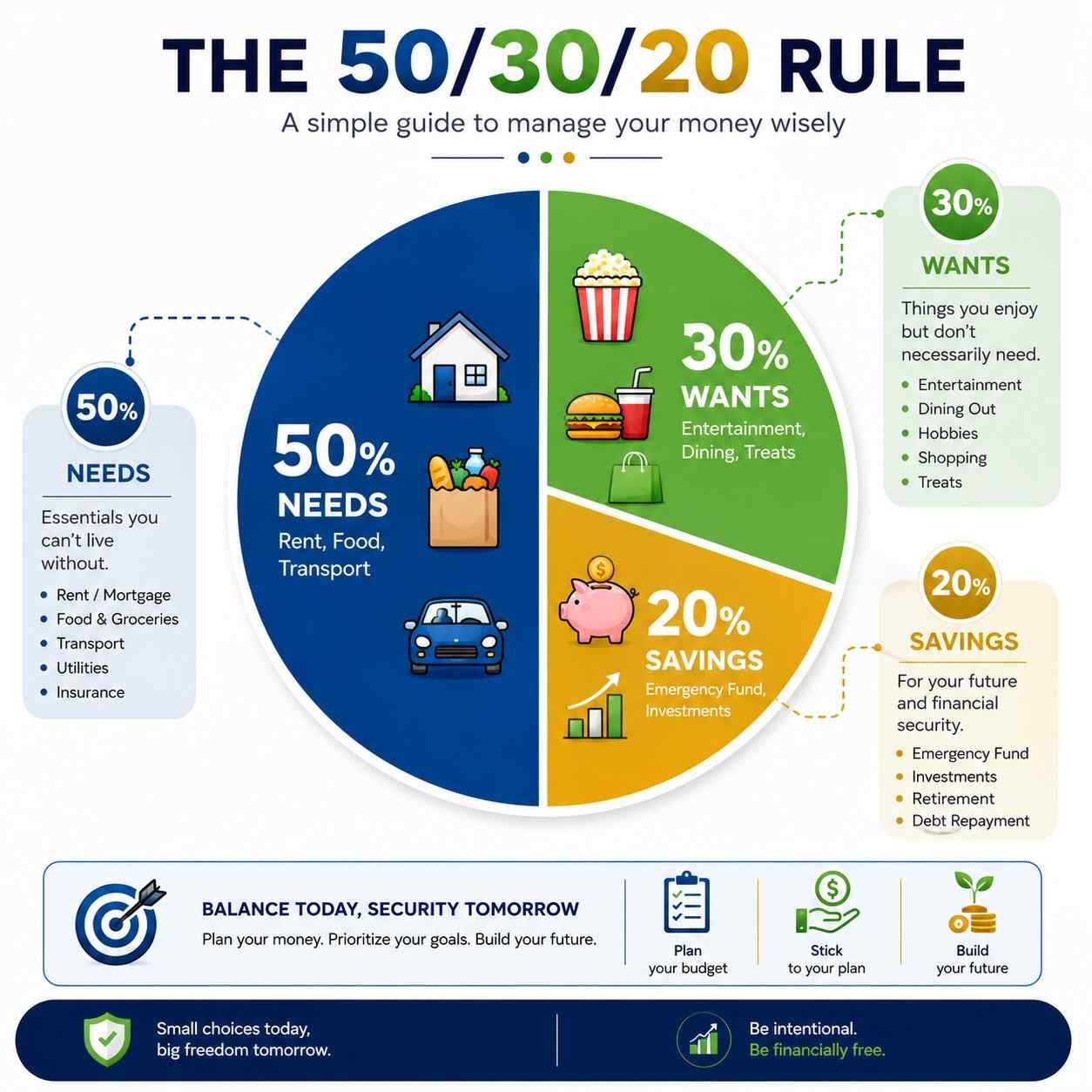
The 70-20-10 Rule for Simple Budgeting

When money’s tight, a detailed spreadsheet budget can feel overwhelming. Instead, try a simple spending plan like the 70-20-10 rule:

CategoryPercentagePurpose
Living Expenses70%Rent, groceries, utilities, bills
Savings/Debt Repayment20%Emergency fund, credit card debt, investments
Flexible/Wants10%Entertainment, dining out, personal treats

If your essential expenses take up more than 70% of your income, that’s okayโ€”the percentages can be adjusted based on your situation. Some households may need to dedicate 90% or more of their income to necessities during periods of high inflation.

Alternative: Zero-Based Budgeting

With a zero-based budget, every dollar you receive is allocated to a specific purpose, so there’s no room left for overspending. When you subtract your expenses from your income for a given month, the difference is zero.

Flexibility is key. If you overspend on a new pair of shoes, make up the difference by reducing spending in another discretionary category, like dining out.

Infographic showing the 70-20-10 budget rule for breaking the paycheck-to-paycheck cycle

Step 3: Cut Costs Where Inflation Hurts Most.

Now that you’ve started tracking your expenses and created a budget, look at your spending with a fresh eye to find opportunities to cut back. Inflation does not affect all expenses equally. Food prices may rise faster than transportation costs.

Areas Where You Can Cut Costs

Monthly Bills:

  • Lower your energy bill by using fewer lights or appliances less often
  • Downgrade your phone plan
  • Shop around for better home- or auto-insurance rates

Subscriptions:

  • Cancel streaming services, news subscriptions, or monthly subscription boxes you don’t truly use
  • Audit your “small” recurring expenses

Food:

  • Cook at home instead of dining out
  • Use coupons and cook meals with low-cost ingredients
  • Create a meal plan that takes advantage of leftovers

Shopping:

  • Wear what you already have
  • Stick to a limited clothing budget
  • Shop secondhand

Turn Unused Items into Cash

Do you have unused items lying around your home? Selling unwanted items through online marketplaces can be one way to bring in extra money. You might be surprised at what people are willing to pay for things you no longer need.


Step 4: Automate Your Savings-Pay Yourself First.

Not only should you budget for savings, but you should treat saving as a high-priority expense. If you wait to set aside money for savings after you’ve covered expenses, you may find there’s nothing left. This is one of the most powerful ways to break the paycheck-to-paycheck cycle.

The “Pay Yourself First” Strategy

Instead of waiting to save what’s left, automatically funnel a portion of each paycheck directly into a savings account. Then, build the rest of your budget around what’s left.

Small Transfers Add Up

Even small automatic transfers can add up faster when your money earns meaningful interest. As of mid-2026, some online bank accounts offer interest rates of up to 4% APY, while the national average for traditional savings accounts is closer to 0.61%.

Savings Account TypeInterest Rate (APY)
High-Yield Savings AccountUp to 4%
Traditional Savings Account~0.61%

For example, $100 in a savings account with a 4% APY would grow to about $104 after one year, while the same amount in a traditional savings account earning 0.61% APY would grow to about $100.61.


Step 5: Build Your Emergency Fund.

If you’re currently just barely covering all your expenses each month, saving for the future may feel unrealistic. But creating an emergency fund should be a priority for you if you’re living paycheck to paycheck. This is a crucial part of how to break the paycheck-to-paycheck cycle.

Why an Emergency Fund Matters

When you have an emergency fund, you’re less likely to rely on credit cards in a pinch, thus avoiding racking up debt you can’t afford to pay back. Without a safety net, one unexpected expense can push you deeper into a cycle of debt.

How Much to Save

Experts recommend an emergency fund large enough to cover three to six months of expenses. But focus on saving a little each paycheck. Aim for an attainable amount to start, like $500 or $1,000, and you can go up from there.


Step 6: Manage Debt Strategically

We need to manage debt before it manages us. Inflation and high interest rates are an unforgiving combination. Rising prices squeeze household budgets while rising borrowing costs make debt even more expensive.

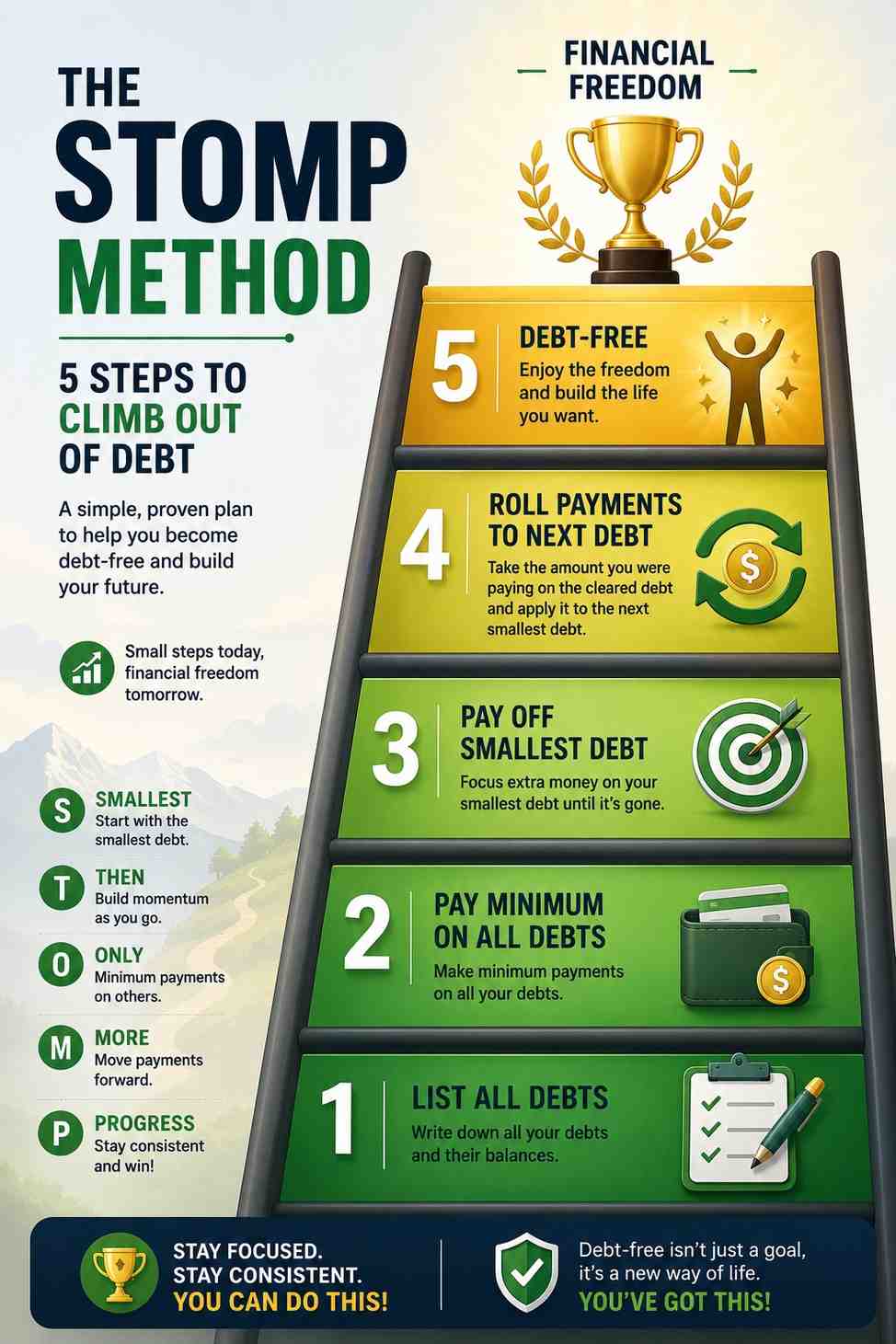
Infographic showing the STOMP method for climbing out of debt and achieving financial freedom

The STOMP Method

If you have multiple debts, the STOMP method (Stick To One Minimum Payment) can help:

  1. Identify the minimum payment required on each debt
  2. Commit to sticking to those amounts
  3. As individual debts are paid off, redirect that excess cash toward accelerating the repayment of the remaining debt with the highest interest rate
  4. Try not to incur new debt

Good Debt vs. Bad Debt

Not all debt is bad:

  • Good Debt: Housing loans, business loans, education loans
  • Bad Debt: Revolving credit card balances, high-interest consumer debt

Focus on eliminating bad debt while maintaining good debt: The easiest way to avoid paycheck-to-paycheck.


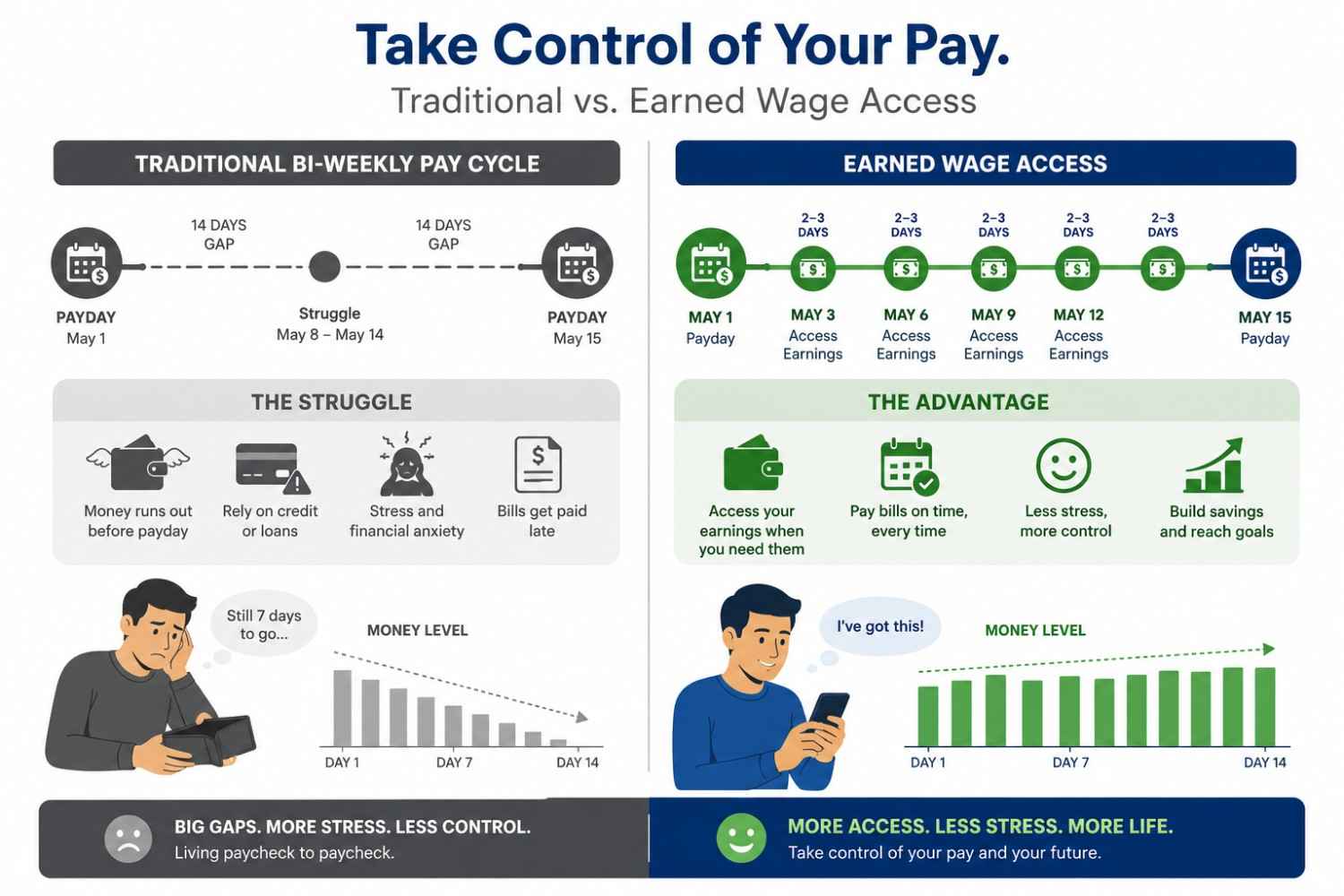
Step 7: Explore Earned Wage Access as a Tool.

A new generation of financial technology is giving workers something they’ve historically lacked: on-demand access to a portion of the wages they’ve already earned.

What Is Earned Wage Access?

Instead of waiting for a fixed payday, workers can access a portion of wages they’ve already accrued, giving them the flexibility to meet urgent needs without turning to costly alternatives like payday loans. This tool can be part of how to break the paycheck-to-paycheck cycle.

Who Benefits from EWA?

Financial strain comes in a lot of different shapes and sizes. Needing flexibility is not a measure of income; it’s a measure of lived experience. EWA is adopted across every demographic:

  • Full-time employees
  • Salaried workers earning above six figures
  • Freelancers, gig workers, and shift teams
  • Parents managing household unpredictability
  • Workers facing unexpected life events

A Note of Caution

While EWA can be a helpful tool for managing cash flow between paychecks, it is not a long-term solution for breaking the paycheck-to-paycheck cycle. It should be seen as a bridge, not a permanent crutch.

Comparison infographic showing traditional pay cycle versus earned wage access for financial wellness

Step 8: Protect Your Money from Inflation.

Inflation chips away at your purchasing power and adds pressure to every financial decision. Here’s how to protect your finances as you learn how to break the paycheck-to-paycheck cycle.

1. Focus on the Bare Necessities.

During periods of high inflation, prioritize essential spending and trim or eliminate the rest:

  • Needs: Food, shelter, utilities
  • Nice-to-haves: A car, but not necessarily a brand-new Cadillac
  • Wants: New TVs, vacations, jewelry

2. Be Strategic with Your Investments

Don’t let fear keep you from investing. There are plenty of companies with pricing power that can deliver strong returns, even in a high-inflation environment.

For those with lower risk tolerance, consider CDs, bonds, and other guaranteed investments that can beat or at least keep up with inflation.

3. Don’t Panicโ€”Think Long-Term

The market always goes up in the long run. Despite pandemics, recessions, and inflation, the market has always recovered. Resist emotional decision-making and let knowledge guide your decisions.

Illustration showing a shield protecting money from inflation arrows with three key strategies for financial protection

Step 9: Seek Support and Stay Accountable.

If you’re feeling anxious about money, you’re not alone: 60% of Americans report feeling stressed about money, citing insufficient income, debt, and budgeting challenges.

Talk to Others

  • Trusted loved ones: Sharing your concerns can help you feel more at ease
  • Credit counselors: Some consumers may qualify for free or low-cost financial assistance and debt counseling

Community Resources

If your budget doesn’t stretch far enough to cover necessities, local, state, or federal assistance programs may help with essentials like food, utilities, healthcare, childcare, or housing. Since eligibility requirements change regularly, check even if you didn’t qualify before.


Common Mistakes to Avoid

Based on expert insights, here are the most common mistakes people make when trying to break the paycheck-to-paycheck cycle:

1. Not Tracking Spending

The Mistake: Spending without tracking, then wondering at month-end where it all went.

The Fix: Track your expenses for at least one month. A budget only works if you follow it.

2. Lifestyle Inflation

The Mistake: Upgrading your lifestyle every time your income increases.

The Fix: Before increasing your standard of living, ask whether the additional spending will create lasting happiness or merely temporary satisfaction.

3. Ignoring “Small” Recurring Bills

The Mistake: Overlooking subscriptions and small recurring expenses.

The Fix: Audit all your subscriptions and small bills. Often, these “small” expenses can really eat into your budget when combined.

4. Not Adjusting Tax Withholding

The Mistake: Overpaying taxes throughout the year to get a big refund.

The Fix: Updating your Form W-4 means you’ll have more money in your paychecks throughout the year, which can make a big difference if you’re living paycheck-to-paycheck.


Your 30-Day Action Plan.

Here’s a practical step-by-step plan to start breaking the cycle of living paycheck-to-paycheck:

Week 1: Awareness

  • โ–ก Track every expense for one week
  • โ–ก Categorize expenses as “needs” and “wants.”
  • โ–ก Review your last month’s bank statement

Week 2: Budget Creation

  • โ–ก Create a budget using the 70-20-10 rule or zero-based budgeting
  • โ–ก Set up a savings account if you don’t have one
  • โ–ก Audit subscriptions and cancel unused ones

Week 3: Taking Action

  • โ–ก Set up automatic transfer of 10% of income to savings
  • โ–ก Identify one area to cut spending (food, subscriptions, etc.)
  • โ–ก Start an emergency fund with a $500 goal

Week 4: Looking Ahead

  • โ–ก Review tax withholding (use a W-4 calculator)
  • โ–ก Research earned wage access options if needed
  • โ–ก Set a SMART financial goal for the next 6 months

๐Ÿ“Œ Q&A: Your Paycheck-to-Paycheck Questions Answered

Q1: What does it actually mean to live paycheck-to-paycheck?

A: Living paycheck-to-paycheck means that your income is almost entirely consumed by essential expenses, leaving little to no room for savings. It’s a cycle where you’re constantly waiting for your next paycheck to cover bills, and any unexpected expense can cause significant financial stress. It’s important to note that this isn’t always about low income; a lack of financial cushion and awareness is often the primary driver. Even high earners with high fixed costs can fall into this pattern.

Q2: I feel like I should have enough money, but it’s always gone by the end of the month. Why?

A: The most common reason for living paycheck-to-paycheck is a lack of clarity on where your money is actually going. Without tracking your spending, small, frequent purchases can silently drain your account. You might be underestimating the total cost of things like daily coffee, dining out, or monthly subscriptions. The gap between perceived spending and actual spending is often the culprit.

Q3: Is living paycheck-to-paycheck always a sign of financial failure?

A: Absolutely not. It is a very common situation that often stems from systemic issues like the cost of living outpacing wage growth, not personal irresponsibility. Financial wellness in this context is about building stabilityโ€”meeting your essential obligations consistentlyโ€”not about having a large savings account. Self-compassion is a crucial first step to breaking the cycle.

Q4: Where is the best place to start if I want to break the cycle?

A: The first and most critical step is to track every dollar you spend for at least a month. You can use a simple spreadsheet, a notebook, or a budgeting app. This gives you a clear, non-judgmental picture of your cash flow and reveals the specific areas where your money is going .

Q5: What is the 70-20-10 rule, and can it help me?

A: The 70-20-10 rule is a simple budgeting framework. It suggests allocating 70% of your income to living expenses (rent, utilities, groceries), 20% to living expenses Repayment, and 10% to wants (entertainment, dining out). It’s a great starting point for people who find traditional budgets too restrictive and can be adjusted to fit your personal situation.

Q6: How do I start building an emergency fund when I have no money left over?

A: Start with a very small, attainable goal, like saving $50 or $100. You can do this by making small cuts, like reducing dining out or canceling an unused subscription, and automating a transfer of that saved amount to a savings account on payday. The key is to build a small bufferโ€”even $100โ€”which can prevent you from relying on expensive credit cards for minor emergencies.

Q7: I have credit card debt. Should I focus on paying that off before saving?

A: It’s a balancing act. While paying down high-interest debt is crucial, it is equally important to create a small emergency buffer. Without a buffer, you’ll likely use your credit card again for the next unexpected expense, creating a cycle. Aim to save a small emergency fund while making consistent, extra payments on your highest-interest debt.

Q8: What is the “pay yourself first” strategy mentioned in the article?

A: This strategy means treating your savings like a non-negotiable bill. As soon as you get paid, you automatically transfer a predetermined amount (even a small one) to a savings account. You then build your spending budget around what’s left, ensuring you make progress on your financial goals before you have a chance to spend the money on other things.

Q9: How can I cut costs without feeling like I’m depriving myself?

A: Focus on “smart cuts” rather than total deprivation. Audit your subscriptions and cancel any you don’t use. Look for ways to reduce fixed bills like insurance or phone plans. Instead of eliminating things you enjoy, try finding lower-cost alternatives, like cooking at home more often or using the library for entertainment. Small, consistent changes have a compound effect.

Q10: What if I’ve tried budgeting before and it didn’t work?

A: This is very common. Often, the issue is using a budget that is too rigid and doesn’t fit your life. A budget is meant to be a flexible plan. If you overspend in one category, simply adjust another. The goal is progress, not perfection. Using modern tools like automated tracking apps can also remove the friction of manual entry, making it easier to stick with a plan.


Conclusion: Living paycheck-to-paycheck.

Breaking the paycheck-to-paycheck cycle is not easy, but it is achievable. It requires awareness, discipline, and a willingness to make changes. The journey to financial stability is built choice by choice, paycheck-to-paycheck.

Key Takeaways from This Guide:

  1. Track every dollar to know where your money goes
  2. Create a budget that works for your situation
  3. Cut costs where inflation hurts most
  4. Automate savingsโ€”pay yourself first
  5. Build an emergency fund to cover unexpected expenses
  6. Manage debt strategically using the STOMP method
  7. Consider earned wage access as a short-term cash flow tool
  8. Protect your money from inflation through smart choices
  9. Seek support and stay accountable

Remember: Small improvements, repeated consistently, compound over time. Don’t wait for a perfect plan. Start where you are, with what you have. Focus on progress, not perfection.

A family that tracks expenses more carefully, reduces waste, and gradually pays down debt is already better positioned than it was a year ago.”

Your journey to financial freedom starts now. You now know how to break the paycheck-to-paycheck cycle. Take action today.


Sources

  1. Standard Bank South Africa. “How to get financially unstuck.” https://www.standardbank.co.za/southafrica/personal/learn/how-to-get-financially-unstuck
  2. Nasdaq. “3 Ways To Protect Your Money From Inflation, According to an Expert.” https://www.nasdaq.com/articles/3-ways-protect-your-money-inflation-according-expert
  3. Experian. “How to Break the Paycheck-to-Paycheck Cycle.” https://www.experian.com/blogs/ask-experian/how-to-break-paycheck-to-paycheck-cycle/
  4. Visa. “Visa Direct Blog | On-demand access to earned wages.” https://corporate.visa.com/en/products/visa-direct/blog/on-demand-access-to-earned-wages.html
  5. TaxAct Blog. “Living paycheck-to-paycheck? 6 Practical Ways to Handle Inflation.” https://blog.taxact.com/how-to-deal-with-inflation/
  6. Inquirer.net. “Managing finances during high inflation.” https://business.inquirer.net/599358/managing-finances-during-high-inflation/amp
  7. PYMNTS.com. “WorkWhile Adds AI Tool to Eliminate Payday Loans.” https://www.pymnts.com/dashboard-post/artificial-intelligence-2/2026/workwhile-deploys-predictive-ai-to-enhance-hourly-workers-financial-planning/

First Salary: 10 Essential Steps to Financial Freedom

A young professional in Kenya celebrating their first salary guide, with a phone showing a deposit notification and a Nairobi skyline background.

The Moment of Financial Independence.

Receiving your first salary is one of the most exciting milestones in life. This first salary Kenya guide is designed to help you navigate this critical moment. For many young Kenyans, this first salary represents years of hard work, sacrifice, and the long-awaited transition from dependence to independence. Whether you’re earning Sh30,000 or Sh100,000, this first salary Kenya moment marks the beginning of your financial journey.

But here’s the reality: the choices you make with your very first salary can determine your financial trajectory for decades. According to financial experts, the first 24 months of employment should be dedicated to building an impenetrable financial foundation.

and rather than chasing high-risk investments or upgrading your lifestyle.

This first salary Kenya guide will show you exactly how to do that. The excitement of seeing money in your account can easily lead to impulse spending. Within two weeks, many young professionals find themselves wondering, “Where did all my money go?” The good news is that with the right habits, you can avoid this trap and build lasting wealth.

What This First Salary Guide Will Do For You

This comprehensive first salary Kenya guide will walk you through ten essential steps to manage your first salary wiselyโ€”tailored specifically for the Kenyan context. We’ll cover everything from understanding your payslip to starting your first investment, with practical examples and actionable strategies. This first salary Kenya guide is your roadmap to financial freedom.


Step 1: Know Your Net Payโ€”Before You Spend a Shilling

Personal financial advisor Sophia Achieng emphasizes that before spending anything, you must clearly understand your payslip. This first salary guide starts with this fundamental step. Your gross salary is not what lands in your account.

Infographic showing how a Kenyan payslip breaks down gross salary into deductions and net pay as explained in a first salary Kenya guide.

Understanding Your Payslip

When you receive your first payslip, look carefully at the deductions:

  • PAYE (Pay As You Earn): Income tax deducted at source
  • NSSF (National Social Security Fund): Pension contribution
  • SHIF (Social Health Insurance Fund): Health insurance contribution
  • Other deductions: Union dues, pension schemes, or loan repayments

For instance, if your gross salary is Sh50,000, your net take-home pay might be around Sh39,000 after statutory deductions. Knowing this helps you plan realistically. This first salary Kenya guide emphasizes that understanding your payslip is the foundation of all financial planning.

Confirm Your Employment Benefits

Before spending, understand your full compensation package:

  • Medical cover details (is your family covered?)
  • Transport and communication allowances
  • Bonus structure and salary review timelines
  • Insurance benefits

“Look at your payslip critically and get to know what deductions have been made,” advises Sophia Achieng. “People have this fear that if you negotiate, you will not be hired, which should not be the case. You should be firm enough and negotiate respectfully. If the salary is fixed, look to see if the benefits are flexible.”


Step 2: Create a Budget That Works in the Kenyan Context.

Budgeting is the cornerstone of financial freedom. This first salary Kenya guide recommends creating a budget immediately. It gives your money direction and prevents you from spending your entire salary within the first few weeks.

Infographic showing the 50/30/20 budget rule from the first salary Kenya guide with Kenyan examples for needs, wants, and savings.

The 50/30/20 Rule (Adapted for Kenya)

A simple starting point is the 50/30/20 rule:

CategoryPercentagePurpose
Needs50%Essentials: rent, food, transport, utilities
Wants30%Personal treats, entertainment, dining out
Savings/Investments20%Emergency fund, investments, debt repayment

If you earn Sh39,000 net, that’s:

  • Sh19,500 for needs
  • Sh11,700 for wants
  • Sh7,800 for savings and investments

Adjust based on your reality:ย If rent takes from your first salary a larger share, trim from wants, not savings. The most important thing is being consistent. This first salary guide stresses that consistency is more important than perfection.

Practical Budgeting Tips for Kenya

  1. Track your expenses for at least a month using a spreadsheet, a budgeting app, or even a notebook. The M-Pesa app can help you track spending.
  2. Identify “money leaks”โ€”those small, seemingly harmless expenses that add up. Daily coffee, snacks, and impulse online shopping can significantly impact your wallet.
  3. Create a budget before you spend, not after. Give every shilling a purpose.

“For those considering whether to rent or buy, our guide on Rent vs Buy California provides 7 smart lessons that can help inform your decision.”

Step 3: Save First, Spend Laterโ€”The “Pay Yourself First” Rule.

One of the most powerful money habits you can develop is treating savings like a non-negotiable bill on your first salary.ย Pay yourself before you pay anyone else. This first salary guide emphasizes this principle above all others.

Why This Matters

As soon as your salary hits your account, immediately transfer a predetermined amount to savings. If you never see the money in your everyday account, you won’t miss it.

How Much Should You Save?

Finance coach Margaret Njeri recommends saving 20% of every income. Even small amounts teach discipline and set the stage for future financial stability.

If you earn Sh30,000 and aim to save 10%, immediately transfer Sh3,000 to a separate savings account when the money comes in. A financial advisor from Abojani Investment emphasizes that a minimum of 10-15% of net salary should be funneled into savings.

Automate Your Savings

Many employers or banks can facilitate automatic deductions to a savings or SACCO account. Automation removes temptation. You can set up:

  • Standing orders to your savings account
  • Automatic transfers to M-Shwari or KCB M-Pesa
  • SACCO monthly contributions

Step 4: Build Your Emergency Fund.

Life does not always go according to plan. You may experience job changes, medical emergencies, or unexpected bills. Having emergency savings gives you a safety net and reduces financial stress. This first salary guide recommends prioritizing this step.

What Is an Emergency Fund?

An emergency fund is money set aside specifically for unexpected expenses. According to financial experts, you should aim to build an emergency fund that covers three to six months of living expenses.

How to Start Building It

  1. Start small: Begin with a target of one month’s expenses, then gradually grow it.
  2. Automate transfers: Set up a standing order to your emergency fund at the beginning of each month.
  3. Keep it liquid: Your emergency fund should be easily accessibleโ€”ideally in a money market fund or a savings account.

Real Example: If your monthly expenses are Sh30,000, save Sh5,000 monthly to reach your first goal within six months.

Finance coach Margaret Njeri explains:ย “Habits form now, and waiting until adulthood makes saving harder.”


Step 5: Understanding Where to Save.

Where you save matters. Different savings vehicles serve different purposes. This first salary guide will help you make the right choice.

Comparison infographic showing savings options in Kenya, including bank accounts, M-Shwari, SACCO, and money market funds, from the first salary Kenya guide.

Options for Your Savings in Kenya-Africa

Savings VehicleBest ForKey Features
Savings AccountEmergency funds, short-term goalsEasy access, low interest (4-7% at KCB Goal Savings)
M-ShwariQuick, mobile savings2-5% interest, accessible via M-Pesa
SACCODisciplined saving, dividends5-10% annual dividends, loan access
Money Market FundEmergency funds, short-term parkingHigher returns (10-12% in Kenya), same-day/next-day liquidity
Locked M-ShwariDiscipline, saving with a goalLock your savings for a chosen period.
Fixed DepositMedium-term savingsHigher interest but no access until maturity

Making the Right Choice

For short-term needs and emergency funds, use a secure and liquid place like a savings account or Money Market Fund. Digital savings platforms like M-Shwari are popularโ€”you can save on your phone and earn interest. For disciplined saving with added benefits like loan access, join a SACCO.


Step 6: Start Investingโ€”Even With Ksh 1,000.

Once you’ve built a savings cushion, consider investingโ€”even with small amounts. According to investment experts from Absa Bank Kenya, many unit trusts let you start with as little as Sh1,000. This first salary Kenya guide encourages you to start investing early.

Investment ladder infographic showing beginner investment options in Kenya from low to high risk as part of a first salary Kenya guide.

Why You Need to Invest

Inflation reduces your money’s value over time. If inflation is 5% and your savings earn 4%, you’re effectively losing 1% in purchasing power each yearโ€”your shillings grow in number but shrink in value.

Beginner Investment Options in Kenya

According to investment experts from Absa Bank Kenya and @the_acemt Consulting, think of investments on a spectrum:

Investment TypeRisk LevelBest For
Money Market FundsLowEmergency funds, short-term goals
Treasury BillsLow“Near cash” options, low risk
Fixed Income Funds/BondsLow-ModerateSteadier returns over 3-7 years
SACCO InvestmentsModerateDividends, loan access, community
Equity Funds (Stocks)HighLong-term growth, higher volatility

How to Start Investing Practically

  1. Define your goals: Know what you’re saving for and when after you get your first salary.
  2. Build a safety net: Keep emergency cash in a money market fund first.
  3. Understand your risk tolerance: Know how you’d react if your investment dropped in value.
  4. Start small and be consistent: Even Sh1,000 a month can snowball into substantial wealth over time.
  5. Invest regularly: Set up a standing order for monthly contributions.

The Power of Compounding

James Njagi, Head of Business Development at CIC Asset Management Limited, explains: “Investing just Sh500 a month can snowball into substantial wealth over time. Compoundingโ€”earning returns on your returnsโ€”is the engine of wealth. Delay costs more than risk.”


Step 7: Avoid Lifestyle Inflationโ€”The Silent Wealth Killer.

When income rises, it’s tempting to upgrade everythingโ€”from your apartment to your gadgets to your social life. But lifestyle inflation can stall your progress. This first salary Kenya guide warns you about this common trap.

What Is Lifestyle Inflation?

Lifestyle inflation (also called lifestyle creep) is when your spending increases as your income increases. That first paycheck on your first salary makes you feel like you need to prove you’re doing well. You feel pressured to buy expensive outfits, upgrade your phone, take friends out, or live beyond your means.

How to Avoid Lifestyle Inflation

  1. Maintain your current spending level and channel extra income into investments or savings.
  2. Grow your lifestyle gradually as your income improves, not immediately.
  3. Live below your means: Financial advisor Benjamin Cheruiyot advises keeping rent strictly below 25% of net income.
  4. Quiet growth beats loud spending. You don’t need to prove anything to anyone.

“Instead of upgrading everything at once, take time to understand your true monthly expenses. It is better to grow your lifestyle gradually as your income improves rather than struggle to maintain an image you cannot afford.”


Step 8: Manage Debt Wisely.

Debt can either help you grow or trap you. According to financial experts, avoid borrowing for daily expenses or lifestyle upgrades. Mobile loans and “buy now, pay later” options can quickly snowball. This first salary Kenya guide recommends caution with debt.

Good Debt vs. Bad Debt

  • Good Debt: Borrowing for education, a business, or an asset that appreciates.
  • Bad Debt: Borrowing for consumptionโ€”clothes, phones, eating out, or daily expenses.

Smart Debt Management Tips

  1. If you have multiple debts, prioritize paying off the ones with the highest interest first.
  2. Before taking any loan, understand the repayment terms and interest rates clearly.
  3. Credit should complement a budget, not replace one.
  4. Ask yourself: Is this loan helping me build something valuable or simply funding a lifestyle I cannot afford?

“When it comes to making important financial decisions, understanding how to choose someone to act on your behalf is crucialโ€”our detailed guide on How to Choose a Financial Power of Attorney outlines 7 critical steps to consider.”


Step 9: Support Family Smartly โ€“ The “Black Tax” Strategy.

Many young Kenyans who start earning their first salary feel the responsibility to help parents, siblings, or relatives. Supporting family is important, but it is also necessary to plan your own finances.

The “Black Tax” Reality

The cultural expectation to provide for family can be a significant financial burden. Without a strategy, “black tax” can drain your resources and trap you in a cycle of dependency.

How to Support Family Without Breaking Your Budget

  1. Set aside an amount you can comfortably give without putting yourself under financial pressure.
  2. Structure your support: Instead of erratic cash hand-outs, consider paying specific bills (like school fees or SHIF premiums for parents).
  3. Set healthy boundaries: You cannot pour from an empty cup.
  4. “Support family but set boundaries”โ€”Set aside an amount you can comfortably give without putting yourself under financial pressure.

The Most Impactful Way to Help

Financial advisor Benjamin Cheruiyot recommends purchasing comprehensive medical insurance or consistently paying SHIF premiums for aging parents. This proactive move protects you from catastrophic, out-of-pocket hospital bills that can instantly wipe out years of savings.


Step 10: Invest in Your Most Valuable Assetโ€”You.

Your earning potential is your greatest asset. According to financial experts, the highest-yielding asset a 25-year-old possesses is their own earning potential.

Why Investing in Yourself Matters

Redirecting early income into professional development provides returns that far outpace traditional financial instruments. Skills and knowledge compound just like money.

How to Invest in Your Career

  1. Enroll in short courses and obtain industry-specific certifications like KASNEB or CIFA.
  2. Acquire complementary skills such as data analytics, foreign languages, or digital marketing.
  3. Invest in mentorship to gain insights and guidance.
  4. Set career goals that align with your financial aspirations.
  5. View your income as a tool to fund your next level, not a reward to exhaust.

In a fiercely competitive Kenyan job market, specialized knowledge rapidly translates into accelerated promotions, superior negotiating leverage, and substantially higher compensation packages.


Common Mistakes to Avoid.

Based on expert insights, here are the most common money mistakes young professionals makeโ€”and how to avoid them:

1. Upgrading Lifestyle Too Fast

The Mistake: Moving into an expensive apartment, buying a new phone, or eating out daily just to match a new social status.

The Fix: Understand your true monthly expenses. Live within your means and aim to save a portion of your income before spending.

2. Ignoring Savings and Emergency Funds

The Mistake: Delaying savings, thinking you’ll start later when you earn more.

The Fix: Start by saving at least 10% of your salary from your first month. Build a small emergency fund to cover hospital bills, job loss, or family emergencies without borrowing.

3. Not Tracking Where Money Goes

The Mistake: Spending without tracking, then wondering at month-end where it all went.

The Fix: Track your expenses for at least one month. A budget only works if you follow it.

4. Falling for “Guaranteed High Returns” Scams

The Mistake: Chasing investment schemes promising unrealistic returns.

The Fix: Only deal with CMA- or CBK-licensed institutions. If it sounds too good to be true, it probably is.

5. Not Reading the Fine Print on Loans

The Mistake: Taking loans without understanding interest rates and repayment terms.

The Fix: Before taking any loan, understand the repayment terms and interest rates clearly. Credit should complement a budget, not replace one.

6. Spending Before Understanding Your Net Pay

The Mistake: Spending based on gross salary, not net income after deductions.

The Fix: Look at your payslip critically and confirm your net pay before planning your budget.


Your 30-Day Action Plan.

Here’s a practical step-by-step plan for your first month of employment:

Week 1: Understanding Your Money

  • โ–ก Review your payslipโ€”understand all deductions
  • โ–ก Confirm your net pay (take-home amount)
  • โ–ก List all your essential expenses (rent, transport, food, utilities)
  • โ–ก Open a separate savings account if you don’t have one

Week 2: Creating Your Budget

  • โ–ก Create a budget using the 50/30/20 rule based on your net income
  • โ–ก Calculate your expenses and set realistic spending limits
  • โ–ก Set up a standing order to transfer 10-20% of your salary to savings

Week 3: Building Your Foundation

  • โ–ก Start building your emergency fundโ€”even Sh500 is a start
  • โ–ก Research the best savings vehicle for you (bank account, M-Shwari, SACCO, or Money Market Fund)
  • โ–ก Identify areas where you can reduce expenses

Week 4: Planning for the Future

  • โ–กย Research beginner investment optionsโ€”money market funds, SACCOs, or unit trusts
  • โ–ก Identify one skill you can invest in to boost your career
  • โ–ก Set a SMART financial goal for the next 12 months

Conclusion.

Your first salary is a powerful tool. Used wisely, it can set you on a path toward financial freedom. Used carelessly, it can lock you into a cycle of living paycheck to paycheck.

Key Takeaways from This First Salary Kenya Guide:

  1. Know your net pay before you start spending.
  2. Create a budget that works for your Kenyan context.
  3. Save first, spend laterโ€”pay yourself at least 10% of every income.
  4. Build an emergency fund to cover 3-6 months of expenses.
  5. Start investing early, even with small amounts like Sh1,000.
  6. Avoid lifestyle inflationโ€”live below your means.
  7. Support family smartly without breaking your own budget.
  8. Invest in yourselfโ€”skills and education compound.
  9. Avoid common mistakesโ€”don’t ignore savings, don’t chase get-rich-quick schemes.

Remember what CPA Ruth Omae reminds us: “It’s not how much you earn, it’s how you manage what you earn.” Financial freedom isn’t achieved overnight; it’s built paycheck by paycheck, choice by choice.

Your journey to financial freedom starts now. Every shilling you save and invest today is a down payment on the future you deserve. This first salary Kenya guide has given you the tools; now it’s time to take action.

“For a deeper dive into protecting your legacy, explore our comprehensive guide that breaks down The 5 essential differences between a Financial Power of Attorney and a Living Trust.”


Sources.

  1. Pulse Kenya. “Personal finance for young professionals: Managing your first salary in Kenya.” https://www.pulse.co.ke/story/personal-finance-for-young-professionals-managing-your-first-salary-in-kenya-2025102308584226897
  2. FXPesa. “Practical Steps To Saving.” https://support.fxpesa.com/hc/en-us/articles/27401309915793-Practical-Steps-To-Saving
  3. Business Daily. “Investing in 2026? Start smart, not scared.” https://www.businessdailyafrica.com/bd/lifestyle/personal-finance/investing-in-2026-start-smart-not-scared-5291302
  4. K24 Digital. “Just got your first salary? 10 smart money moves every Gen Z should make.” https://k24.digital/lifestyle/money/just-got-your-first-salary-10-smart-money-moves-every-gen-z-should-make
  5. K24 Digital. “5 common money mistakes Kenyans make after landing a new job.”ย https://k24.digital/heartbeat/5-common-money-mistakes-kenyans-make-after-landing-new-job
  6. Money254. “Sinking Fund: What It Is and 5 Reasons You Should Start One in 2023. ”ย https://www.money254.co.ke/post/sinking-fund-what-it-is-and-5-reasons-you-should-start-one-in-2023-money-management
  7. The Standard. “Early financial habits every student should start building today.” https://standardmedia.co.ke/evewoman/index.php/managing-your-money/article/2001530701/early-financial-habits-every-student-should-start-building-today
  8. The Standard. “What you should know about your first salary.” https://www.standardmedia.co.ke/evewoman/index.php/managing-your-money/article/2001540610/what-you-should-know-about-your-first-salary
  9. The Kenyan Wall Street. “Budgeting Tips to Start 2025 Right.”ย https://kenyanwallstreet.com/budgeting-tips-to-start-2025-right
  10. Daily Nation. “I got my first job, earned Sh40,000. But after expenses, help me with a savings plan.”ย https://nation.africa/kenya/life-and-style/saturday-magazine/i-got-my-first-job-earn-sh40-000-but-left-with-zero-after-expenses-help-me-with-a-savings-plan-5182670
  11. Payscale. “Average Early-Career Accountant with Financial Reporting Skills Salary in Kenya.” https://www.payscale.com/research/KE/Job=Accountant/Salary/f498acd5/Early-Career-Financial-Reporting
  12. LinkedIn (CPA Ruth Omae). “Payday Tips.” https://www.linkedin.com/posts/cpa-ruth-omae-b4a763162_personalfinance-financialwellness-moneymanagement-activity-7391830938692870144-68tH
  13. Streamline. “5 Smart Money Moves to Make After Landing Your First Job.” https://streamlinefeed.co.ke/news/5-smart-money-moves-to-make-after-landing-your-first-job
  14. The Star. “NJAGI: Are you working for your money, or is your money working for you? ”ย https://the-star.co.ke/business/commentary/2025-09-01-njagi-are-you-working-for-your-money-or-is-your-money-working-for-you
  15. Nax Today. “Kenyans Online Highlight Struggles in Viral Salary Clip.” https://nax.today/slider-stories-breaking-news-and-top-stories-in-kenya/article/3691/kenyans-online-highlight-struggles-in-viral-salary-clip

Financial Power of Attorney vs Living Trust: 5 Essential Differences You Need to Know

Financial power of Attorney vs. Living Trust Comparison: Two Legal Documents Side by side

Expert Analysis | July 25, 2026 | Reading Time: 23 min


The financial power of attorney vs living trust decision is one of the most common and critical questions in estate planning. While both are essential tools, they serve very different purposes. A financial power of attorney allows someone you trust to manage your financial affairs if you become incapacitated. A living trust holds your assets and specifies how they should be managed and distributed during your lifetime and after your death.

Understanding the financial power of attorney vs living trust distinction is essential for comprehensive estate planning. Many people mistakenly believe they can choose one over the other, but experts overwhelmingly recommend having both documents in place. This comprehensive guide breaks down the 5 essential differences between a financial power of attorney and a living trust, explains when each is used, and provides a clear framework for ensuring your estate plan is complete.

Whether you are creating your first estate plan or reviewing existing documents, understanding the financial power of attorney vs. living trust question is essential for protecting your assets and your loved ones.


What Is a Financial Power of Attorney?

Before comparing a financial power of attorney vs. a living trust, you must understand what each document does individually.

Definition and Purpose

A financial power of attorney (POA) is a legal document that authorizes another personโ€”your agent or attorney-in-factโ€”to manage your financial affairs. The person granting the authority is the principal, and the person receiving the authority is the agent.

With a power of attorney, legal title to the managed assets remains with the principal. A power of attorney ceases to operate when you revoke it or when you die. This is a powerful (and potentially dangerous) document that should be carefully drafted to fit your specific circumstances.

What a Financial POA Can Do

A financial POA allows your agent to manage a wide range of financial matters, and your agent can handle everything that is outside of the trust. The powers granted can be very broad or very limited.

AuthorityDescription
BankingMake deposits and withdrawals from bank accounts
InvestmentsManage brokerage accounts, retirement accounts, and investments
Real EstateBuy, sell, or manage real property
Business OperationsOperate the principal’s business
Household ManagementPay bills and manage household expenses
InsuranceManage life insurance and annuities
TaxesFile taxes and handle tax matters
Legal AffairsHire attorneys and handle legal matters
Government BenefitsApply for and manage benefits

What a Financial POA Cannot Do (Without Specific Authorization)

Typically, an agent cannot create, amend, or revoke a trust unless specifically authorized. According to experts, if you want to give your agent the power to change your living trust, you must specifically grant these rights in your POA document. Any type of financial POA can list these powers, but it must specifically outline the powers, or the agent will be unable to exercise them.

A good rule of thumb with powers of attorney is “When in doubt, spell it out.” The power of attorney covers matters that fall outside the trust, including assets that are not in the trust, government agencies, and retirement accounts and benefits that aren’t typically transferred into a trust.

When a Financial POA Takes Effect

There are two main types of financial POAs:

TypeWhen It Takes EffectBest For
DurableImmediately upon signing and remains effective after incapacity Most individuals ensure seamless management if you become incapacitated
SpringingOnly takes effect when a specific event occurs (typically physician certification of incapacity)Limited use; experts often recommend against due to activation difficulties

A durable power of attorney is designed to allow your agent to step into your shoes and take care of important matters, such as paying bills, managing bank accounts, filing taxes, and handling property transactions.


What Is a Living Trust?

Definition and Purpose

A living trust (also called a revocable living trust) is a legal entity that holds title to your assets during your lifetime and specifies how those assets should be managed and distributed after your death. Unlike a will, a living trust avoids probateโ€”the public, time-consuming, and expensive court process.

With a trust, you (the “settlor”) transfer legal title to specific assets to a “trustee” to be managed by the trustee for the benefit of specified persons (the “beneficiaries”). The revocable trust is commonly used by individuals who want to get professional management of their investments and other assets. Since the trust is revocable, it can be modified by the settlor to change the trustee or the beneficiaries and can even be cancelled entirely.

What a Living Trust Can Do

FunctionDescription
Hold AssetsOwns your assets (real estate, bank accounts, investments)
Manage During IncapacityAllows your successor trustee to manage assets if you become incapacitated 
Distribute After DeathProvides instructions for distributing assets to beneficiaries without probate 
Maintain PrivacyStays private, unlike a will, which becomes public record

Who Is Involved in a Living Trust?

RoleDescription
Grantor/TrustorThe person who creates the trust and transfers assets into it (you)
TrusteeThe person who manages the trust assets (you, during your lifetime)
Successor TrusteeThe person who takes over management if you become incapacitated or die 
BeneficiaryThe person(s) who receive the trust assets after your death

A trust is different from a will because your assets are placed into your trust during your lifetime and will be transferred after you pass away without requiring the probate process. The trust only applies to assets that have been properly transferred into it. Anything left outside the trust cannot be controlled by your trustee.


The 5 Essential Differences: Financial Power of Attorney vs Living Trust.

Understanding the financial power of attorney vs living trust distinction comes down to five essential differences.

5 key differences between financial power of attorney and living trust

Difference 1: Purpose

DocumentPrimary Purpose
Financial Power of AttorneyAllows someone to manage your financial affairs if you become incapacitated 
Living TrustHolds your assets and specifies how they should be managed and distributed during your lifetime and after your death 

Key Takeaway: A POA is about who manages your finances. A living trust is about what assets you have and how they are distributed.

Difference 2: When It Is Used

DocumentWhen It Is Used
Financial Power of AttorneyPrimarily used during your lifetime if you become incapacitated 
Living TrustUsed during your lifetime (for asset management) and after death (for asset distribution) 

Key Takeaway: A POA is a “lifetime” document that ends at your death. A living trust is both a “lifetime” and “after-death” document.

Difference 3: What Happens at Death

DocumentWhat Happens at Death
Financial Power of AttorneyEnds immediately upon the principal’s death 
Living TrustContinues after death; assets are distributed to beneficiaries according to trust terms 

Key Takeaway: This is a critical distinction. A POA cannot be used after death. A living trust provides instructions for your assets after you are gone.

Difference 4: Probate

DocumentProbate Impact
Financial Power of AttorneyDoes not avoid probate for assets not in a trust 
Living TrustAvoids probate for assets properly transferred to the trust 

Key Takeaway: A living trust is the primary tool for avoiding probate. A POA does not address probate at all.

Difference 5: Scope of Authority

DocumentScope of Authority
Financial Power of AttorneyGives your agent authority over financial accounts you own individually and non-trust assets 
Living TrustGives your successor trustee authority over assets held in the trust 

Key Takeaway: Your POA agent cannot manage trust assets. Your successor trustee cannot manage assets outside the trust.


Why You Need Both: The Common Mistake.

The most common mistake people make in theย financial power of attorney vs. living trustย discussion is thinking they can choose one over the other. Experts overwhelmingly recommend havingย bothย documents in place. Both a living trust and a durable power of attorney are crucial tools in incapacity planning, and they are often used together to create a comprehensive safety net.

What Happens If You Have Only a Living Trust

If you create a living trust but do NOT have a financial POA:

  • Problem: A living trust only covers assets you have transferred into it.
  • Gap: Assets outside the trust (bank accounts, retirement accounts, personal property) become unmanaged if you become incapacitated.
  • Result: Your family may need to petition the court for a conservatorshipโ€”a time-consuming and expensive process.

What Happens If You Have Only a Financial POA

If you create a financial POA but do NOT have a living trust:

  • Problem: A POA ends upon your death.
  • Gap: Your assets must go through probate, a public, time-consuming, and expensive court process.
  • Result: Your family faces delays and legal costs, and your asset distribution becomes a matter of public record.
How financial power of attorney and living trust work together in estate planning

The Expert Consensus

The power of attorney and the revocable trust are both tools people use to authorize someone else to manage their finances. However, the trust and power of attorney approaches have several important differences that you should discuss with your lawyer. For example, a trustee can only manage assets that have been legally transferred to the trust. Powers of attorney can cover a broader set of financial issues. So, it may be wise to have a power of attorney even if you are setting up a trust. On the other hand, unlike the power of attorney, a trust can continue to operate after your death, meaning that a trust can serve, to some extent, as a will substitute.

Both documents can allow for another individual to manage your assets if you can’t. In a living trust, that person is called the trustee (or in some cases, the alternate trustee). In a power of attorney, that person is known as the agent.


How a Financial Power of Attorney and Living Trust Work Together

financial power of attorney and a living trust are designed to work together, not compete.

The Typical Scenario

  1. During Lifetime (Healthy): You manage your own finances and trust assets.
  2. During Incapacity: Your successor trustee manages trust assets. Your POA agent manages your individual financial accounts (outside the trust).
  3. At Death: Your successor trustee distributes trust assets according to trust terms. Your executor handles probate for any assets outside the trust (if applicable).

Key Players and Their Roles

RoleAuthorityDocument
YouManages all assetsN/A
POA AgentManages individual financial accounts and non-trust assetsFinancial POA
Successor TrusteeManages trust assetsLiving Trust
ExecutorHandles probateWill
Key players in estate planningโ€”POA agent, successor trustee, and executor

The “Spell It Out” Principle

Because a POA agent typically cannot manage trust assets or change beneficiary designations, it is essential to state these provisions in your documents clearly. Your agent can handle everything that is outside of the trust. This may include updating beneficiary designations, accessing your retirement accounts, or dealing with digital accounts.

The living trust and the power of attorney both pertain to incapacity planning. Typically, the agent under the power of attorney will use the day-to-day checking account funds to pay necessary expenses while the principal is incapacitated. Meanwhile, the trustee will manage the investment and savings accounts and will also typically be required to pay upkeep and personal expenses.

If you want your agent to handle financial matters inside the trust, it’s also possible to make your POA the trustee. You should first be confident that your agent is completely trustworthy, as they’re not monitored unless someone brings a lawsuit for mismanagement.


The Hidden Power of a Revocable Trust for Incapacity

When comparing a financial power of attorney vs. a living trust, one of the most important considerations is how each tool handles incapacity. A well-drafted trust provides significant advantages that a POA alone cannot match.

A Trustee Has More Authority Than a POA Agent

It is better to rely on one’s trust when possible because assets held in a living trust can be controlled much more reliably than assets outside of a trust. The Trustee’s greater authority is particularly relevant when dealing with mortgages, lines of equity, insurance related to trust-owned real estate, and the sale of real property trust assets.

A well-drafted trust typically provides more flexibility to the trustee than is provided to an agent in most powers of attorney. A trust can authorize the trustee to use his or her own discretion (judgment) when addressing unforeseen circumstances.

The Problem with Banks and Third Parties

Many banks, insurance companies, and title companies insist upon their own in-house power of attorney and are reluctant to accept an attorney-drafted power of attorney unless it specifically addresses their accounts. As the owner in charge of the trust estate, a successor trustee has more authority and power to manage the assets inside the trust and can rely not only upon the authority granted in the trust but also on the authority granted under California statute.

The POA’s Role with Retirement Accounts

Nevertheless, the Power of Attorney and the Will are still each very much necessary. A well-drafted Power of Attorney is indispensable to controlling retirement accounts, Social Security income, and legal affairs, as these are non-transferable to a trust. A Will is necessary to control who inherits any assets held in one’s name (including vehicles and checking accounts) at the time of death.


Real-World Examples: When Each Document Is Used

Example 1: The Executive with a 401(k) and Investment Accounts

Scenario: A 55-year-old executive has a 401(k), brokerage account, and personal bank accounts. She also owns a home.

DocumentWhat It Does
Financial POAIf she becomes incapacitated, her POA agent can pay bills, manage her brokerage account, and file her taxes 
Living TrustHer home and other assets are transferred to the trust. If she dies, her successor trustee distributes the home to her children without probate 

Example 2: The Real Estate Investor

Scenario: A 65-year-old real estate investor owns multiple rental properties. He is married and has three adult children.

DocumentWhat It Does
Financial POAIf he becomes incapacitated, his POA agent can manage rental income, pay property taxes, and handle tenant issues
Living TrustAll rental properties are held in the trust. At his death, his successor trustee manages or sells the properties according to trust terms 

Example 3: The Senior with a Health Crisis

Scenario: An 80-year-old woman develops dementia. She has a home, bank accounts, and a modest investment portfolio.

DocumentWhat It Does
Financial POAHer POA agent pays her bills and manages her bank accounts 
Living TrustHer successor trustee ensures her home and any investments in the trust are properly managed 

Example 4: The Conflicting Documents Scenario

Sometimes it can be very helpful for the agent under a power of attorney to amend an incapacitated person’s living trust. Consider someone who tells her agent under a power of attorney that she wants to amend her trust to disinherit her estranged stepson. Then she becomes incapacitated before dying. The power of attorney authorizes the agent to make changes to the trust. The trust, however, restricts the right to amend the trust to the settlor or his conservator. Accordingly, the trust’s own restrictions on who can amend the trust prevent the settlor’s agent from exercising the full scope of authority granted within the power of attorney. The documents are not in harmony.


Frequently Asked Questions About Financial Power of Attorney vs Living Trust

1. What is the difference between a financial power of attorney and a living trust?

A financial POA allows someone to manage your financial affairs if you become incapacitated, while a living trust holds your assets and specifies how they should be managed and distributed during your lifetime and after your death.

2. Do I need both a financial power of attorney and a living trust?

Yes. Experts overwhelmingly recommend having both documents in place because they serve different purposes and address different situations.

3. Does a living trust avoid probate?

Yes, for assets properly transferred to the trust. This is one of the primary benefits of a living trust.

4. Does a financial POA avoid probate?

No. A financial POA ends at the principal’s death and does not address asset distribution.

5. Can my POA agent manage my trust assets?

Generally, no. Your POA agent typically cannot manage trust assets. Your successor trustee manages trust assets. However, if you want your agent to handle financial matters inside the trust, it’s possible to make your POA the trustee.

6. Can my POA agent change my beneficiary designations?

Only if specifically authorized in the POA document. Typically, this power is left out to prevent potential abuse.

7. When does a financial POA take effect?

A durable POA takes effect immediately and remains effective after incapacity. A springing POA only takes effect upon incapacity.

8. What happens to my POA when I die?

A financial POA ends immediately upon the principal’s death.

9. What happens to my living trust when I die?

A living trust continues after death, and assets are distributed to beneficiaries according to trust terms.

10. What assets can go into a living trust?

Real estate, bank accounts, brokerage accounts, and other financial assets can be transferred to a living trust.

11. What assets cannot go into a living trust?

Retirement accounts (401(k)s, IRAs) typically cannot be transferred to a living trust without tax consequences. Beneficiary designations are recommended instead.

12. How do I choose between a financial POA and a living trust?

You should not choose. You need both. They serve different purposes and are both essential for a complete estate plan.

13. Can one person be both my POA agent and successor trustee?

Yes. You can name the same person for both roles, though this is not required.

14. What is probate, and why should I avoid it?

Probate is the court-supervised process of distributing a deceased person’s assets. It is public, time-consuming, and can be expensive. A living trust helps avoid it.

15. What is the most common mistake people make with these documents?

The most common mistake is thinking they can choose one over the other. Experts recommend having both.

16. Can a power of attorney change a living trust?

Your power of attorney can only make changes to your living trust if you specifically grant them that authority. If the POA document fails to include the power to change your living trust, your agent doesn’t have the right to do so. Once your agent has the right to change your living trust, they can make changes under the right circumstances, such as in a divorce, when a beneficiary is no longer alive, or if a child has been born.


Key Takeaways & Next Steps.

Key Takeaways

  1. A financial power of attorney and a living trust serve different purposes. A POA allows someone to manage your finances during incapacity; a living trust holds your assets for management and distribution.
  2. You need both. Experts recommend having both documents in place for a complete estate plan.
  3. A POA ends at death; a living trust continues. This is a critical distinction.
  4. A living trust avoids probate; a POA does not. For assets properly transferred to the trust, a living trust is the primary tool for probate avoidance.
  5. Clear communication is essential. Inform your agent, successor trustee, and family about your documents and wishes.
Why you need both a financial power of attorney and a living trustโ€”estate planning essentials

Your Next Steps

  1. Take inventory of your assets. Understand what you own and where it is held.
  2. Identify your key roles. Decide who will be your POA agent and successor trustee.
  3. Consult an attorney. Get professional advice on the financial power of attorney vs. living trust decision for your specific situation.
  4. Draft and execute both documents. Ensure they are properly signed and notarized.
  5. Communicate your plan. Share your documents and intentions with your agents, family, and financial professionals.

What to Read Next on FinWireStack


Sources

  1. [^1] Marshall, Parker & Weber. “Financial Power of Attorney and Trust โ€“ Understanding the Differences.” https://www.paelderlaw.com/estate-planning/financial-power-of-attorney-and-trust-understanding-the-differences/
  2. [^2] Rocket Lawyer. “Estate Planning and Financial Decision Making.” https://www.rocketlawyer.com/family-and-personal/estate-planning/power-of-attorney/legal-guide/estate-planning-and-financial-decision-making
  3. [^3] Devey Law. “Trust vs. Durable Power of Attorney in California Incapacity Planning.” https://www.deveylaw.com/blog/trustvsdpoa
  4. [^4] Dennis Fordham Law. “Harmonizing the Entire Estate Plan.” https://dennisfordhamlaw.com/harmonizing-the-entire-estate-plan/
  5. [^5] LegalZoom. “The Complete Guide to Estate Planning.” https://www.legalzoom.com/articles/the-complete-guide-to-estate-planning
  6. [^6] (Not used in this article)
  7. [^7] Dennis Fordham Law. “It is better to rely on one’s Trust when possible.” https://dennisfordhamlaw.com/it-is-better-to-rely-on-ones-trust-when-possible/
  8. [^8] LegalZoom. “Can Your Power of Attorney Change Your Living Trust?” https://www.Legalzoom.com/articles/can-your-power-of-attorney-change-your-living-trust
  9. [^9] (Not used in this article)
  10. [^10] Lake County News. “Having oneโ€™s affairs in order.” https://www.lakeconews.com/news?itemid=707&start=11304
  11. [^11] Fafinski Mark & Johnson. “Estate Planning 101.” http://www.fmjlaw.com/trusts-estates-blog-estate-planning-101/

The Complete Beginner’s Guide to Investing & Personal Finance in 2026

The complete beginner's guide to investing and personal finance featured image showing a roadmap of financial education with 5 sections for 2026

The complete beginner’s guide to investing and personal finance is your roadmap to financial freedom. Whether you’re just starting your career, looking to build wealth, or planning for retirement, understanding the fundamentals of money management is the first step toward achieving your financial goals.

This comprehensive guide brings together Finwirestack’s entire educational series into one complete learning path. From budgeting and saving to trading and investing, everything you need to know is organized here in a logical, easy-to-follow structure. You will learn:

  • How to build a strong financial foundation through budgeting and saving
  • The difference between trading and investing, and which is right for you
  • How to start investing in stocks, cryptocurrencies, and forex
  • Advanced strategies and psychology for consistent success

By the end, you will have a complete understanding of the complete beginner’s guide to investing and personal finance, and be ready to take control of your financial future.


The complete beginner's guide to investing and personal finance learning hub showing the full educational path from budgeting to advanced trading for 2026

The complete beginner’s guide to investing and personal finance โ€” your roadmap to financial freedom


Section 1: Building Your Financial Foundation

Before you can invest or trade, you need a solid financial foundation. This section covers the essentials of personal financeโ€”the building blocks that support all your future financial decisions.

Personal Finance 2026: Smart Money Management in the Digital Age

Article Link: Personal Finance 2026: Smart Money Management Guide

Why It Matters: Mastering personal finance is the first step toward financial freedom. This guide covers everything you need to know about budgeting, saving, investing, and debt management in the digital age.

Key Takeaways from This Article:

TopicKey Insight
Emergency FundSave 3-6 months of essential expenses
50/30/20 Rule50% needs, 30% wants, 20% savings/debt
AI-Powered ToolsUse technology for proactive money management
Debt ManagementPay off high-interest debt first (avalanche method)
Retirement AccountsMaximize tax-advantaged accounts (401k, IRA)

๐ŸŽฏ Action Step: If you haven’t already, create a budget using the 50/30/20 rule. Track your spending for one month to understand where your money is going.


Section 2: Choosing Your Investment Path

Once your foundation is solid, it’s time to decide how to grow your wealth. This section helps you understand the key differences between investment approaches and choose the path that aligns with your goals.

Crypto vs Stocks: Which Market Is Right for You in 2026?

Article Link: Crypto vs Stocks: 2026 Ultimate Smart Guide

Why It Matters: The choice between crypto and stocks is one of the most debated questions in personal finance. This guide helps you understand the differences in volatility, regulation, returns, and accessibility.

Key Takeaways from This Article:

FactorCryptoStocks
Trading Hours24/7Weekdays, limited hours
Volatility50-80%+ annual swings15-25% annual swings
RegulationLimitedSEC regulated
Historical ReturnsExplosive but inconsistent~10% average annually
Best ForHigh risk toleranceLong-term wealth building

๐ŸŽฏ Action Step: Consider your risk tolerance and financial goals. If you prefer stability, lean toward stocks. If you have a higher risk appetite and believe in blockchain technology, consider a crypto allocation.


The complete beginner's guide to investing and personal finance crypto vs stocks comparison showing key differences for beginners

Caption: Figure 2: Crypto vs. Stocksโ€”understanding the key differences


Trading vs. Investing: Which Strategy Is Right for You in 2026?

Article Link: Trading vs Investing: 2026 Ultimate Smart Guide

Why It Matters: Understanding the difference between trading and investing is fundamental to your financial success. This guide helps you choose the approach that fits your personality, time commitment, and goals.

Key Takeaways from This Article:

FactorTradingInvesting
Time HorizonShort-term (seconds to weeks)Long-term (years to decades)
Risk ProfileHigherLower
Time CommitmentHigh (active)Low (passive)
Tax ImplicationsHigher ratesLower capital gains rates
Success Rate1-4% profitable90%+ profitable over 20 years

๐ŸŽฏ Action Step: Be honest about your time commitment and risk tolerance. If you have limited time and prefer stability, investing is likely your best path. If you have time to monitor markets and can handle volatility, trading might be an option.


Section 3: Building Your Investment Portfolio

Now that you’ve chosen your path, it’s time to learn how to actually invest in the assets you’ve selected. This section covers the practical steps for getting started.

Crypto Trading 101: 2026 Ultimate Beginner’s Guide

Article Link: Crypto Trading 101: 2026 Ultimate Beginner’s Guide

Why It Matters: Cryptocurrency has evolved into a mature asset class with institutional participation and clearer regulations. This guide covers everything you need to know to start trading crypto.

Key Takeaways from This Article:

TopicKey Insight
Trading PairsBase currency vs quote currency (e.g., BTC/USDT)
ExchangesChoose regulated platforms like Coinbase, Binance, Kraken
WalletsUse cold storage for significant holdings
DCA StrategyInvest fixed amounts regularly
Risk ManagementUse stop-loss orders and the 1% rule

๐ŸŽฏ Action Step: Choose a regulated exchange, complete KYC verification, and start with a small amount in a major coin like Bitcoin or Ethereum. Practice on a demo account if available.


The complete beginner's guide to investing and personal finance investment options comparison showing stocks crypto and forex for beginners

Investment options comparison โ€” stocks, crypto, and forex


Stock Investing 2026: Buffett’s Smart Beginner Strategy

Article Link: Stock Investing 2026: Buffett’s Smart Beginner Strategy

Why It Matters: Warren Buffett’s simple investment philosophy has made him one of the wealthiest people in the world. His advice for beginners is remarkably straightforward: buy a low-cost S&P 500 index fund and hold for the long term.

Key Takeaways from This Article:

TopicKey Insight
Warren Buffett’s AdviceBuy a low-cost S&P 500 index fund (like VOO)
Compound Interest$100/month for 30 years = $226,000 at 10% average return
Brokerage SelectionChoose Vanguard, Fidelity, or Schwab
Automatic InvestingSet up monthly contributions
Buy-and-HoldStay invested through market cycles

๐ŸŽฏ Action Step: Open a brokerage account if you haven’t already. Choose a low-cost S&P 500 index fund like VOO, and set up automatic monthly contributions.


Section 4: Mastering Forex Trading

For those interested in the largest financial market in the world, this section covers everything from basic terminology to advanced strategies.

Essential Forex Trading Terminology: Ultimate Guide

Article Link: Essential Forex Trading Terminology: Ultimate Guide

Why It Matters: Understanding forex terminology is essential for successful trading. This comprehensive glossary covers pips, leverage, margin, slang, and technical indicators used by professional traders.

Key Terms to Know:

TermDefinition
PipStandard unit of price movement (0.0001 for most pairs)
LeverageBorrowed capital to increase position size
MarginCollateral required to open a leveraged position
SpreadDifference between bid and ask prices
Stop-LossPre-set order to cap your loss
Take-ProfitPre-set order to lock in your gains

๐ŸŽฏ Action Step: Bookmark the glossary and reference it whenever you encounter an unfamiliar term. Practice on a demo account to apply your knowledge.


7 Proven Steps to Start Trading Forex

Article Link: 7 Proven Steps to Start Trading Forex

Why It Matters: This step-by-step guide walks you through the entire process of starting your forex trading journeyโ€”from choosing a broker to placing your first trade.

The 7 Steps:

  1. Learn the essentials โ€” Understand currency pairs, pips, leverage, and margin
  2. Choose a regulated broker โ€” Protect your funds with a trustworthy partner
  3. Open and verify your account โ€” Complete the KYC process
  4. Practice on a demo account โ€” Build confidence without risking real money
  5. Create a trading plan โ€” Define your rules before you enter a trade
  6. Choose your first currency pair โ€” Start with major pairs like EUR/USD
  7. Place your first trade โ€” Use micro lots and low leverage

๐ŸŽฏ Action Step: If you’re interested in forex trading, follow these seven steps in order. Don’t skip the demo phase.


Technical vs Fundamental Analysis: Which Strategy Wins?

Article Link: Technical vs Fundamental Analysis: Which Strategy Wins?

Why It Matters: Understanding the difference between technical and fundamental analysis is crucial for making informed trading decisions.

Key Takeaways:

FactorTechnical AnalysisFundamental Analysis
FocusPrice action and patternsEconomic and political factors
Primary QuestionWhen to enter/exitWhat to buy/sell
Time HorizonShort to medium termMedium to long term
ToolsCharts, indicators, volumeInterest rates, GDP, NFP
Best ForDay trading, scalpingPosition trading, investing

๐ŸŽฏ Action Step: Start with technical analysis if you’re a beginnerโ€”it has a shorter learning curve. Add fundamental analysis gradually as you gain experience.


The Role of Central Banks in the Forex Market

Article Link: The Role of Central Banks in the Forex Market

Why It Matters: Central banks are the single most powerful force in the forex market. Understanding how they operate gives you a significant trading edge.

5 Powerful Ways Central Banks Move Markets:

  1. Interest Rate Decisions โ€” Higher rates = stronger currency
  2. Quantitative Easing โ€” QE typically weakens a currency
  3. Forward Guidance โ€” Words move markets powerfully
  4. Direct Intervention โ€” Central banks can buy/sell currency
  5. Verbal Intervention โ€” Statements can influence prices

๐ŸŽฏ Action Step: Follow central bank announcements and economic calendars. Pay attention to forward guidance and press conferences.


Section 5: Advanced Strategies and Psychology

To achieve consistent success in trading, you need more than just technical knowledge. This section covers advanced strategies and the psychological discipline required for long-term success.

Advanced Forex Strategies: 15 Proven Institutional Techniques

Article Link: Advanced Forex Strategies: 15 Proven Institutional Techniques

Why It Matters: Advanced strategies elevate your trading from retail gambling to professional execution. This guide reveals the techniques used by institutional traders.

Key Advanced Strategies:

StrategyDescription
Smart Money ConceptsMarket structure, order blocks, fair value gaps
Algorithmic TradingAutomated execution with precision
HedgingProtect positions with offsetting trades
Ichimoku CloudsRead trend, momentum, and support/resistance
Carry TradeBorrow in low-rate currencies, invest in high-rate currencies

๐ŸŽฏ Action Step: Master one advanced strategy at a time. Start with Smart Money Concepts (SMC) before exploring algorithmic trading.


The complete beginner's guide to investing and personal finance advanced trading framework showing Smart Money Concepts and algorithmic trading

Advanced trading framework โ€” institutional-grade techniques


Forex Trading Psychology: 7 Secrets to Master Your Mindset

Article Link: Forex Trading Psychology: 7 Secrets to Master Your Mindset

Why It Matters: Trading psychology is the single most important factor separating successful traders from those who consistently lose money.

The 7 Secrets to Master Your Mindset:

  1. Control Greed โ€” Don’t overtrade or use excessive leverage
  2. Manage Fear โ€” Use stop-loss orders and stick to your plan
  3. Replace Hope โ€” Accept losses as part of trading
  4. Avoid Anger โ€” Take breaks after losses
  5. Stay Grounded โ€” Balance confidence with realism
  6. Be Patient โ€” Wait for proper setups
  7. Overcome FOMO โ€” Stick to your strategy

๐ŸŽฏ Action Step: Keep a trading journal. Record every trade, including your emotional state. Review it weekly to identify patterns.


Risk Management Mastery: 7 Proven Strategies

Article Link: Risk Management Mastery: 7 Proven Strategies

Why It Matters: Risk management is the foundation of consistent profitability. Without it, even the best strategy will eventually fail.

The 7 Proven Strategies:

  1. The 1% Rule โ€” Never risk more than 1% of your account per trade
  2. Position Sizing โ€” Calculate your position size before every trade
  3. Stop-Loss Placement โ€” Always use a stop-loss order
  4. Risk-Reward Ratio โ€” Target a minimum of 1:2
  5. Diversification โ€” Trade different pairs and strategies
  6. Trading Psychology โ€” Control your emotions
  7. Trading Journal โ€” Record, review, and learn from every trade

๐ŸŽฏ Action Step: Calculate your position size using the formula: Position Size = (Risk Amount รท Stop Loss Distance) ร— Pip Value. Never risk more than 1% of your account.


The complete beginner's guide to investing and personal finance complete learning path showing progression from beginner to advanced trader

Caption: Figure 5: The complete learning path โ€” from beginner to advanced


Conclusion: Your Financial Journey Starts Here

The complete beginner’s guide to investing and personal finance is your roadmap to financial freedom. You now have access to a comprehensive educational series covering everything from budgeting and saving to advanced trading strategies.

Your Learning Path Summary

PhaseFocusKey Articles
1: FoundationBudgeting, saving, and debt managementPersonal Finance 2026
2: Choose Your PathCrypto vs Stocks, Trading vs InvestingCrypto vs Stocks, Trading vs Investing
3: Building Your PortfolioCrypto and stock investingCrypto Trading 101, Stock Investing 2026
4: Mastering ForexForex basics, analysis, central banksTerminology, Analysis, Central Banks
5: Advanced StrategiesInstitutional techniques, psychology, riskAdvanced Strategies, Psychology, Risk Management

Quick Reference Guide

If You Want To…Start Here
Build a budget and save moneyPersonal Finance 2026
Understand crypto vs stocksCrypto vs Stocks
Choose between trading and investingTrading vs Investing
Learn crypto trading basicsCrypto Trading 101
Start stock investingStock Investing 2026
Learn forex terminologyForex Terminology
Start trading forex7 Steps to Start Forex
Understand analysis methodsTechnical vs Fundamental
Learn about the central bank’s impactCentral Banks
Master advanced strategiesAdvanced Forex Strategies
Improve trading psychologyForex Psychology
Manage risk effectivelyRisk Management

๐ŸŽฏ Final Thought: Financial freedom isn’t about getting rich overnight. It’s about building good habits, making informed decisions, and staying consistent over time. The best time to start was yesterday. The second-best time is today.


FAQ

1. What is the first step in the complete beginner’s guide to investing?

The first step is to build a strong financial foundation by creating a budget, establishing an emergency fund, and paying off high-interest debt. Start with the Personal Finance 2026 guide to master these essentials.

2. How do I choose between crypto and stocks?

Consider your risk tolerance, time horizon, and financial goals. If you prefer stability, lean toward stocks. If you have a higher risk appetite and believe in blockchain technology, consider a crypto allocation. The Crypto vs Stocks guide provides a detailed comparison.

3. What is the difference between trading and investing?

Trading is short-term (seconds to weeks) and aims to profit from price fluctuations. Investing is long-term (years to decades) and aims to build wealth through compounding. The Trading vs Investing guide explains the key differences.

4. What is the best investment for beginners?

For beginners, a low-cost S&P 500 index fund like VOO is the best starting point. It provides instant diversification across 500 companies with very low costs (0.03% expense ratio). This follows Warren Buffett’s advice for beginners.

5. How much money do I need to start investing?

You can start with as little as $10-$100. Most brokers offer fractional share investing with no minimum balance requirements. The most important factor is consistency, not the initial amount.

6. Is crypto trading suitable for beginners?

Crypto trading can be suitable for beginners who are willing to learn the technology, accept extreme volatility (50-80% swings), and limit exposure to 5-10% of their portfolio. Start with major coins like Bitcoin and Ethereum.

7. What is the 1% rule in trading?

The 1% rule means you never risk more than 1-2% of your trading capital on any single position. This risk management principle protects your account from significant damage after a losing trade.

8. How long does it take to learn forex trading?

The basics can be learned in 2-4 weeks of consistent study. However, mastering trading and developing consistent profitability takes months or years of practice. Start with a demo account and progress gradually.

9. Do I need to use all the strategies in this guide?

No. Start with the fundamentals and gradually add strategies as you gain experience. The most important thing is to find an approach that fits your personality, time commitment, and risk tolerance.

10. Can I combine trading and investing?

Yes! Many experienced investors maintain a hybrid approachโ€”keeping 80% of their capital in long-term investments and using the remaining 20% for active trading opportunities. This provides diversification and flexibility.


Further Reading

To continue your financial education, explore these additional articles from Finwirestack:


External Resources (DoFollow Links)


Disclaimer: Investing and trading involve risk. Past performance does not guarantee future results. The information provided in this article is for educational purposes only and does not constitute financial advice. Always consult a qualified financial advisor before making investment decisions.